


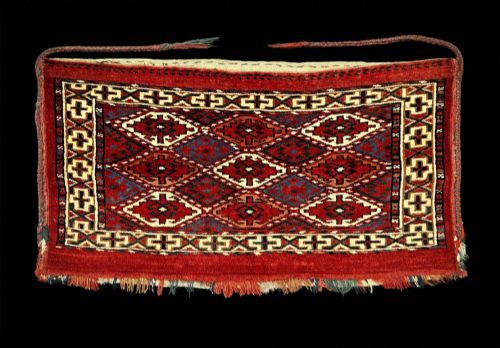


Yomut Torba
These yomut torba pieces are traditional Central Asian tribal weavings valued for their rich woolwork and striking geometric guls.
Yomut Torba
A yomut torba is a traditional storage bag face originating from the Turkmen tribes of the Trans-Caspian steppes. These tribal textiles served practical household functions in nomadic encampments while displaying distinct cultural motifs.
Buyers browsing this selection will frequently encounter pieces featuring the characteristic kepse gul design, a repeating geometric emblem central to the weaving tradition. Other variations include banded flatweave designs and aishk gul patterns.
Examples range from complete bag faces retaining their original backs to fragments and smaller pieces exhibiting asmalyk style designs. Dating primarily from the nineteenth century, these objects showcase the enduring artistic output of Central Asian weavers.
How yomut torba were made
The construction of these pieces relies heavily on hand-spun wool and cotton, providing a durable foundation for the dense pile and flatweave structures. Artisans utilised natural dyes to achieve deep, lasting colour palettes across the textiles.
The combination of pile-woven surfaces and banded flatweave techniques demonstrates the versatile structural methods employed by the weavers. Each rug fragment or bag face reflects traditional Central Asian nomadic textile production.
Yomut Torba Retail Price Guide 2026
Typical asking prices for yomut torba among the pieces listed under this phrase on Sellingantiques today, from the lower quarter to the upper quarter. They describe what is for sale here now, not the wider market.
Nomads originally hung these bags inside felt tents not just for storage, but to show off the family's best woolwork.
What varies in quality
The distinction between average and exceptional pieces lies in the precision of the geometric motifs and the depth of the natural dyes. Sharply defined guls and well-balanced compositions indicate superior execution by the maker.
Preservation of the original structure also influences the standing of a piece, with complete bag faces retaining backs holding particular interest. The fineness of the hand-spun wool and the tightness of the weave further separate standard examples from finer works.
The Yomut Torba Glossary
- Gul
- A primary medallion or repeating motif used extensively in Turkmen carpet design. These octagonal or diamond-shaped emblems often denote specific tribal lineages.
- Torba
- A small storage bag produced by nomadic tribes for domestic use inside a tent. They were traditionally hung against tent walls to hold personal possessions.
- Mafrash
- A larger rectangular storage container or pannier used during tribal migrations. They are frequently woven in flatweave or pile techniques.
- Asmalyk
- A specific style of pentagonal trapping traditionally mounted on camel flanks during wedding processions. The design is celebrated for its decorative complexity.
- Flatweave
- A textile constructed by interweaving warp and weft threads without creating a raised pile surface. This technique produces durable, lightweight banded designs.
Yomut Torba: Frequently Asked Questions
What is a yomut torba used for?
Historically, a yomut torba functioned as a small storage bag inside nomadic tents across Central Asia. Families used them to hold personal items and household goods.
Today, collectors display these tribal weavings as wall hangings or decorative interior textiles to appreciate their geometric design.
How do you date these pieces?
Dating relies on analysing the materials, structural characteristics, and natural dye palettes used in the construction. Pieces originating from the nineteenth century often show distinct hand-spun wool qualities.
Stylistic markers like specific gul patterns and weaving techniques also help place examples within particular decades of the period.
Are all yomut torba complete bags?
Many examples available today are bag faces or fragments rather than complete containers. Over time, the backing materials deteriorated while the decorative front panels survived.
Some pieces do retain their original backs, which remains a notable feature for collectors seeking intact examples of nomadic craftsmanship.
Where did these textiles originate?
These weavings originate from the Trans-Caspian steppes and Turkmenistan in Central Asia. The Yomut tribes inhabited these regions and developed distinct weaving traditions.
Their work stands apart through specific tribal motifs, banded flatweaves, and a reliance on natural dyes.