
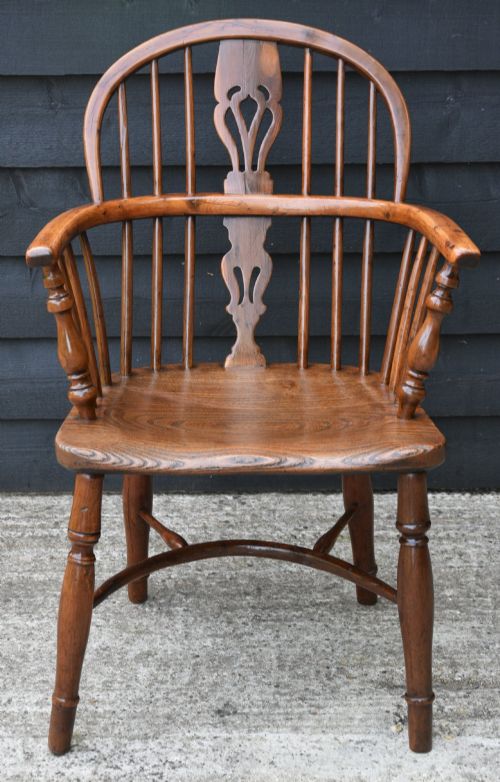

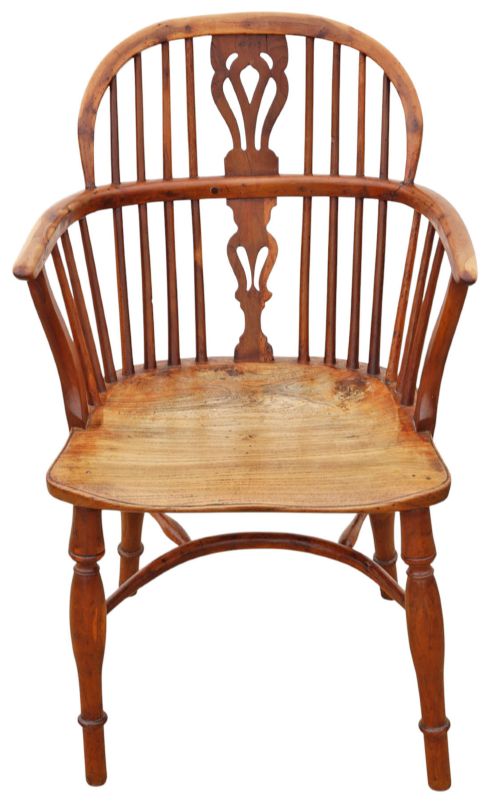
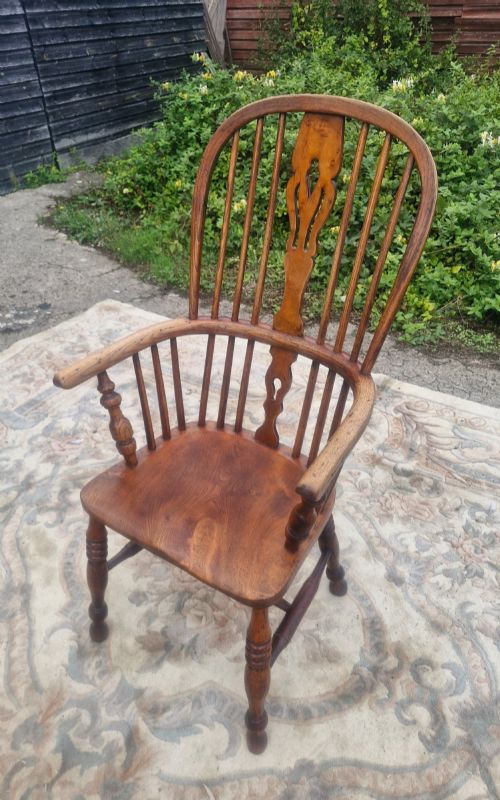


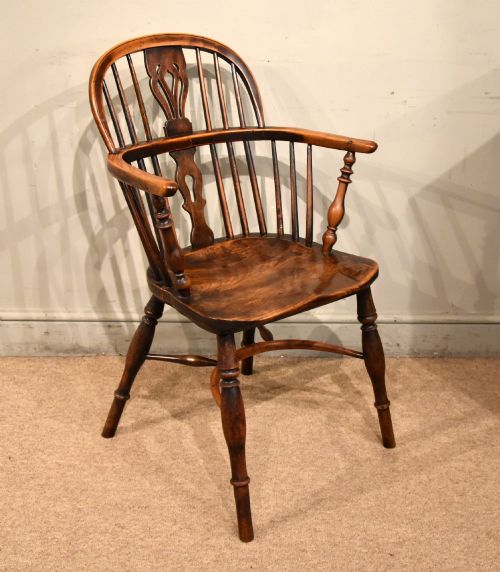
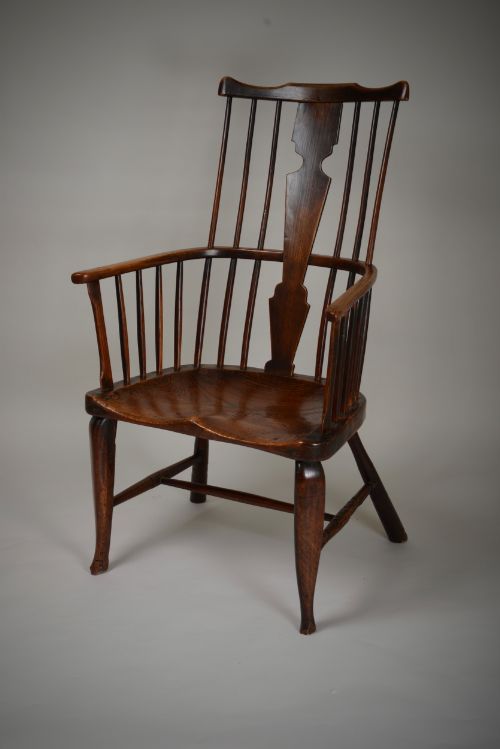
Yew Country Armchair
A yew country armchair brings tactile warmth and vernacular character to a room through its robust timber frame and sculpted seat.
Yew Country Armchair
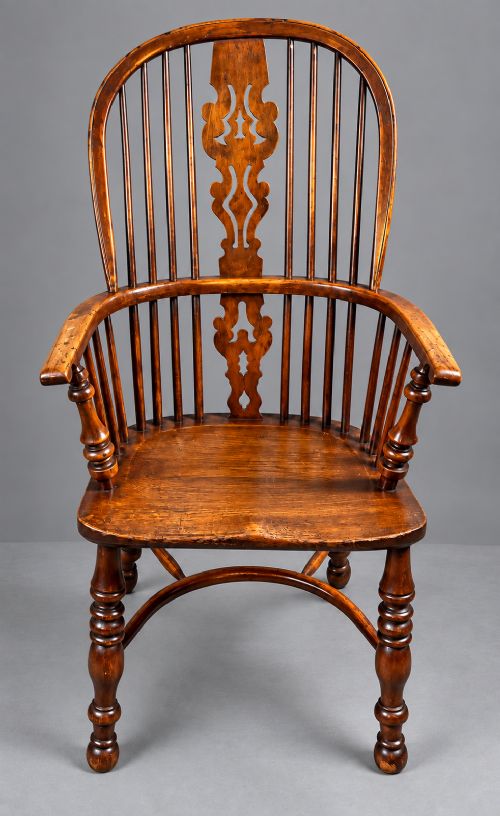
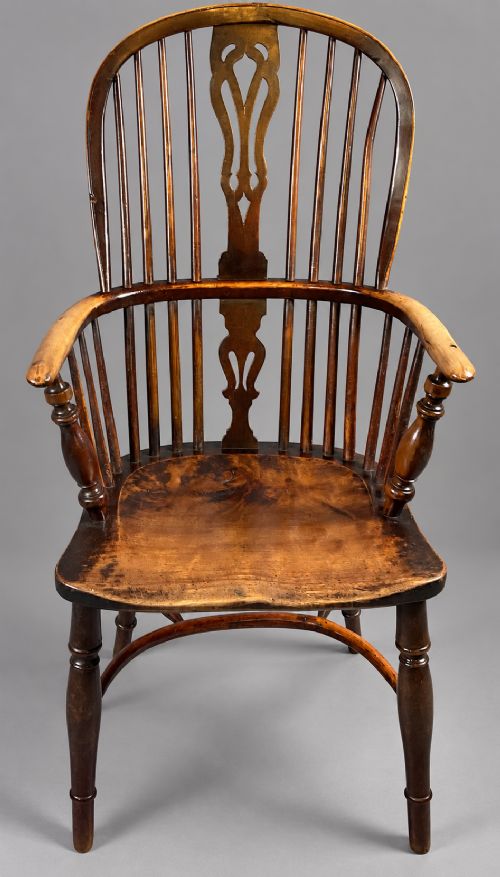
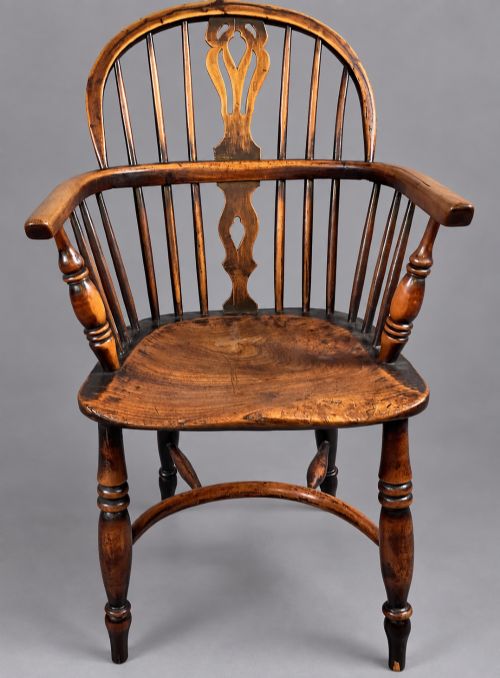
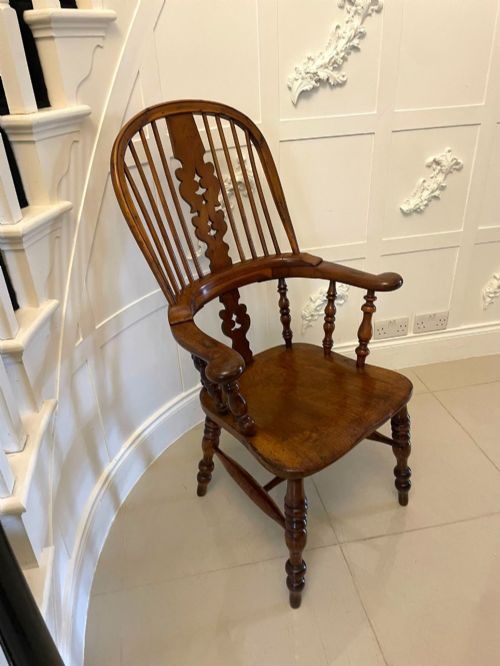
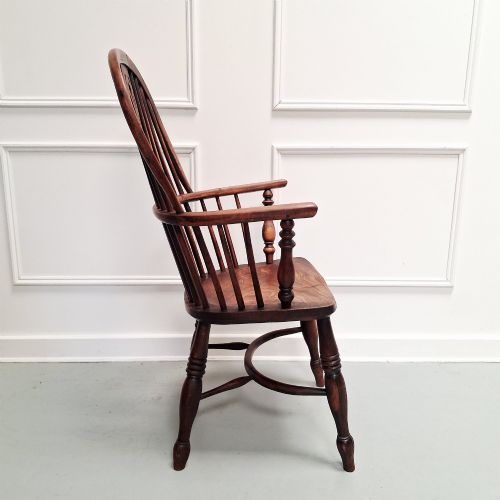
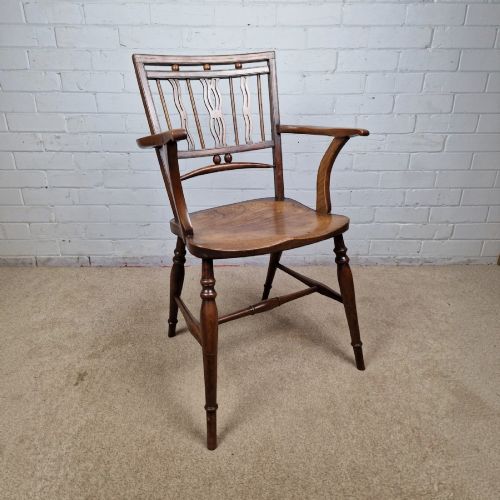
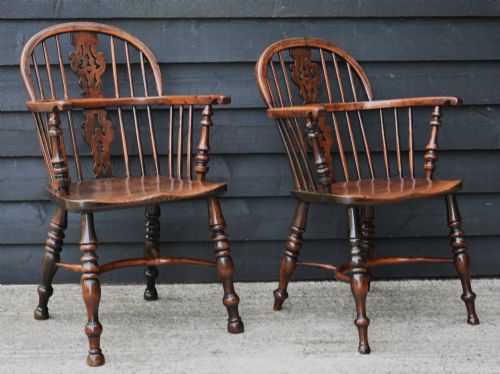
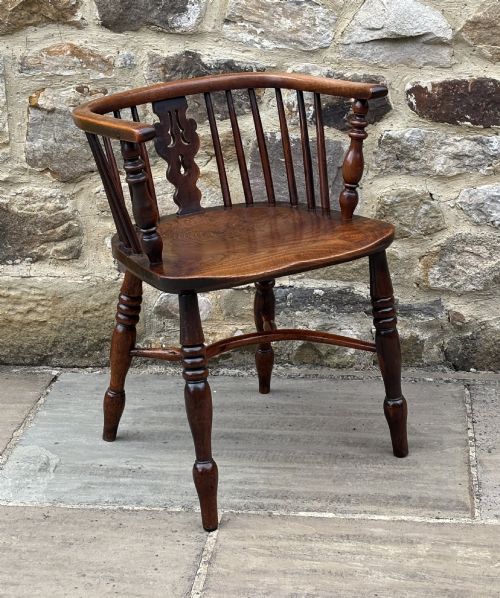
A yew country armchair is a seating form rooted in English provincial and vernacular traditions, most frequently appearing as a Windsor chair. When you search for a yew country armchair, you encounter seating constructed with turned spindles, bentwood hoops, and solid wooden saddles. The versions met most often on this page date from the eighteenth and nineteenth centuries, spanning Georgian and Victorian periods.
These pieces encompass specific regional styles such as Thames Valley, Yorkshire, and Mendlesham variants, alongside comb back, high back, and hoop back designs. Makers utilised local timber traditions, pairing yew with elm, ash, and beech to build sturdy domestic seating. They function as both carver chairs and dining chairs, displaying the practical adaptations developed by provincial joiners.
Materials and construction methods
Construction relies on a combination of different timbers chosen for specific structural properties, predominantly yew for its rich figuring and resilience, paired with elm for solid, anti-splitting seats. Ash and beech provide the flexible strength required for steam-bent hoops and slender spindles, while occasional fruitwood or laburnum appears in regional examples. Joinery employs traditional wedged tenons and wedged through-joints where spindles pass directly through the saddle seat.
The shaping of the seat involves deep adzing to form a comfortable, sculpted depression, while the back components utilise steam-bending techniques to achieve continuous curves in hoops and comb rails. Turnery on the legs and arm supports is executed on a pole lathe, producing distinctive baluster and ring-moulded profiles. Surfaces are finished to preserve the natural grain patterns of the varied woods without heavy veneers.
Listings feature eighteenth and nineteenth-century examples, incorporating periods from Georgian to Victorian alongside specific styles like English provincial and vernacular.
Distinctions in quality
Quality in these chairs rests on the selection of timber and the harmony of the proportions, particularly the figuring in the yew wood and the depth of the elm seat plank. Superior examples display crisp, well-defined turnery on the legs and spindles and balanced overarching hoops that maintain structural integrity without excessive reinforcement. The comfort and ergonomic sweep of the comb or hoop back indicate the maker's skill in shaping rigid materials.
Evidence of workshop origin, such as stamped maker marks or distinct regional characteristics associated with known production centres, elevates a piece within its category. Integration of a crinoline stretcher or elaborate arm scrollwork points to more ambitious provincial craftsmanship. The preservation of original surface patination without aggressive sanding distinguishes well-kept examples.
J Spencer·Gabbitass Worksop·John Brand of Sleaford
The Yew Country Armchair Glossary
- Windsor chair
- A chair built with a solid wooden seat into which the legs and back spindles are direct-tenoned rather than constructed around a separate frame. This technique creates a sturdy, unified structure characteristic of country furniture.
- Hoop back
- A continuous bentwood bow forming the back and arms of a chair in a single sweeping line. This design distributes weight evenly and provides robust lateral support.
- Comb back
- A Windsor chair back featuring a horizontal top rail supported by vertical spindles that resemble the teeth of a comb. It often incorporates raised arm terminals or scroll ends.
- Crinoline stretcher
- A curved underframe joining the legs of a Windsor chair to provide rigidity and bracing. The name derives from its resemblance to the hooped steel petticoats of the nineteenth century.
- Vernacular furniture
- Domestic objects made by local craftspeople using regional materials and traditional techniques without strict adherence to metropolitan academic styles. These pieces reflect local utility and available resources.
Yew Country Armchair: Frequently Asked Questions
What is a yew country armchair?
A yew country armchair is a traditional wooden seat featuring a sculpted solid timber plank for a seat and a stick-back construction. These chairs were produced by provincial joiners using locally sourced woods.
They combine a durable framework of bentwood hoops and turned spindles designed for everyday domestic utility in English homes.
How do you date an antique Windsor chair?
Dating relies on examining the construction methods, tool marks, and timber combinations present in the frame. Eighteenth-century examples often feature heavier undercarriages and distinct regional shaping compared to later Victorian iterations.
Changes in turning styles and the evolution of back designs, such as the transition from high comb backs to hoop backs, also help establish the period.
Where were these chairs made?
These armchairs were manufactured across various English regions, with distinct styles emerging from the Thames Valley, Yorkshire, and Nottinghamshire workshops. Provincial cabinet makers utilised local timber stands.
Towns such as Worksop and Sleaford hosted specific makers who produced recognisable local variations of the vernacular Windsor form.
How should I care for yew wood furniture?
Yew wood furniture benefits from stable indoor humidity and protection from direct sunlight to prevent the timber from drying out or fading. Applying occasional applications of beeswax preserves the natural lustre of the grain.
Avoid placing these chairs near modern heat sources or radiators, which can cause timber shrinkage and loosen the traditional joints.