

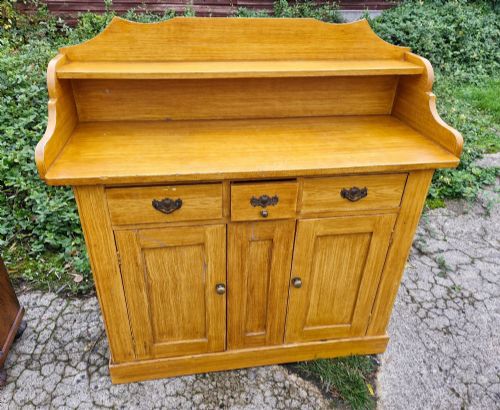

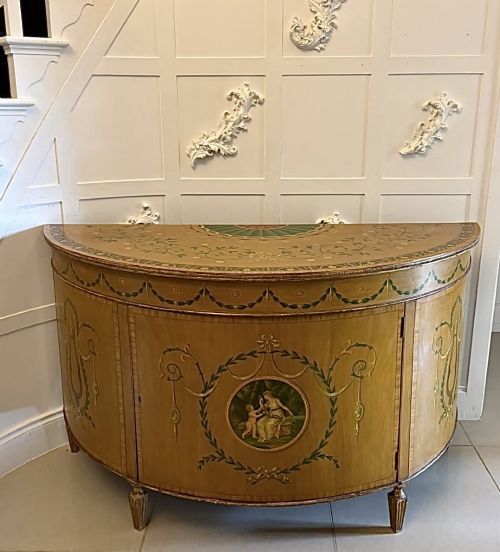
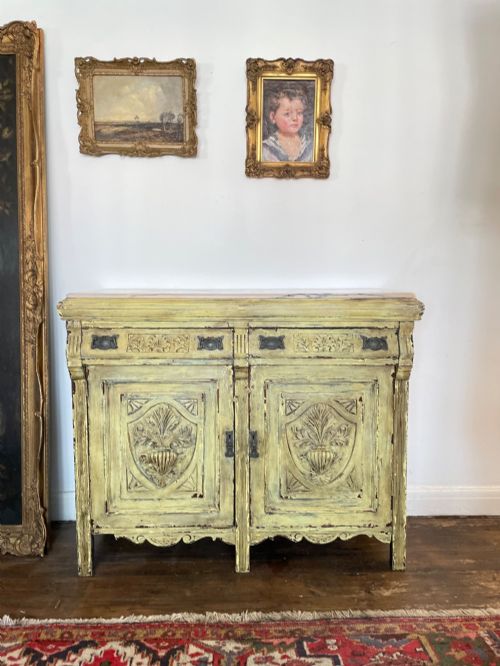
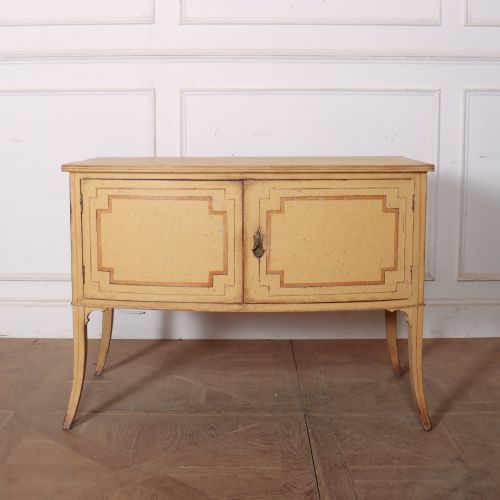
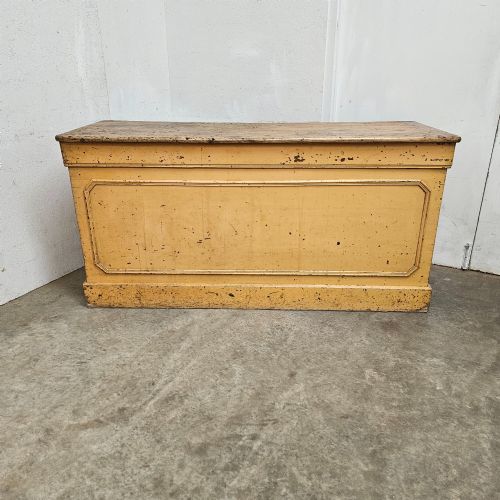
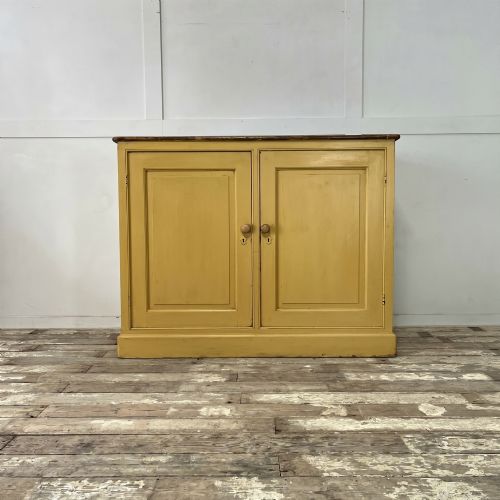



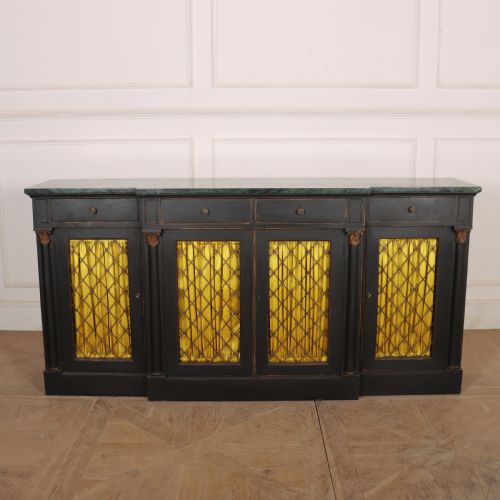
Yellow Sideboard
A yellow sideboard brings warmth and character to a room through centuries of painted woodwork and regional craft.
Yellow Sideboard
A yellow sideboard encompasses painted pine dressers, satinwood cabinets, and country serving tables spanning from the eighteenth century to the Victorian era. Buyers searching for a yellow sideboard typically encounter painted pine pieces featuring original surface colours alongside fine Georgian satinwood examples.
The category draws together vernacular furniture from the English West Country, French provincial workshops, and Italian houses. Forms range from low dresser bases and shop counters to tall housekeeper cupboards and side cabinets.
Makers utilised resilient softwoods and figured timbers, applying layered paint finishes that have weathered into distinct patinas over time. These items served practical storage functions in kitchens, dining rooms, and commercial shops before entering the antique market.
How they were made
Carpenters constructed these pieces primarily from solid pine, timber, and satinwood, frequently employing traditional joinery such as dovetailing for drawers and mortise and tenon frames. Iron and brass hardware, including handles and key escutcheons, secured the doors and compartments.
Surfaces received hand-applied coats of paint over bare wood, sometimes layered across decades to create the original painted finishes seen today. Some refined variants incorporated delicate hand-painted ornamentation directly onto the timber substrate.
Yellow Sideboard Retail Price Guide 2026
Typical asking prices for yellow sideboard among the pieces listed under this phrase on Sellingantiques today, from the lower quarter to the upper quarter. They describe what is for sale here now, not the wider market.
Listings span pine, satinwood, and painted wood across the 18th, 19th, and Victorian centuries.
What varies in quality
The integrity of the original paint surface largely distinguishes vernacular country furniture from standard utilitarian workshop output. Surviving layers of early pigment reveal the authentic age and working history of each piece without excessive later intervention.
Timber selection and structural joinery separate simple regional pine carcasses from sophisticated cabinet work like Georgian satinwood. Proportion, balance, and the retention of original brass or iron hardware further elevate the standing of individual items.
The Yellow Sideboard Glossary
- Dresser base
- The lower section of a kitchen dresser, typically comprising drawers above cupboards, used independently as a sideboard.
- Satinwood
- A hard, yellowish timber from tropical trees prized in high-status furniture for its fine grain and lustrous appearance.
- Original paint
- The initial surface coating applied to a piece of furniture, valued by collectors for its untouched historical character and patina.
- Housekeeper cupboard
- A large tall storage cabinet traditionally used in country houses for linen, provisions, and household stores.
- Breakfront
- A piece of furniture featuring a central section that projects forward from the flanking outer sections.
Yellow Sideboard: Frequently Asked Questions
What rooms suit a yellow sideboard?
These pieces function well in kitchens, dining rooms, and hallways where practical storage meets decorative presence. Their scale allows them to anchor a wall while offering deep drawers and cupboards.
Placing one in a living space provides a surface for lamps and everyday items while introducing historic texture and painted colour to the interior.
How do I care for painted wood?
Maintain painted surfaces by dusting with a soft, dry cloth and avoiding modern chemical cleaning sprays that might soften old paint. Keep the wood away from direct heat sources and strong sunlight to prevent warping and fading.
Wax can be applied sparingly to unpainted timber elements, but original painted finishes generally require minimal intervention beyond gentle cleaning.
Are these pieces from the Victorian era?
The selection includes items spanning the eighteenth century, the Regency period, and the late Victorian era. Regional pieces often reflect vernacular traditions that persisted across multiple decades.
Construction details, timber types, and paint characteristics help distinguish eighteenth-century examples from nineteenth-century country furniture.
What is the difference between a dresser base and a sideboard?
A dresser base originates from the lower half of a kitchen dresser, featuring rows of drawers and cupboards designed for utilitarian storage. Sideboards developed specifically for dining rooms to serve food and store tableware.
Both forms serve similar functions in modern homes, though dresser bases often display heavier pine construction and more rustic proportions.