




Yellow Oriental Rug
A yellow oriental rug brings warmth to a room through saturated mustard, lemon, and golden grounds woven across centuries.
Yellow Oriental Rug
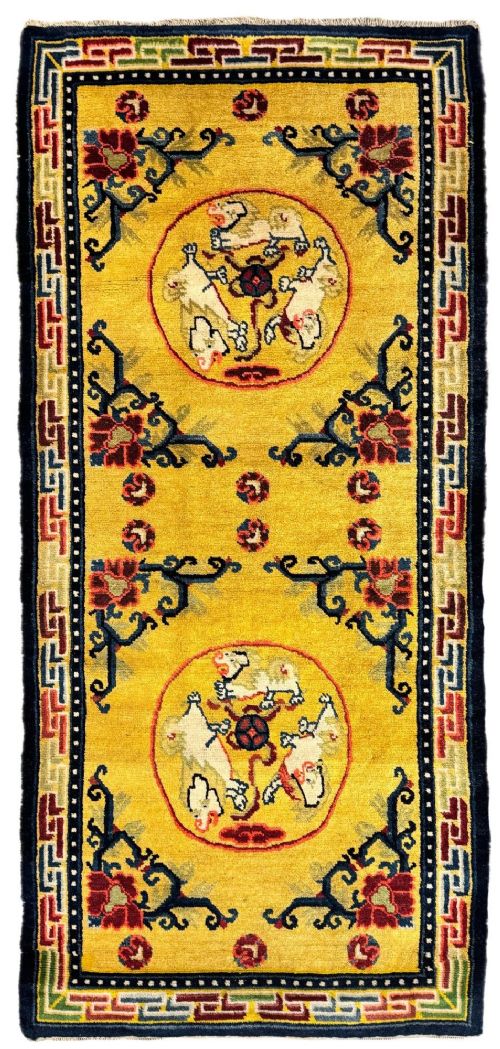
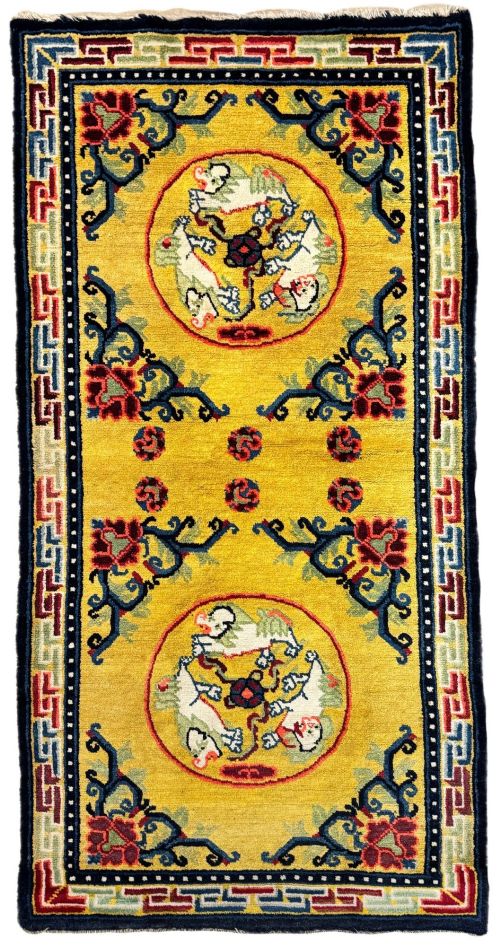
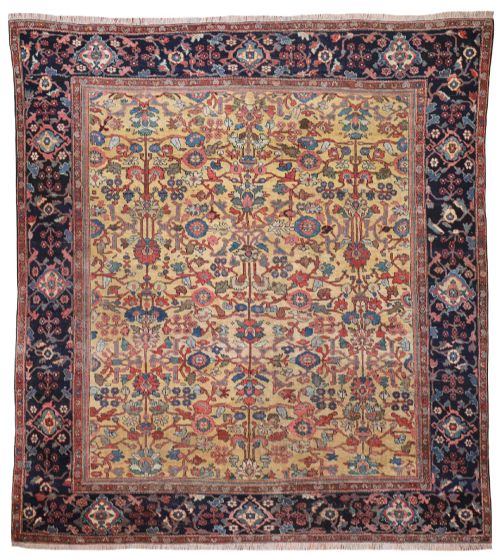
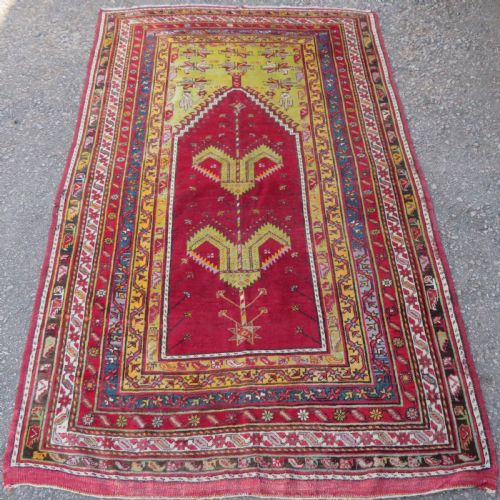
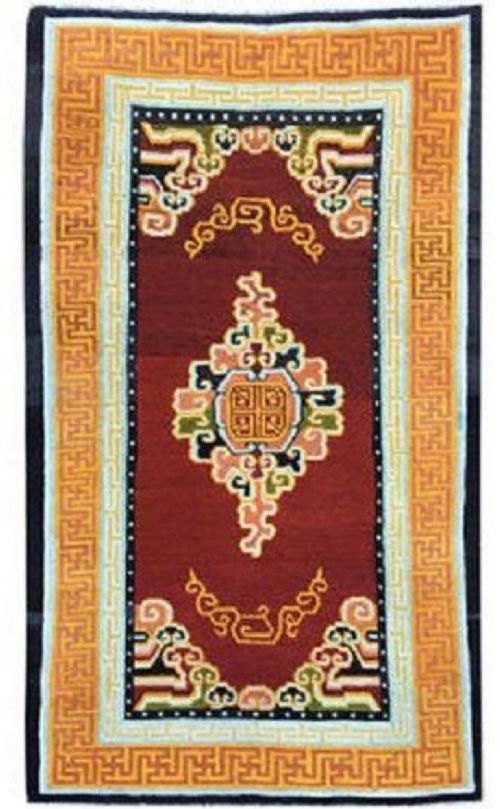
A yellow oriental rug encompasses knotted carpets, flatweaves, and prayer rugs originating from Persian, Turkish, Caucasian, Chinese, and Central Asian workshops. These pieces span from the nineteenth century into the early twentieth century, showing distinct regional designs such as geometric lattices, central medallions, and floral sprays.
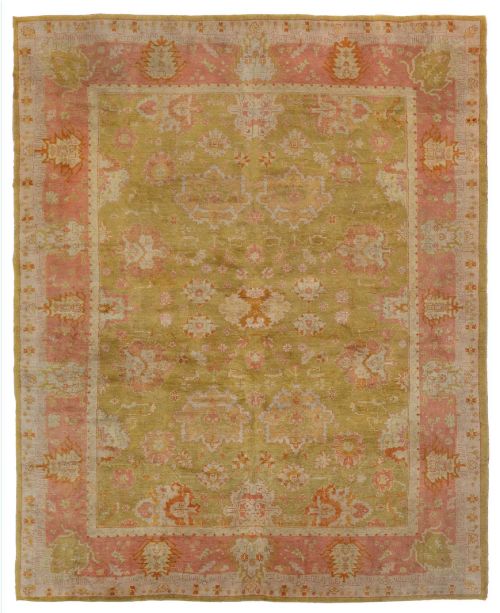
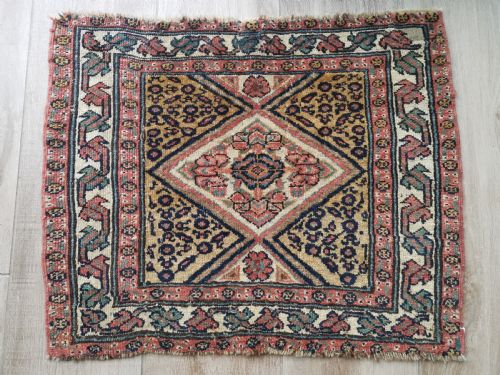
The yellow ground serves as either the dominant field colour or frames the composition within distinct borders. Examples range from expansive room-size carpets woven in Oushak and Farahan to smaller seating mats from Ningxia and Kurdish bagfaces.
Regional variations dictate the tone and texture, from the muted golden fields of western Anatolia to the bright lemon grounds found in Kurdish and Caucasian weaves.
Materials and construction
The structure relies primarily on wool pile hand-knotted onto cotton or wool foundations, alongside occasional silk embroidery found in Uzbek Suzanis. Hand-spun wool provides the tactile density and resilience observed across Caucasian Kazaks and Persian Bidjars.
Natural dye extraction yields the characteristic golden and yellow grounds, reacting over decades to produce mellow, variegated patinas. Weaving techniques vary from precise Persian Senneh knots to coarser Soumak flatweaves and Turkish village knotted piles.
Yellow Oriental Rug Retail Price Guide 2026
Typical asking prices for yellow oriental rug among the pieces listed under this phrase on Sellingantiques today, from the lower quarter to the upper quarter. They describe what is for sale here now, not the wider market.
Materials recorded across current inventory include wool, cotton, silk, and hand-spun wool configured in pile carpets, flatweaves, and prayer mats.
Assessing quality in yellow oriental rugs
Knot density and the stability of the foundation dictate structural longevity, separating robust room-size carpets from fragile fragments or heavily distressed remnants. Finer knots permit intricate curves in floral lattices, whereas coarser structures suit bold, geometric Caucasian designs.
The depth and absorption of the yellow dye define visual success, as uneven fading or harsh chemical treatments diminish the harmony of the field. Surviving pile height relative to the foundation structure indicates the amount of historical wear sustained.
The Yellow Oriental Rug Glossary
- Ground
- The background colour of the main field behind the central motifs and medallions.
- Prayer rug
- A small rug featuring a mihrab or niche design historically oriented toward Mecca during daily prayers.
- Soumak
- A flatweave technique using intricate wrapping threads to create a textured, durable surface without a cut pile.
- Bagface
- The decorated front panel of a nomadic storage sack, preserved and mounted as a small collectible rug.
- Medallion
- A symmetrical central ornament anchoring the design geometry of the field.
Yellow Oriental Rug: Frequently Asked Questions
How do I clean a yellow oriental rug?
Surface dirt responds to gentle, regular suction from a vacuum without a beating brush bar. Professional textile conservators handle deeper cleaning to protect natural dyes from running.
Water exposure requires immediate blotting rather than rubbing to prevent fibre distortion and colour transfer.
Where should I place these rugs?
High-traffic hallways accommodate durable runners and flatweaves, while low-impact sitting rooms suit softer pile carpets. Silk or delicate prayer rugs function best as wall hangings or in light-traffic zones to prevent excessive friction.
Direct, prolonged sunlight alters natural golden and yellow dyes over time, making shaded placement advisable.
How do I distinguish regional styles?
Caucasian pieces display sharp geometry, bold primary colours, and hooked motifs. Persian weaves utilise intricate floral curves, while Anatolian examples lean toward stylized medallions and rich prayer arches.
Palette shifts also help isolate origins, such as the soft golden fields of Oushak compared to the bright lemon tones of Kurdish territory.
What does pile wear indicate?
Even thinning across the surface reveals natural age and consistent domestic use over generations. Localised bald spots or exposed foundation threads point to point-load friction or historical insect damage.
Retaining partial pile depth preserves the saturated appearance of the yellow ground.