





Yellow Marble Urns
Yellow marble urns are striking decorative objects that bring warmth and classical elegance to any mantelpiece or side table.
Yellow Marble Urns
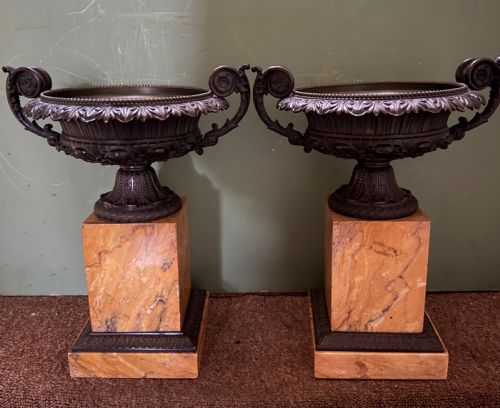
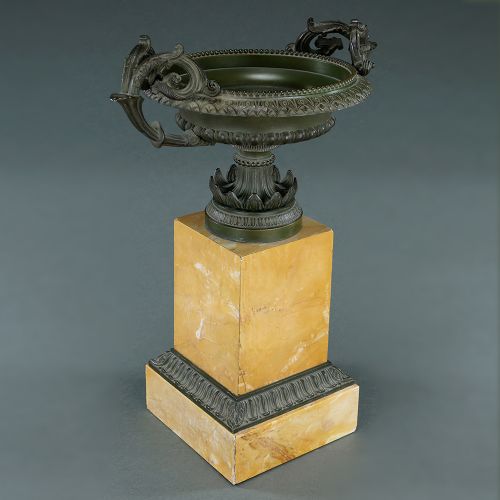
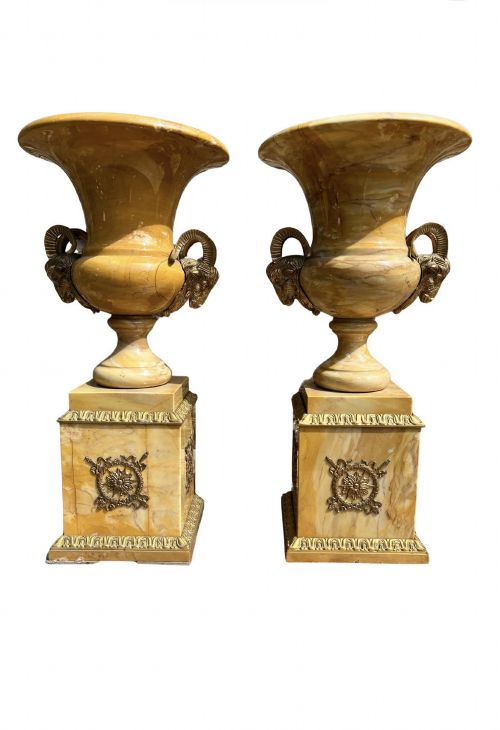
Yellow marble urns and related decorative vessels present rich golden tones derived primarily from Sienna marble. When exploring yellow marble urns, buyers frequently encounter pieces originating from the nineteenth century, often reflecting Neoclassical or French Empire aesthetics.
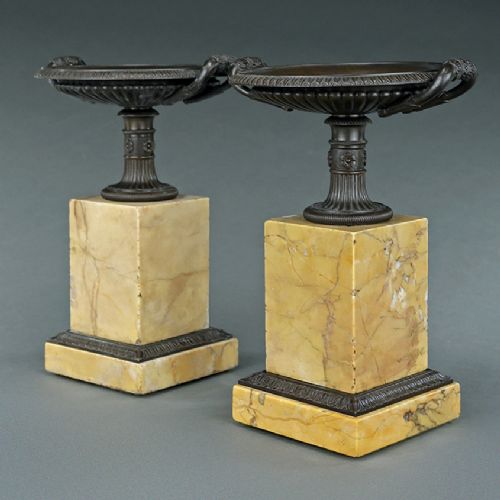
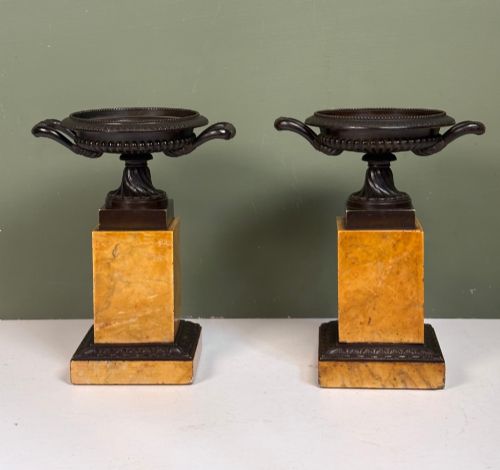
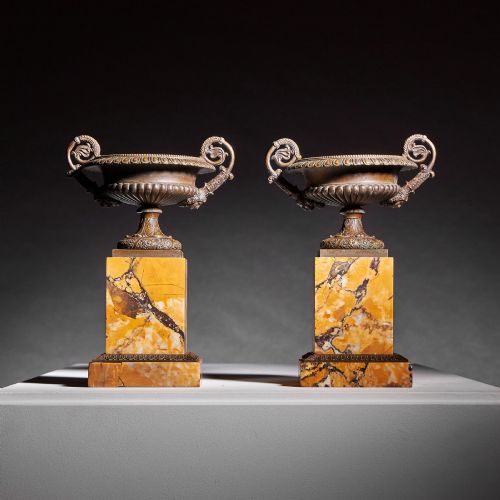
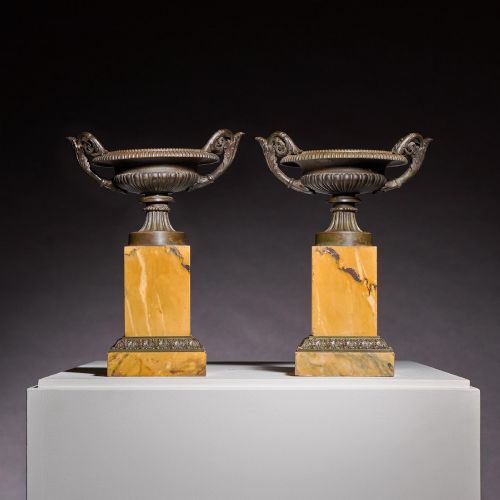
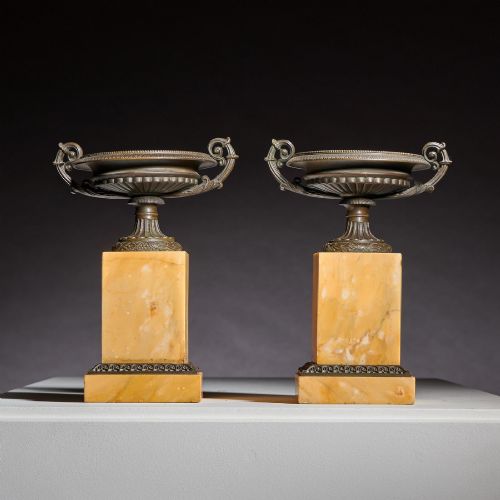
The selection encompasses paired decorative urns, tazzas, and mounted vessels, frequently combined with contrasting materials like bronze and ormolu. These items serve as formal centrepieces, carrying the heavy architectural influence of Grand Tour souvenirs and Regency design.
Materials and Construction
Makers utilised dense Sienna marble for the main body and bases of these objects, turning the stone on lathes to achieve smooth, symmetrical profiles. This marble is characterised by its deep yellow ground and dark veining.
Craftsmen mounted cast bronze, brass, or gilt ormolu components onto the stone surfaces, securing handles, collars, and plinths with threaded pins. The contrast between polished yellow stone and dark or gilt metal defines the physical structure of these pieces.
Yellow Marble Urns Retail Price Guide 2026
Typical asking prices for yellow marble urns among the pieces listed under this phrase on Sellingantiques today, from the lower quarter to the upper quarter. They describe what is for sale here now, not the wider market.
Listings featuring yellow marble rely heavily on nineteenth-century pieces, incorporating French Empire and Neoclassical styles.
Assessing Quality
Quality rests in the crispness of the bronze or ormolu mounts and the depth of colour in the marble itself. Superior examples display finely chased metalwork with sharp details, rather than soft or cast-pitted surfaces.
The choice and figuring of the Sienna marble dictate visual impact, with deeply figured, uninterrupted stone sections commanding greater attention. Proportion and the precision of the turned joints further separate standard production items from masterworks.
The Yellow Marble Urns Glossary
- Sienna marble
- A yellow quarried limestone from Italy known for its warm ochre ground and bold, dark purple-grey veining. It became immensely popular during the eighteenth and nineteenth centuries for decorative arts.
- Ormolu
- Gilding technique using finely ground gold-mercury amalgam applied to bronze. It provides a rich, deep lustre on metal mounts associated with French furniture and decorative objects.
- Tazza
- A shallow bowl or vase raised on a slender stem and foot. These classical vessel forms were frequently produced in pairs for display on tables and mantelpieces.
- Neoclassical
- A style spanning the late eighteenth and nineteenth centuries that drew inspiration from the art and architecture of classical antiquity. It prioritises symmetry, proportion, and restrained ornamentation.
- Grand Tour
- A traditional trip through Europe undertaken by upper-class young men in the eighteenth and nineteenth centuries. Travellers frequently returned with classical antiquities and marble or bronze souvenirs.
Yellow Marble Urns: Frequently Asked Questions
Where should I display yellow marble urns?
These decorative objects sit well on sturdy surfaces like mantelpieces, console tables, or pedestals where their weight and colour can be appreciated.
Keep them away from direct heat sources and moisture to protect both the polished stone and any delicate metal mounts.
How do I clean yellow marble?
Dust the surface regularly with a soft, dry cloth to prevent grime build-up in the natural crevices of the stone and metal.
Avoid using acidic cleaners, vinegar, or abrasive sponges, as these substances will etch and dull the polished marble finish.
Are these urns waterproof?
Most antique stone urns, tazzas, and garnitures were created for purely decorative purposes rather than practical use with water and fresh flowers.
Placing water directly inside unlined stone vessels can cause staining or weaken historical adhesives used in their construction.
How can I tell the period of the marble?
Nineteenth-century examples often exhibit hand-finished turning marks and rich, variegated Sienna marble patterns paired with heavy bronze or ormolu mounts.
Examining the underside, mounting pins, and tool marks helps differentiate period manufacturing techniques from later reproductions.