






Yellow Gold Gypsy Band
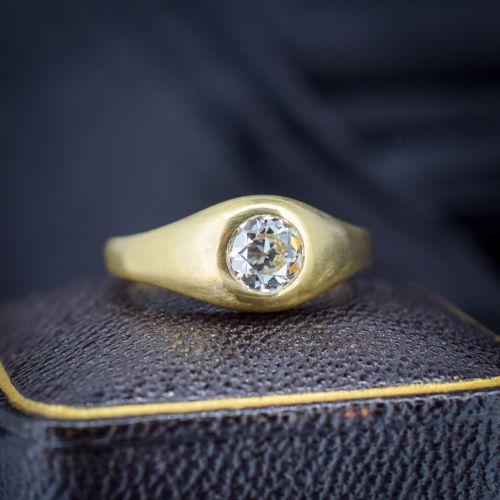
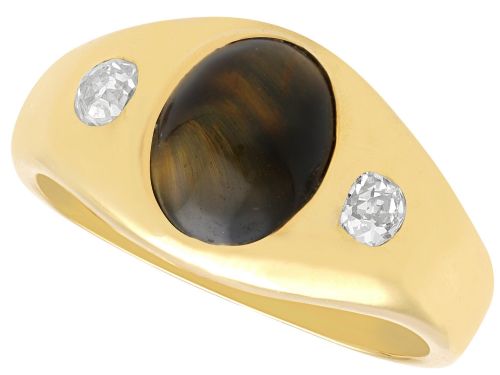
A yellow gold gypsy band sits flush against the finger, housing its stones in smooth, tapered shoulders typical of late nineteenth and early twentieth century design.
Yellow Gold Gypsy Band
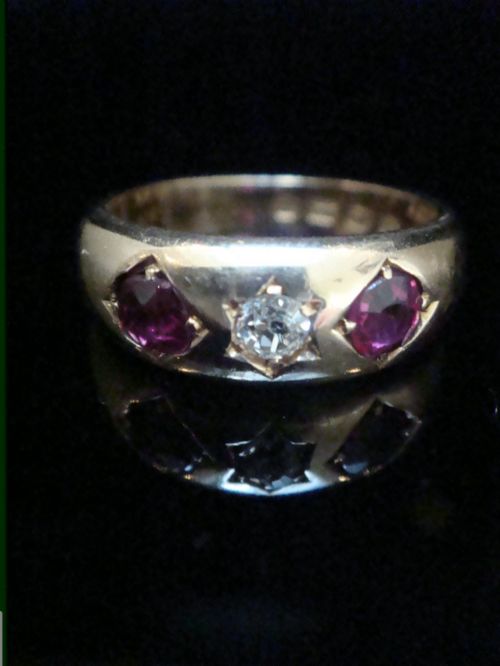
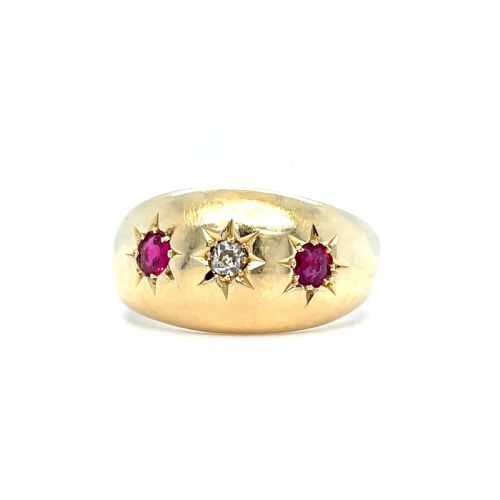
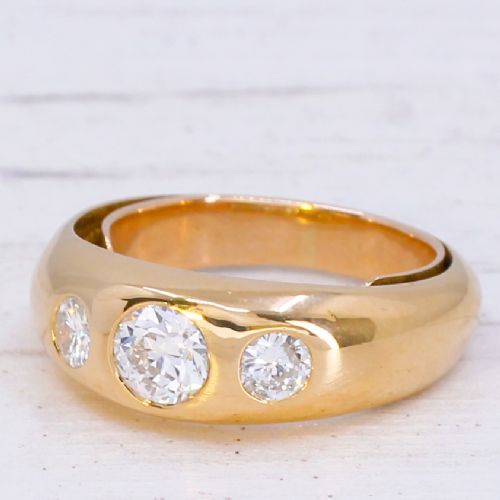
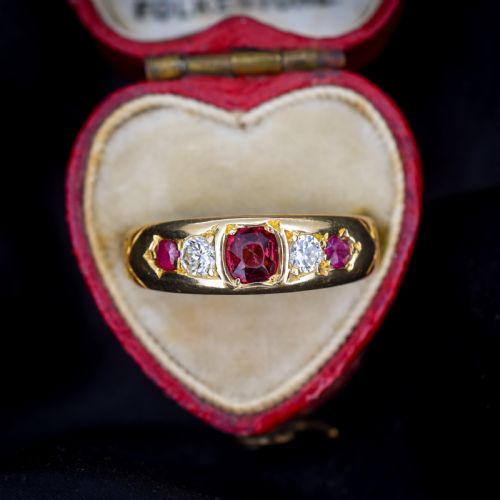
When you search for a yellow gold gypsy band, you encounter rings defined by a solid band that tapers smoothly towards the shoulders, with gemstones set flush into the metal rather than held in raised claws. This page displays examples spanning the Victorian, Edwardian, and mid-century periods, alongside pieces dating to around nineteen hundred.
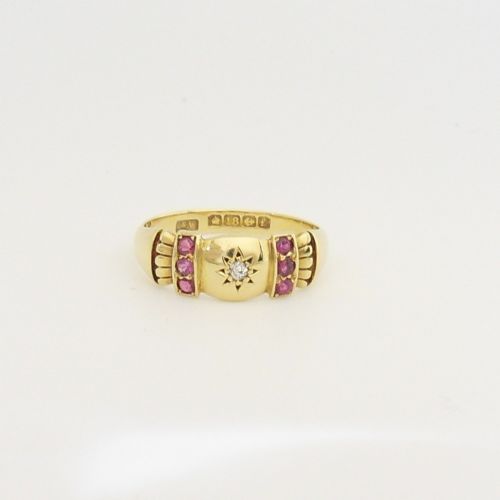
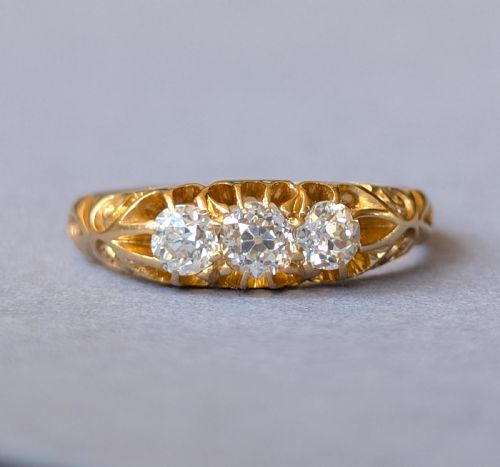
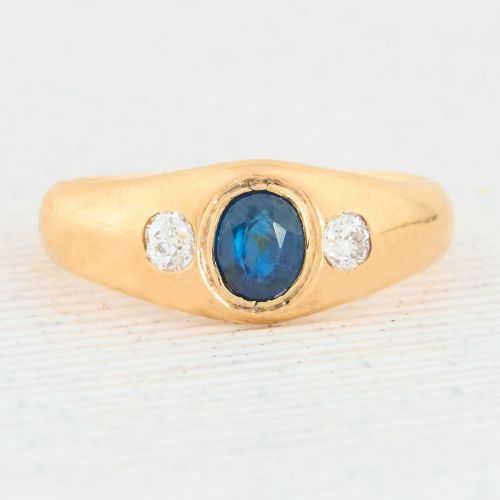
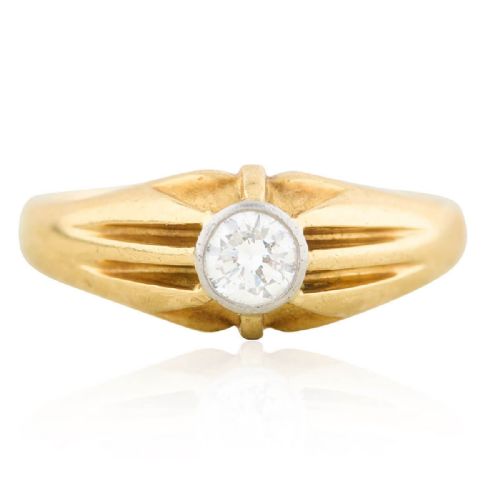
The form prioritises daily wear by embedding diamonds, rubies, sapphires, and emeralds directly into the heavy gold hoop. Most pieces feature either a single stone, a traditional trilogy, or starburst and celestial settings where delicate engravings radiate outward from the gem.
Originating predominantly from British workshops, these rings utilise higher purities of eighteen carat gold alongside nine carat alternatives. The design protects the girdle of the stone within the metal mass, creating a smooth profile that catches neither fabric nor skin.
Materials and Construction
Goldsmiths constructed these bands by casting or forging heavy sections of yellow gold, shaping the metal to form an integrated mounting where the stone sits level with the surface. The gemstone is placed into a drilled recess and the surrounding gold is rubbed or burnished over the edge to hold it firmly in place.
The stones selected for these settings are predominantly old cut diamonds, alongside rubies and sapphires, shaped by hand with facets that catch candlelight and low illumination. Hallmark stamps often appear on the inner shank, recording the assay office, such as Birmingham or Chester, and the gold purity.
Yellow Gold Gypsy Band Retail Price Guide 2026
Typical asking prices for yellow gold gypsy band among the pieces listed under this phrase on Sellingantiques today, from the lower quarter to the upper quarter. They describe what is for sale here now, not the wider market.
Listings span the Victorian and Edwardian eras, alongside mid-century examples, utilising both nine carat and eighteen carat yellow gold.
Distinctions in Quality
Quality rests upon the weight and thickness of the gold shank remaining intact after decades of wear, as thinner bands lose their structural integrity near the back. Superior examples display crisp hand-engraved starbursts and precise flush-setting where the metal meets the stone without gaps.
The proportion and brilliance of the old cut diamonds or natural coloured gemstones elevate certain pieces above standard production. Clear, legible hallmarks and maker marks preserved inside the band provide historical context that distinguishes finer workshops.
The Yellow Gold Gypsy Band Glossary
- Gypsy setting
- A mounting style where the gemstone is set flush into the surface of a thick band of metal. The surrounding gold is burnished down to secure the girdle.
- Old cut
- A diamond facet style hand-polished before the standardisation of modern brilliant cuts, typically featuring a smaller table and higher crown.
- Trilogy ring
- A ring featuring three stones set side by side across the finger, often representing the past, present, and future.
- Starburst
- An engraved pattern of radiating lines surrounding a flush-set gemstone, designed to mimic the twinkling rays of a star.
- Belcher mounting
- A specific style of rounded ring setting where the prongs or shoulders sweep upward to cradle the stone.
Yellow Gold Gypsy Band: Frequently Asked Questions
What is a gypsy ring?
A gypsy ring is a band of gold with a thick, tapered profile that embeds its gemstones flush into the metal surface.
This technique protects the girdle of the stone and creates a smooth exterior profile designed for everyday wear.
How do I date a yellow gold gypsy band?
Dating relies on internal hallmarks stamped inside the shank, indicating the assay office and year of production.
Stylistic details such as starburst engravings, stone cuts, and the specific carat of the yellow gold also help assign pieces to the Victorian or Edwardian eras.
Are these rings suitable for daily wear?
The flush setting protects the stones from knocks, making these bands robust enough for regular use.
However, buyers should check the thickness of the gold band at the back to ensure the metal has not thinned over generations.
What stones are typically found in these bands?
Old cut diamonds are the most frequent choice, often accompanied by natural rubies, sapphires, or emeralds.
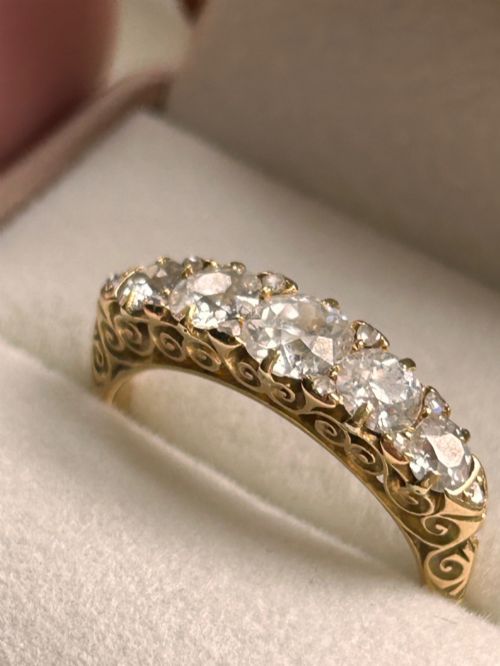
These gems are usually arranged as single solitaires, three-stone groups, or multi-stone rows.