






Edwardian Gold Gypsy Ring
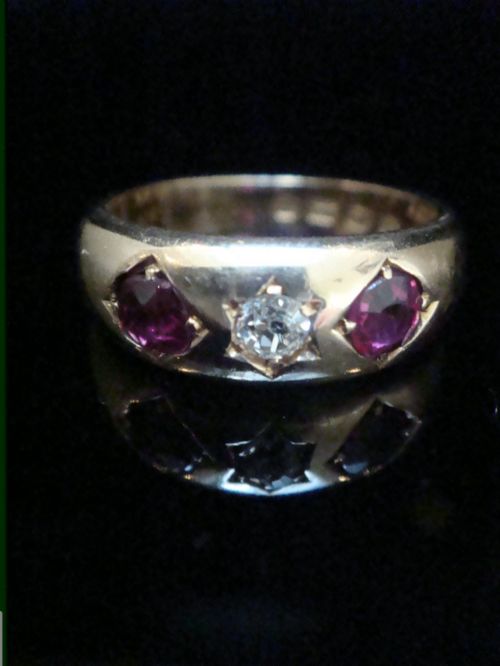
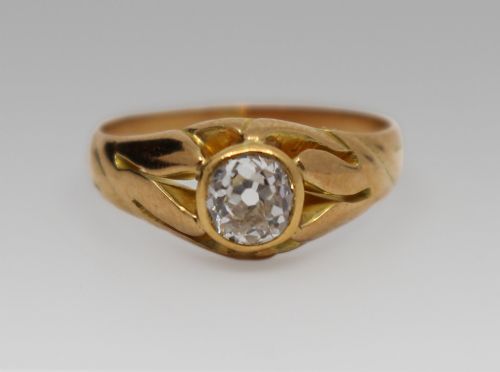
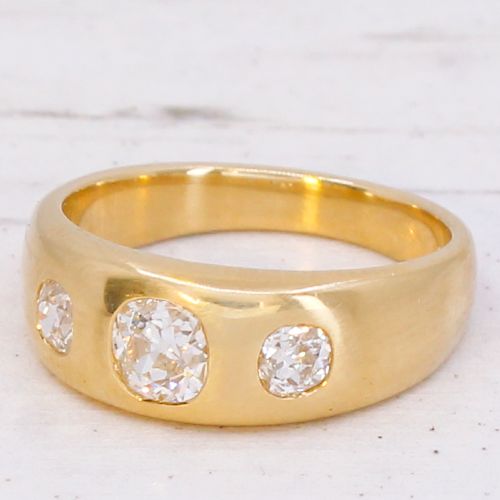
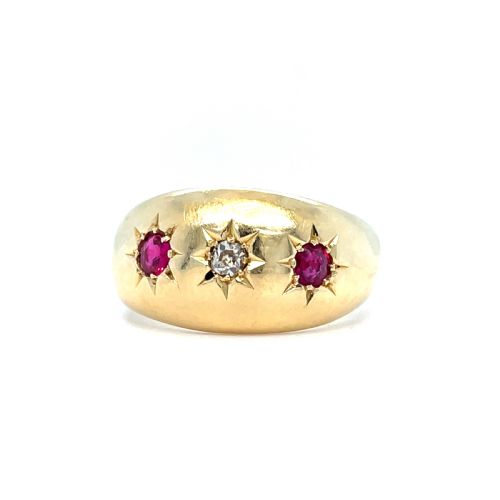
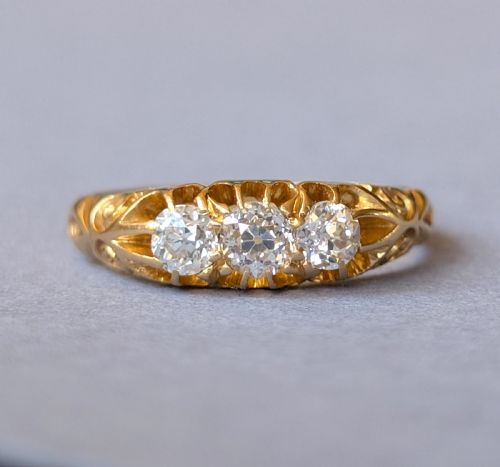
An edwardian gold gypsy ring brings together flush settings and old cut stones for a low profile that catches the light cleanly.
Edwardian Gold Gypsy Ring
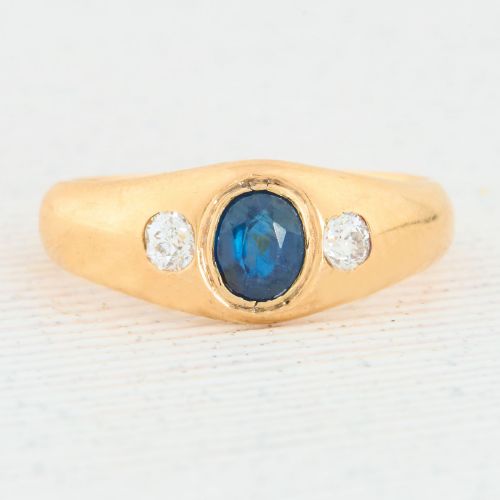
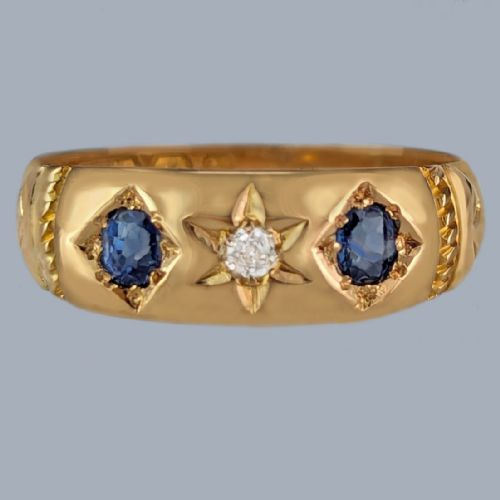
An edwardian gold gypsy ring sits flush against the finger with stones set directly into the heavy tapered band rather than raised in traditional claws. This flush profile protects the gems during daily wear while maintaining a smooth, continuous silhouette around the hand.
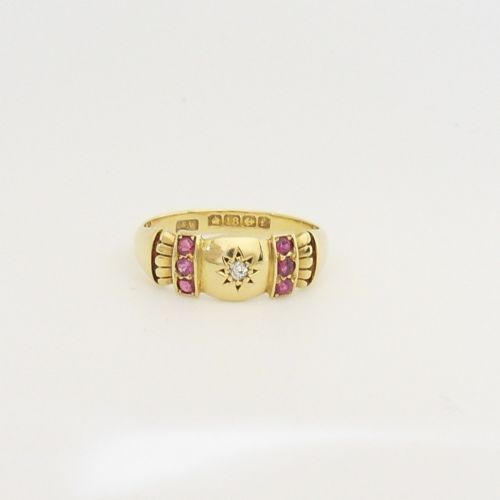
Most examples on this page date from the Edwardian period and the late Victorian era, though earlier nineteenth century and mid twentieth century pieces also appear. These rings often feature starburst engravings around the flush-set stones, which amplify the visual presence of diamonds, rubies, and sapphires.
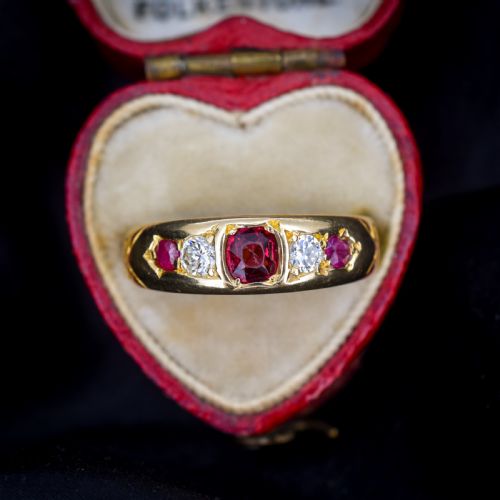
The gold bands range from traditional yellow gold to rose gold and heavier eighteen carat or nine carat alloys. Stones are arranged singly, in traditional three stone trilogies, or across multi stone starburst bands.
Materials and Construction
Goldsmiths constructed these bands from eighteen carat and nine carat yellow and rose gold, forming tapered hoops with thickened shoulders designed to securely house flush-mounted gems. The metal was hand finished and often engraved with celestial starburst patterns around the stone seats.
Stones including old cut diamonds, rubies, and sapphires were inserted directly into tapered recesses within the gold band and secured by burnishing the surrounding metal tightly over the girdle of each gem.
Listings feature periods spanning from the Victorian era and Edwardian decades through to mid-century years.
Quality and Craftsmanship
Quality in these rings rests on the weight of the gold band and the precision of the flush setting. Thicker eighteen carat gold shanks retain their structural integrity better over generations of wear than thinner nine carat counterparts.
The crispness of the starburst hand engraving and the symmetry of the stone placement distinguish finer workshops from standard production. Well cut old diamonds and deeply saturated rubies or sapphires elevate the overall execution of the piece.
The Edwardian Gold Gypsy Ring Glossary
- Gypsy ring
- A ring style featuring a heavy band that tapers toward the back and incorporates flush-set stones that sit level with the surface of the metal. This secure setting method gained immense popularity during the late nineteenth and early twentieth centuries.
- Old cut diamond
- A hand-faceted diamond cut before modern machine precision, typically displaying a smaller table, higher crown, and open culet. These stones possess a distinctive softer candlelit sparkle.
- Star set
- A gemstone setting style surrounded by hand-engraved starburst lines radiating outward into the metal. The engraved rays enhance the perceived size and brilliance of the flush-set stone.
- Flush set
- A technique where a gemstone is inserted directly into a drilled hole in the metal and held securely by pushing the surrounding gold over the edge. It leaves a smooth, snag-free surface.
- Trilogy ring
- A ring featuring three stones set side by side in a row, often representing the past, present, and future. In gypsy settings, these three gems sit flush within the tapered band.
Edwardian Gold Gypsy Ring: Frequently Asked Questions
What is an edwardian gold gypsy ring?
An edwardian gold gypsy ring is a tapered band made of gold with flush-set diamonds, rubies, or sapphires that sit level with the metal surface. These rings were designed for durability and comfort while offering a sleek aesthetic.
The style became fashionable in the late Victorian era and remained popular through the Edwardian period, often incorporating starburst engravings around the stones.
How do I tell an Edwardian gypsy ring from a Victorian one?
Distinguishing between these eras involves looking at the specific hallmarks, gold alloys, and stylistic nuances present in the piece. Victorian examples often feature heavier nine carat or eighteen carat gold with robust proportions.
Edwardian pieces frequently display lighter, more refined floral or celestial starburst motifs alongside traditional Birmingham, Chester, or London assay office hallmarks.
Are these rings suitable for daily wear?
These rings were originally constructed for everyday use, and their flush settings offer excellent protection for the stones. The smooth profile means they do not catch on clothing or fabric.
However, the thickness of the gold band varies across different pieces, so verifying the overall structural integrity of the shank is sensible for continuous daily use.
What stones are typically found in these rings?
Diamonds are the most frequent choice, particularly old cut stones with open culets and hand-facetted symmetry. Rubies and sapphires also appear regularly, either as single stones or paired with diamonds in multi stone arrangements.
Some pieces combine these gems into starburst or trilogy layouts across eighteen carat yellow or rose gold bands.