


Yellow Gold Cluster Pendant
A yellow gold cluster pendant brings together central gems and surrounding stones in gold settings, offering enduring appeal for daily wear.
Yellow Gold Cluster Pendant
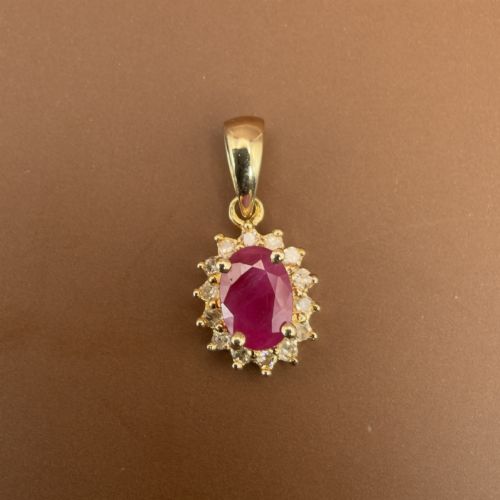
A yellow gold cluster pendant groups a central gemstone encircled by smaller stones, creating a concentrated focal point on a necklace. You will frequently encounter mid-twentieth century and Victorian examples featuring traditional arrangements of coloured stones and diamonds.
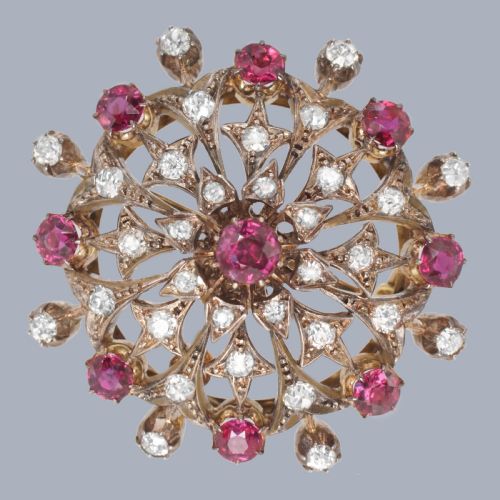
These pieces often double as brooches, showing versatility in how they were worn across different decades. The forms range from symmetrical starbursts and ovals to floral configurations set in gold.
How They Were Made
Maker's workshops utilised various purities of gold, predominantly nine-carat and eighteen-carat, alongside lower and higher karats to mount the stones securely. Stones including diamonds, rubies, garnets, sapphires, peridots, opals, and seed pearls are arranged closely to form the characteristic cluster shape.
Techniques combined prong and cluster settings with engraved details on split rings, chains, and brooch backs. Metalwork ranges from delicate wirework in Edwardian pieces to heavier castings from the mid-twentieth century.
Some Victorian pieces secretly serve double duty as brooches, ready to abandon the chain at a moment's notice.
What Varies in Quality
The choice and match of central stones against the surrounding gems determine the visual harmony of a cluster pendant. Well-matched colour saturation in rubies, garnets, sapphires, or emeralds elevates the overall impact.
The weight of the gold and the precision of the stone setting distinguish standard production from heavier, more substantial examples. Finer work exhibits secure claw or cluster arrangements that protect the girdle of each stone while minimising visible metal.
Hirsch and Oppenheimer
The Yellow Gold Cluster Pendant Glossary
- Cluster pendant
- A necklace attachment featuring a central gemstone framed by a ring of smaller accent stones. This arrangement maximises visual impact by concentrating light across multiple facets.
- Seed pearl
- A very small, naturally occurring or cultured pearl often used in Victorian and Edwardian jewellery. They provide delicate borders in floral and star-shaped clusters.
- Cabochon
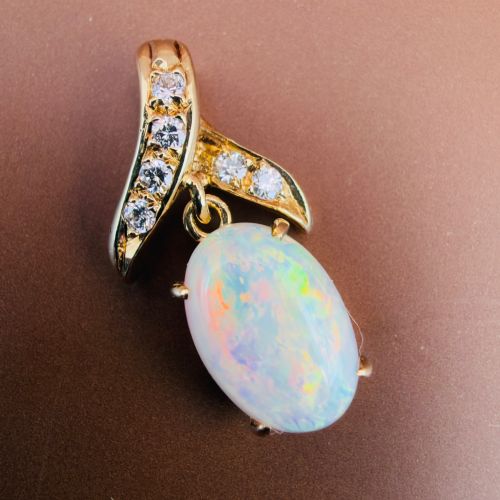
- A gemstone shaped and polished with a smooth, convex surface rather than faceted. This cut suits opaque or translucent stones like opal and garnet.
- Brooch pendant
- A dual-purpose piece of jewellery fitted with both a loop for a chain and a pin fastening on the reverse. It allows the wearer to pin it to clothing or suspend it from a neckchain.
Yellow Gold Cluster Pendant: Frequently Asked Questions
How do I date a yellow gold cluster pendant?
Dating relies on stylistic clues such as the cut of the stones, the purity marks on the gold, and the method of construction. Victorian and Edwardian pieces often display intricate wirework or convert easily to brooches, whereas mid-century examples lean towards heavier cast settings.
Examining the reverse of the pendant reveals mounting techniques that shifted from hand-finished closed backs in the nineteenth century to open-back settings in later decades.
Are these pendants suitable for everyday wear?
Many yellow gold cluster pendants suit daily wear, provided the gemstone hardness and the security of the settings match regular use. Harder stones like diamonds and sapphires tolerate daily rotation well, while softer materials require more care.
Checking the claws periodically with a loupe ensures the stones remain firmly anchored in their yellow gold mountings over time.
Can I wear a pendant brooch as a necklace?
Pendant brooches feature an integrated loop or concealed bail alongside the pin mechanism, allowing them to hang from a chain. This dual functionality was common in the Victorian and Edwardian periods.
When hung from a neckchain, the pin mechanism on the reverse rests against clothing, so matching the pendant weight to an appropriate chain is essential.
What stones are typically found in these clusters?
Diamonds and rubies frequently form the focal points and borders of these clusters, often accompanied by sapphires, garnets, emeralds, and opals. Seed pearls also appear regularly as decorative frames.
These gems reflect the popular palette of the nineteenth and twentieth centuries, particularly in Edwardian and mid-century designs.