


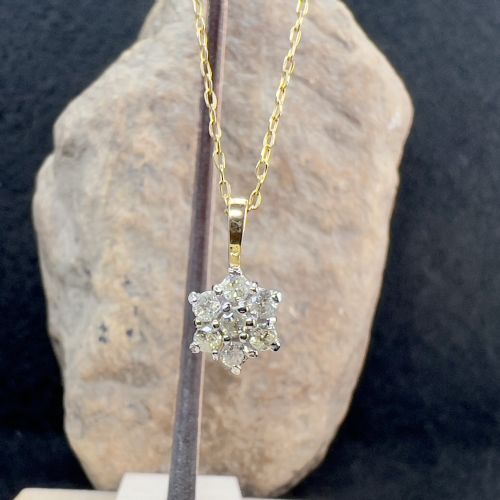


Gold Floral Cluster Necklace
A gold floral cluster necklace brings together precious metals and clustered gemstones in wearable botanical forms.
Gold Floral Cluster Necklace
A gold floral cluster necklace presents a central grouping of stones set within a pendant or secured by a cluster clasp, forming a distinct botanical arrangement. These pieces span periods from the Victorian era through to the nineteen-fifties and nineteen-sixties, reflecting changing tastes in cluster design.
The materials recorded in these pieces include yellow gold, rose gold, silver, and platinum alongside diamonds, rubies, garnets, turquoise, pearls, and sapphires. Forms range from single pendants on chains to jewellery suites and necklaces with integrated floral clasps.
Victorian and Edwardian examples sit alongside mid-century and nineteen-sixties items, showing enduring favour for floral motifs across multiple decades. Buyers encounter both delicate seed pearl blossoms and bolder diamond or coloured gemstone clusters.
Materials and construction
Metals such as nine-carat and eighteen-carat gold provide the primary structure for chains, settings, and clasps, often paired with silver for stone mounts in earlier periods. Goldsmiths employed traditional techniques to mount diamonds, rubies, garnets, and turquoise securely within tight cluster configurations.
Gemstones including old cut diamonds, rose cut diamonds, seed pearls, and garnets are arranged closely to mimic natural petals and floral centres. Jewellers balanced durability and delicacy, utilising claw settings, bezel settings, and closed backs where appropriate for the period.
Victorian jewellers occasionally used silver tops on gold mounts so diamonds would flash brighter against a dark background.
Assessing quality and execution
Quality rests upon the harmony of the floral composition, the matching and cut of the gemstones, and the crispness of the metalwork. Finer examples display balanced stone proportions and secure, refined settings that enhance the naturalistic flower motif without heavy distraction.
The selection of materials marks a clear distinction across the range, from nine-carat gold and garnet combinations to higher carat gold paired with well-matched diamonds and rubies. Superior pieces demonstrate careful hand assembly and stone selection that retain their brilliance and structural integrity over time.
The Gold Floral Cluster Necklace Glossary
- Cluster
- A grouping of multiple gemstones set closely together to form a dense focal point, frequently arranged in a floral pattern. This setting style maximises the visual impact of smaller stones.
- Seed Pearl
- A very small, naturally occurring or cultured pearl used in delicate arrangements. These tiny pearls often form the petals of floral pendants in Victorian and Edwardian work.
- Old Cut Diamond
- A hand-faceted diamond cut before modern machine precision was established, featuring a smaller table and higher crown. These stones display a softer, distinctive glow under candlelight.
- Rose Cut Diamond
- A gemstone cut with a flat base and a domed crown consisting of triangular facets that resemble an opening rosebud. This historic cut produces a subtle shimmer rather than modern brilliance.
- Jewellery Suite
- A matching set of pieces, such as a necklace and bracelet or pendant and earrings, designed to be worn together. Such matched sets share identical materials and stylistic motifs.
Gold Floral Cluster Necklace: Frequently Asked Questions
How do I date a gold floral cluster necklace?
Dating relies upon the combination of gold carat standards, gemstone cuts, and the overall construction style of the piece. Victorian and Edwardian examples often feature rose or old cut diamonds alongside silver-topped gold mounts.
Later mid-century and nineteen-sixties pieces generally utilise nine-carat gold with standardised cluster settings and modern stone cuts. Comparing the fastening types and stylistic cues provides further clarity on the period of manufacture.
Are these necklaces suitable for daily wear?
Daily wear is possible with robust nineteenth-century and mid-century designs, provided the wearer exercises reasonable care. Pieces incorporating delicate elements like seed pearls or softer stones require extra attention to avoid impact and moisture damage.
Checking the security of stone settings and the strength of the chain or clasp ensures safe everyday use. Storing each piece separately prevents scratching from other items.
What is a cluster clasp?
A cluster clasp functions as both a functional fastener and a decorative focal point, often seen on multi-strand pearl necklaces. These clasps incorporate gemstones arranged in a floral pattern that sits visibly at the neckline or nape.
Victorian and vintage examples integrated these detailed mechanisms to allow the necklace to be worn with the clasp displayed prominently. They combine practical security with ornamental charm.
How should I clean my antique necklace?
Cleaning antique and vintage jewellery requires gentle methods suited to the specific materials involved. Soft cloths and mild, non-chemical solutions safely remove everyday dust without disturbing delicate stone settings.
Submerging pieces containing seed pearls, turquoise, or closed-back foils must be avoided to prevent irreversible damage. Professional inspection helps maintain the security of older settings.