
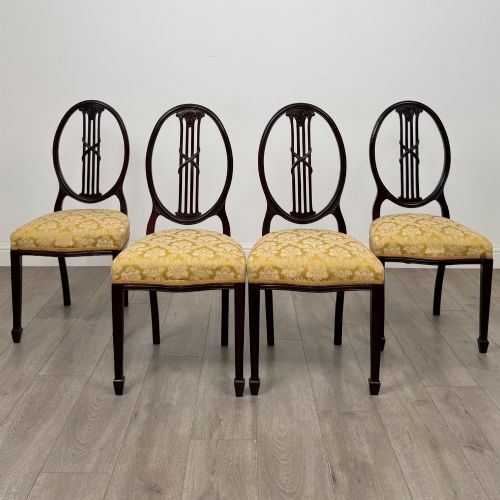
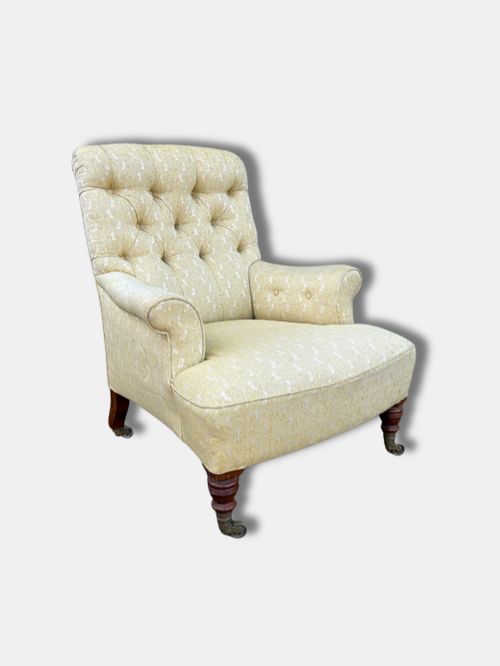
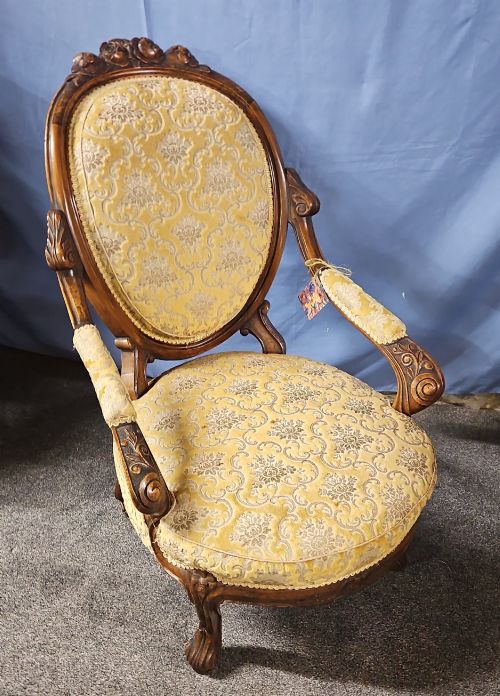
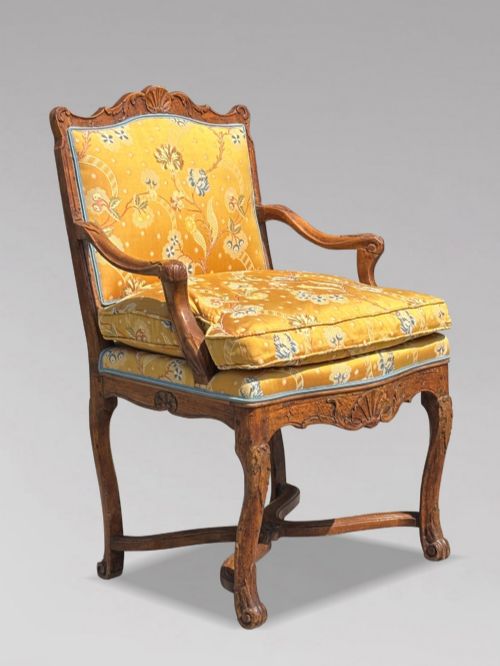



Yellow Damask Chair
A yellow damask chair brings rich texture and enduring colour to a room, drawing the eye with its patterned silk and carved wooden frame.
Yellow Damask Chair
A yellow damask chair encompasses a variety of seating forms upholstered in patterned fabric, ranging from compact nursing chairs to generous wingback armchairs. These pieces emerge across several periods, including Georgian, Victorian, and Edwardian eras, reflecting changing domestic fashions.
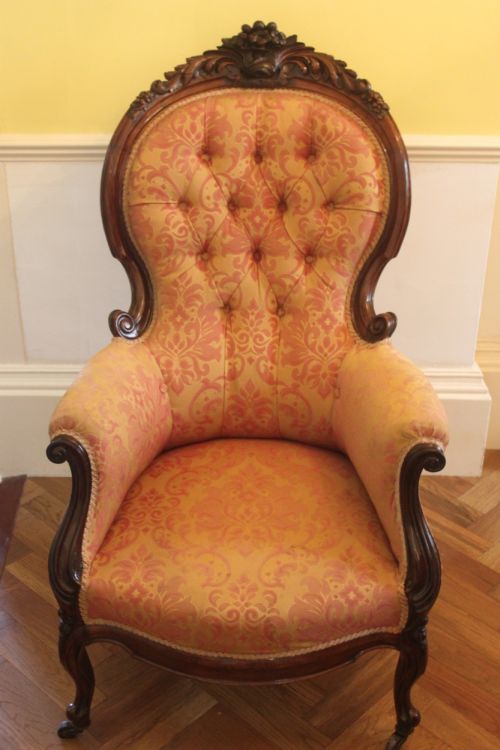
Victorian and nineteenth-century examples are the most common encounters in this search. They combine deep cushioning with decorative carved timber framing to create both comfort and visual presence.
How they were made
Makers utilised dense hardwoods such as mahogany, walnut, and rosewood for the structural frames, carving details directly into the timber. Joints were typically joined with traditional adhesives and reinforcing pegs to ensure long-term stability under daily use.
Upholstery relied on natural textile weavers producing damask, often utilising silk or blended threads to create reversible patterns with matte and lustrous finishes. These fabrics were secured over supportive interior stuffing built from horsehair, coil springs, or webbed foundations.
Listings feature mahogany, walnut, and rosewood frames paired with silk and standard damask fabrics across multiple centuries.
What varies in quality
The sophistication of the timber carving sets high-tier examples apart from simpler workshop output. Crisp, deeply undercut details on walnut and mahogany show the hand of a skilled artisan rather than routine production.
The choice and execution of the textile upholstery significantly alter the character of the seating. Heavy silk damasks correctly aligned to the proportions of the frame demonstrate a superior standard of reupholstery and restoration.
Howard and Sons·Harrods London·Cornelius V Smith
The Yellow Damask Chair Glossary
- Damask
- A reversible figured fabric with patterns woven flat into the ground, traditionally produced in silk, wool, or linen. The design appears in glossy contrast against a matte background.
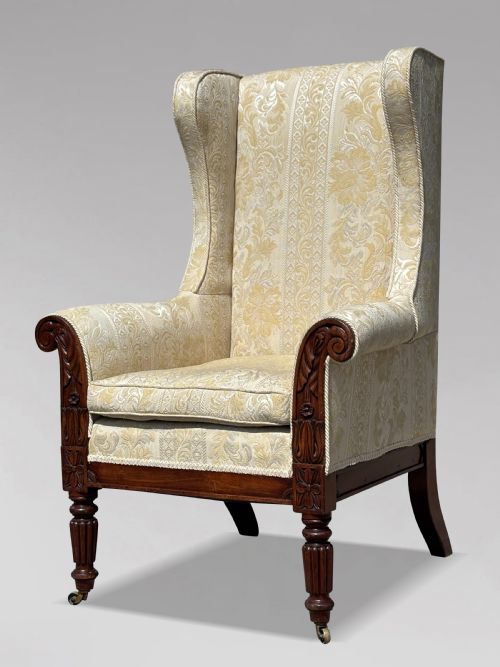
- Wingback
- An armchair featuring protective side panels attached to the backrest, designed to shield the sitter from draughts. Georgian and Victorian makers favoured this shape for fireside seating.
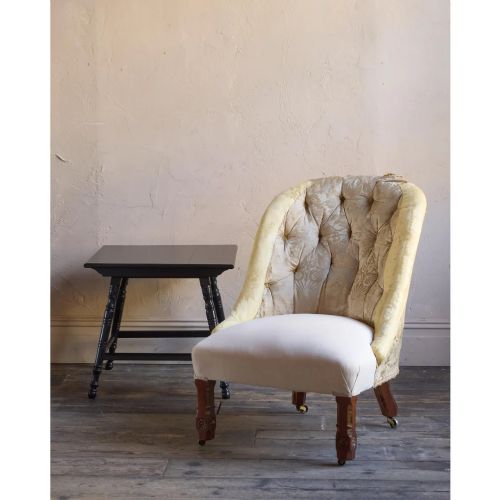
- Nursing chair
- A low-seated Victorian chair designed to allow comfortable sitting while tending to infants. The compact height distinguishes it from standard salon seating.
- Spoon back
- A padded chair back shaped like the bowl of a spoon, conforming closely to the human spine. This distinct outline is characteristic of mid-nineteenth-century seating.
Yellow Damask Chair: Frequently Asked Questions
What periods do these chairs come from?
The pieces span multiple centuries, with significant representation from the Georgian, Victorian, and Edwardian eras. Makers adapted traditional forms like Queen Anne and Hepplewhite across these changing periods.
Craftsmen adjusted their carving techniques and wood selections to suit contemporary tastes, resulting in varied silhouettes from high-backed wing chairs to low bedroom seating.
How were these chairs originally used?
Armchairs and wingbacks served primarily in drawing rooms, libraries, and parlours for comfortable reading or conversation. Smaller nursing and slipper chairs found placement in private chambers and bedrooms.
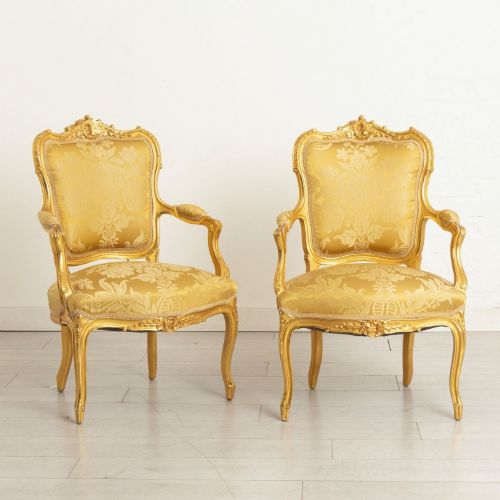
Dining chairs were arranged around large tables for formal meals, while salon suites provided coordinated seating for entertaining guests in larger homes.
How do I care for silk damask upholstery?
Silk damask requires protection from direct sunlight to prevent the yellow fabric from fading over time. Gentle surface dusting helps keep the woven pattern clear of settled particles.
Professional textile cleaning is recommended for any deeper maintenance to preserve the delicate sheen of the woven silk threads.
How do I tell Victorian chairs apart from Georgian ones?
Georgian chairs generally display lighter proportions and restrained carving, often in mahogany or walnut. Victorian pieces tend to be heavier, utilising darker finishes and more exuberant revival motifs like spoon backs.
Examining the structural framing and underneath construction helps reveal the manufacturing methods characteristic of each specific century.