


Yellow Art Glass
Yellow art glass brings warmth through amber tones, opaque hues, and iridescent surfaces spanning Victorian to mid-century periods.
Yellow Art Glass
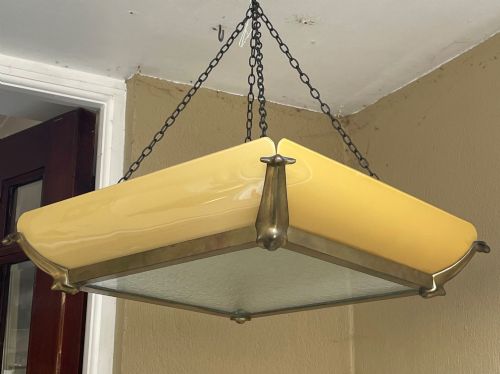
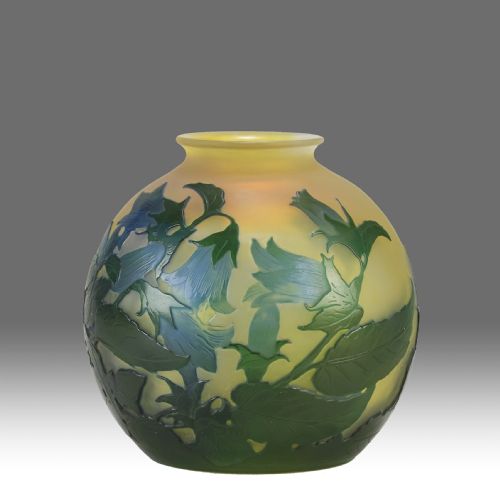
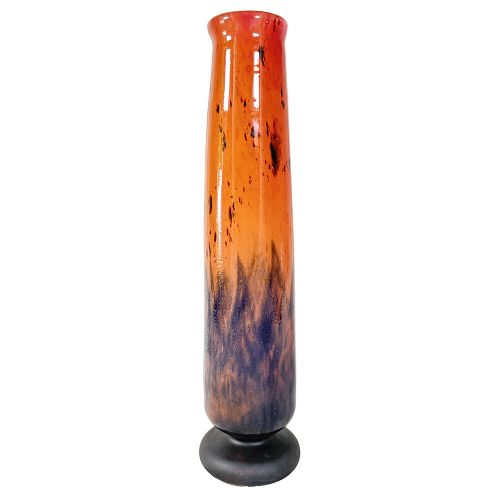
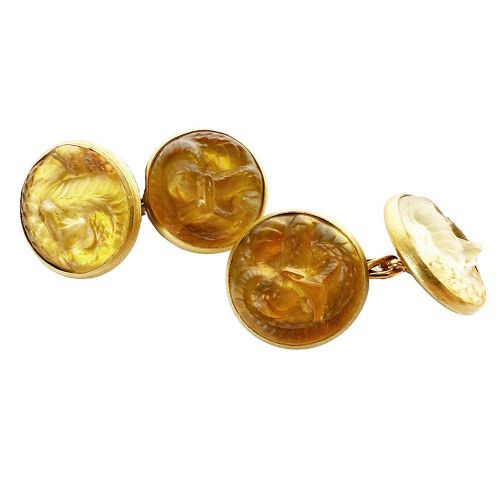
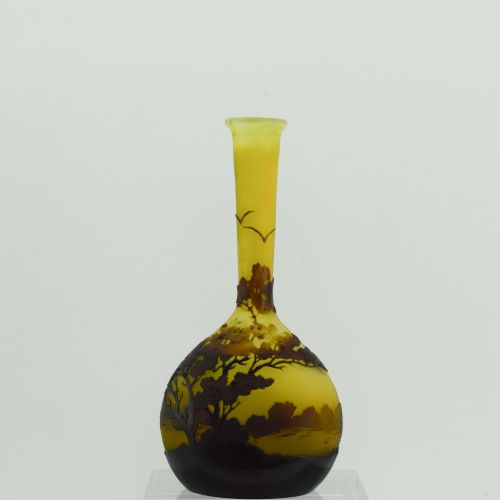
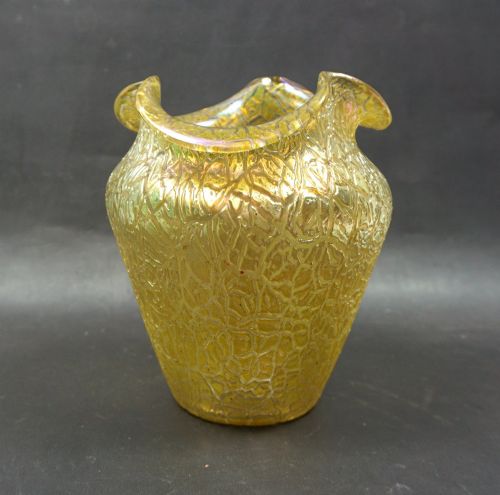
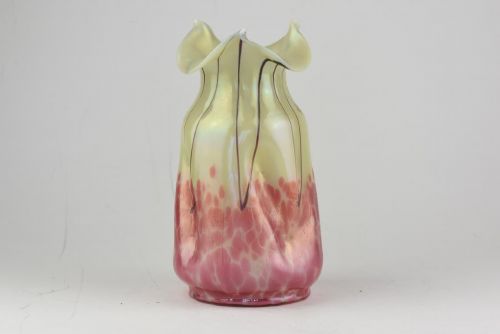
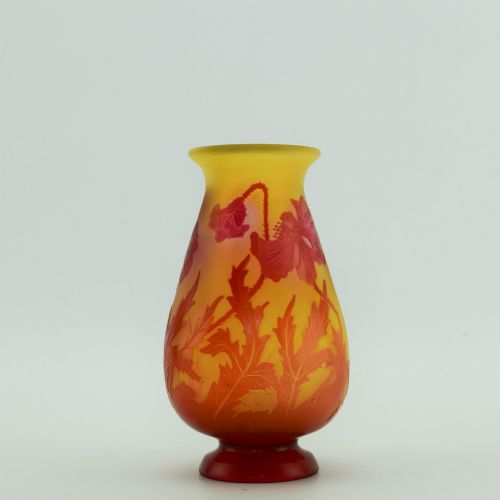
Yellow art glass encompasses decorative vessels, lighting, and jewellery produced primarily during the Art Nouveau, Art Deco, and Victorian eras. These pieces display distinct botanical motifs, geometric lines, and shaded amber tones across various forms.
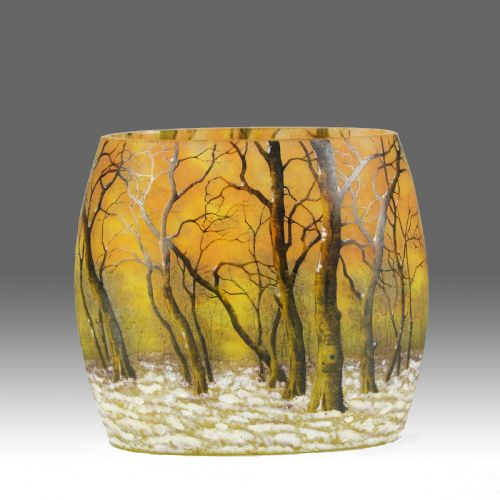
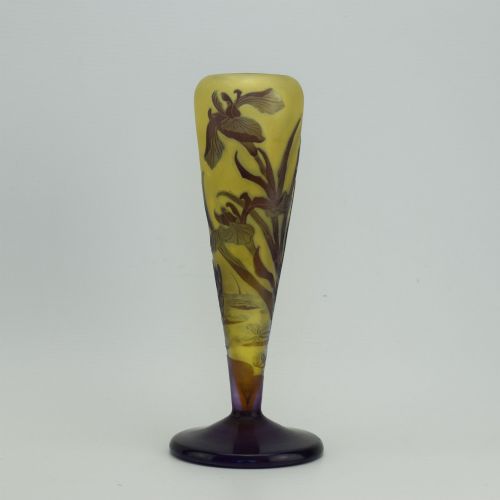
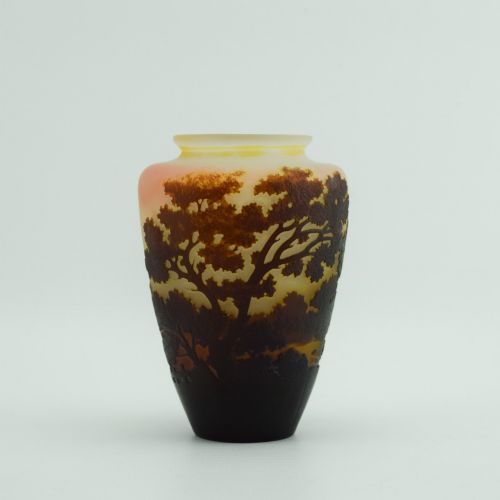
Vases and table lamps dominate the selection, often featuring complex cameo carving or enameled details. Pieces range from small cabinet vessels to monumental lighting fixtures.
The objects originate from major European glass centres including France and Bohemia, reflecting the technical innovations of the late nineteenth and early twentieth centuries.
Materials and technique
Makers utilised layered cameo glass techniques, acid-etching, and enamelling to build colour and depth on the glass surface. Molten batches incorporated minerals to achieve the characteristic amber and yellow hues.
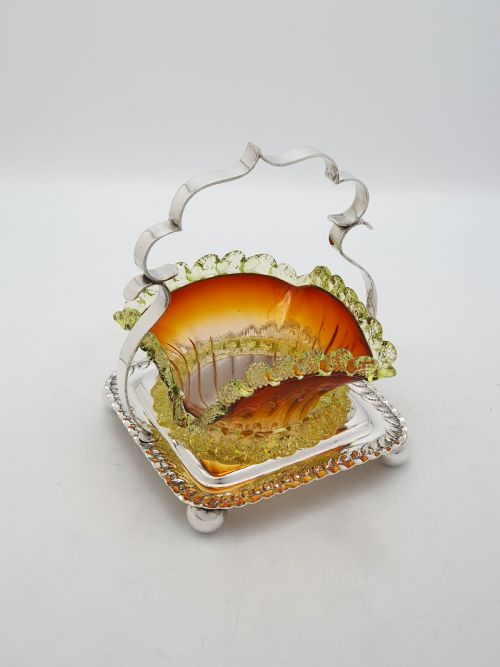
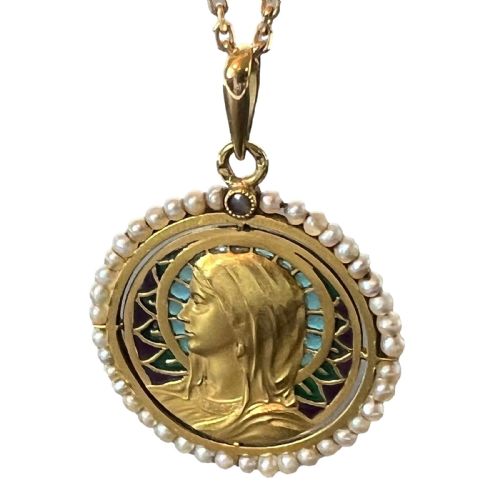
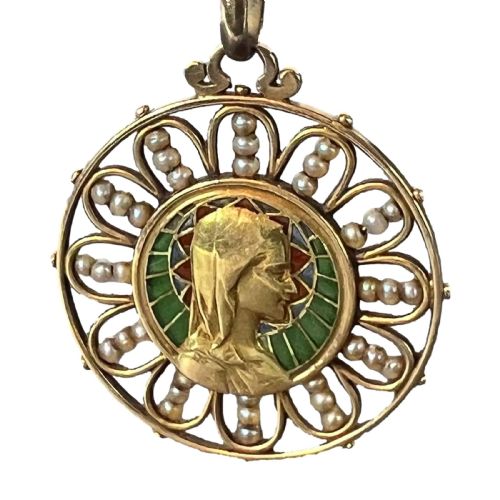
Mounts in wrought iron, brass, and silver-plated metal often complement the glass bodies, particularly on lamps and bonbon dishes. Some items combine blown glass with plique-a-jour enamel and precious metals.
Listings feature items spanning the Victorian era through the 1950s, utilising cameo glass, enamel, and brass.
Assessing quality
Execution of the surface decoration determines distinction, seen in the depth of acid-etching and the precision of hand-painted floral motifs. Superior examples show careful control over layered glass opacity and colour gradation.
The integration of metalwork mounts and signature marks influences the standing of a piece. Well-balanced proportions and crisp detailing separate masterworks from standard production items.
Emile Gallé·Daum Freres·R Lalique·Pallme Konig·Karl Palda·Rudolf Hlousek·Thos Webb and Sons
The Yellow Art Glass Glossary
- Cameo Glass
- A vessel formed of multiple layers of differently coloured glass fused together, then carved or acid-etched to create a raised design. This technique requires considerable skill to expose the underlying contrast without piercing the background layer.
- Acid-Etched Glass
- Glass treated with hydrofluoric acid to eat away exposed surfaces for decorative effect. It creates textured, frosted patterns or defines outlines in multi-layered pieces.
- Vaseline Glass
- Glass containing uranium dioxide that glows under ultraviolet light, producing a distinctive yellow-green tint. Popular in the Victorian period, it was shaped into various decorative bowls and vases.
- Plique-a-Jour
- An enamelling technique where enamel is applied to open cells without a backing, allowing light to shine through like stained glass. It appears frequently in early twentieth-century pendants and medallions.
- Iridescent Glass
- Glass treated with metallic salts while hot to produce a shimmering, rainbow-like sheen across the surface. Artists utilised this finish to mimic natural phenomena on organic vessel forms.
Yellow Art Glass: Frequently Asked Questions
What is vaseline glass?
Vaseline glass is a type of antique glassware made with uranium dioxide, which gives it a transparent yellow or yellow-green colour. The material earned its name from its visual similarity to petroleum jelly.
Under ultraviolet light, these pieces emit a bright green glow. They were widely produced during the Victorian and Edwardian periods for decorative tableware.
How should I clean antique art glass?
Dust antique glass gently with a soft, dry cloth to remove everyday particles. Avoid harsh chemical cleaners or abrasive scouring pads that can damage delicate surfaces and enamel work.
Wash pieces by hand in lukewarm water with mild soap if necessary, supporting the base at all times. Dry immediately with a lint-free towel to prevent water spots on the glass.
Where were most yellow art glass items made?
The majority of these pieces originated in European glassmaking hubs during the late nineteenth and early twentieth centuries. France and Bohemia were primary centres for innovative glass production.
Workshops in Nancy and Paris developed distinct styles like Art Nouveau cameo vessels, while Bohemian makers focused on cut and enamelled decorative objects.