

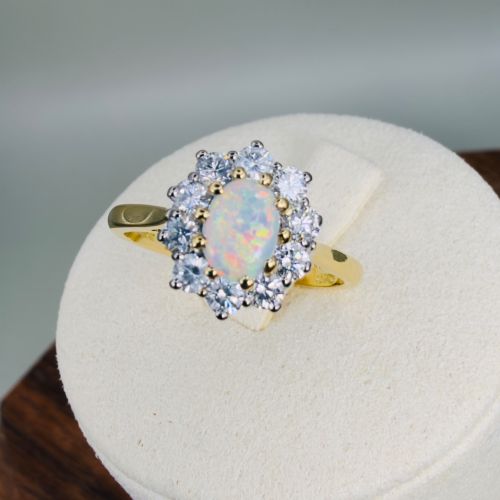
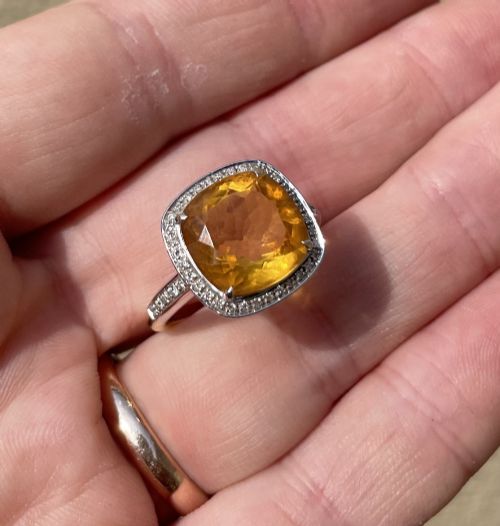
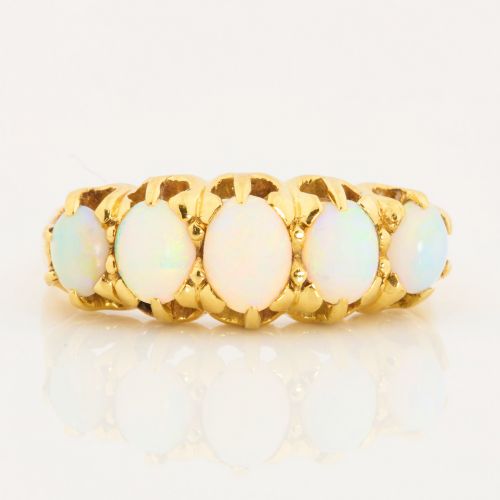
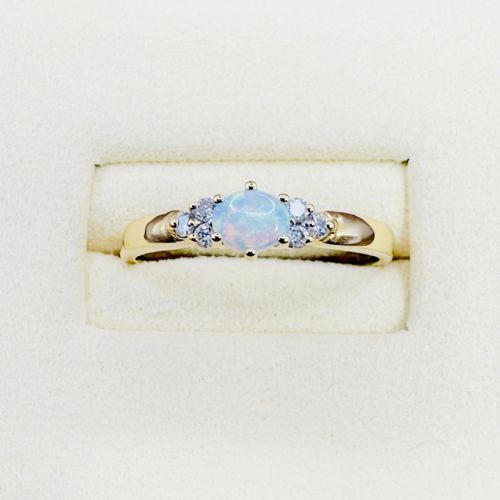
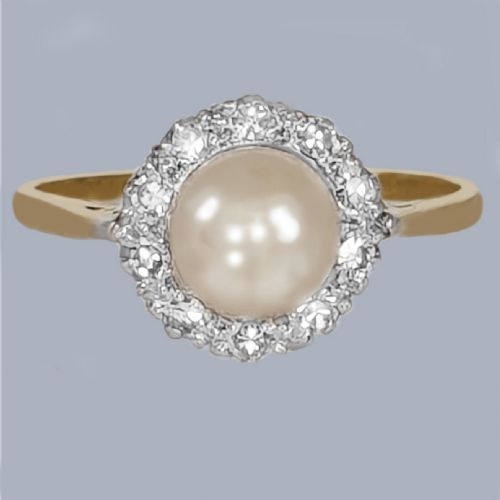


Yellow and White Gold Ring
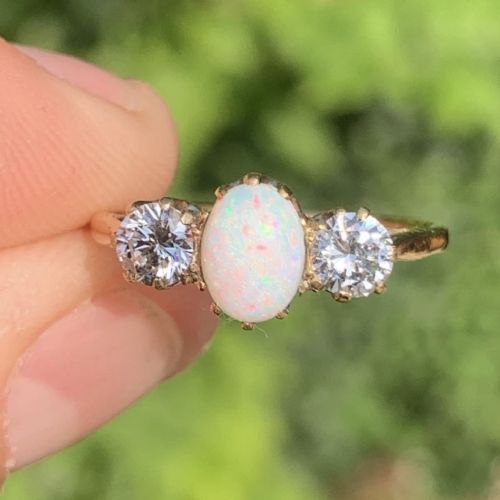
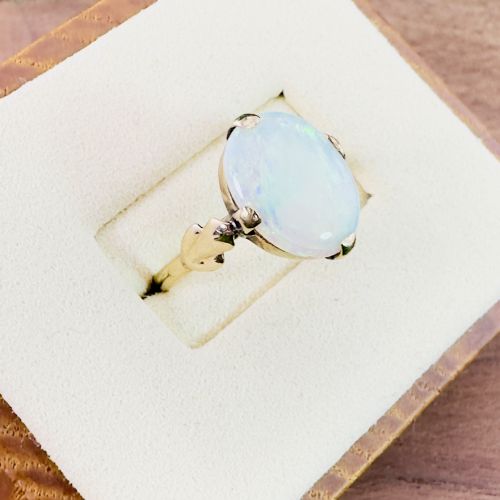
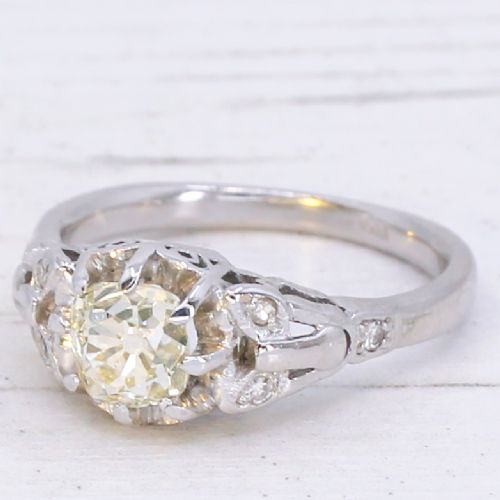
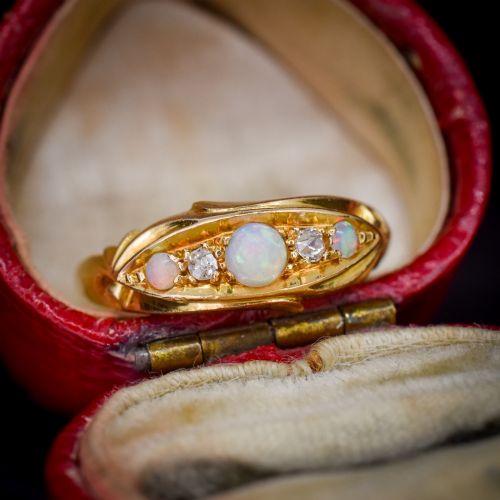
A yellow and white gold ring combines contrasting precious metals to frame central gemstones like opals and diamonds across Victorian and Art Deco designs.
Yellow and White Gold Ring
A yellow and white gold ring brings together dual-tone metalwork, frequently pairing warm yellow bands with crisp white settings to highlight stones. The selection centres on engagement rings, dress rings, and cluster configurations spanning the nineteenth century through the mid-twentieth century.
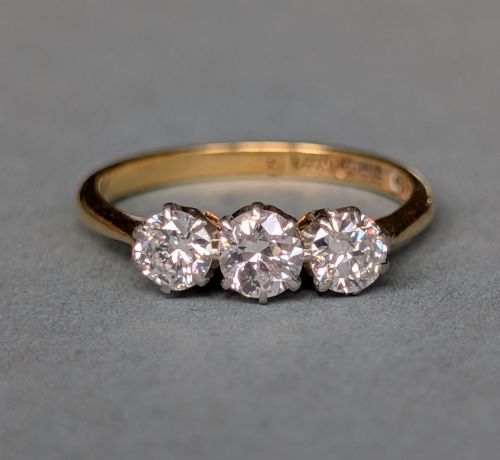
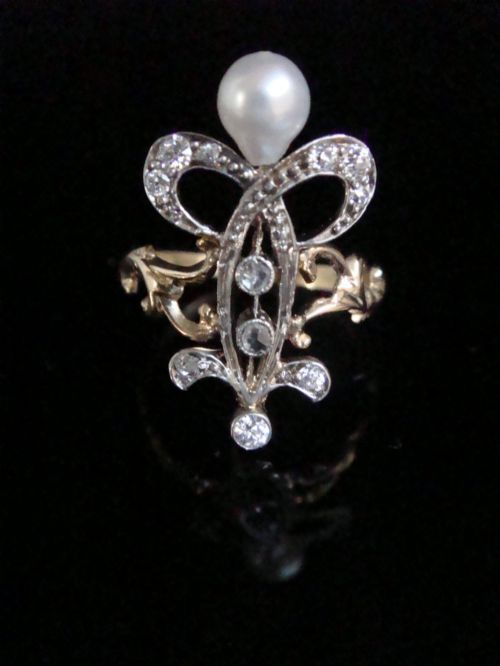
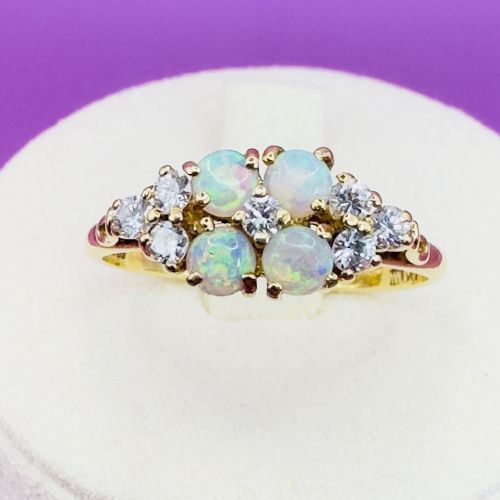
Buyers encounter Victorian trilogy pieces, Edwardian pearl and diamond clusters, and geometric Art Deco creations alongside 1960s opal designs. These jewels function as both daily wear and distinct statements of period craftsmanship.
Makers utilised the contrast between metals to draw the eye directly to the central gem, whether a cabochon opal, an old-cut diamond, or a coloured sapphire. The forms range from delicate boat shapes and target rings to substantial multi-stone clusters.
How they were made
Goldsmiths worked primarily in nine-carat and eighteen-carat yellow gold, platinum, and fourteen-carat or eighteen-carat white gold to construct sturdy mountings. White metal sections were often utilised specifically around diamond settings to enhance the perceived brightness of the stones without introducing coloured reflections.
Gemstones including opals, diamonds, emeralds, sapphires, rubies, citrines, and paste were hand-cut into old cuts, brilliant cuts, cushion cuts, round cuts, and cabochons. Settings involved meticulous claw, bezel, and flush methods, occasionally complemented by enamel work or detailed shoulder engraving.
Yellow and White Gold Ring Retail Price Guide 2026
Typical asking prices for yellow and white gold ring among the pieces listed under this phrase on Sellingantiques today, from the lower quarter to the upper quarter. They describe what is for sale here now, not the wider market.
Listings feature pieces spanning from the 18th century through the 1960s, incorporating gold, platinum, diamonds, opals, sapphires, and emeralds.
What varies in quality
The standard of execution depends heavily on the precision of the metal joining where yellow and white gold meet. Superior examples display seamless integration between the differing metal colours without visible solder bleed.
Gemstone selection and secure setting design dictate the upper tier of these pieces. Higher quality items pair vibrant, stable opals or well-matched diamonds with robust claw work that protects the girdle of each stone effectively.
The Yellow and White Gold Ring Glossary
- Cluster ring
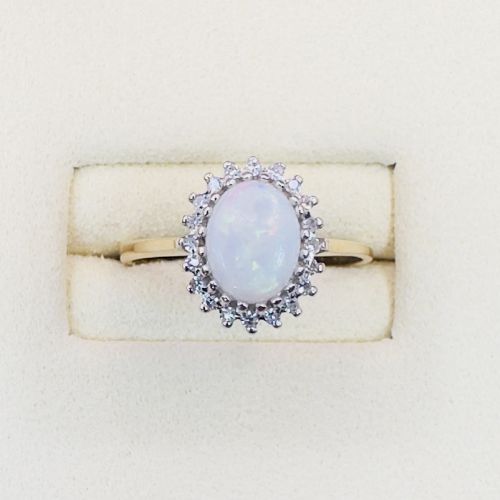
- A ring featuring a central gemstone surrounded by a border of smaller stones, typically diamonds framing an opal or sapphire. This layout maximises visual impact and light reflection.
- Cabochon
- A gemstone shaped and polished with a smooth, rounded convex surface rather than faceted. This cut is standard for opals to display their play of colour.
- Old cut
- An early diamond cutting style characterised by a small table, high crown, and large culet, hand-shaped before modern brilliant standards. These stones exhibit distinct facet patterns under candlelight.
- Trilogy ring
- A mounting holding three stones side by side, often interpreted as representing the past, present, and future. They appear frequently in nineteenth and early twentieth-century designs.
- Boat ring
- A navette-shaped setting resembling the hull of a boat, stretched horizontally across the finger. This style was popular during the Georgian and Victorian periods.
Yellow and White Gold Ring: Frequently Asked Questions
How do I care for an opal in a gold ring?
Opals contain natural water content and require gentle cleaning with warm soapy water, avoiding harsh chemicals, ultrasonic cleaners, and extreme temperature changes.
Store the ring separately from harder gemstones to prevent surface scratching on the softer opal cabochon.
Can these rings be resized easily?
Many yellow and white gold rings can be altered by a skilled jeweller, though intricate shoulder details or full eternity designs limit adjustment.
Consult a specialist to ensure the dual-tone metal band maintains its structural integrity during resizing.
How do I identify an Edwardian ring?
Edwardian pieces, dating from the early 1900s, often combine platinum-topped gold with delicate millegrain edges and lace-like openwork.
Motifs frequently include pearls and old-cut diamonds arranged in light, airy floral or garland designs.