

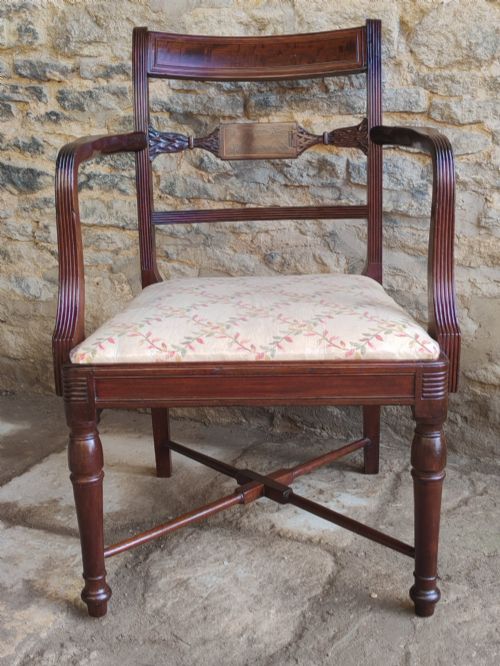

X Stretcher Carver Chair
An x stretcher carver chair brings substantial timber structure and defined seating presence to a room, offering historic regional craft.
X Stretcher Carver Chair
An x stretcher carver chair represents a distinct category of robust seating, appearing primarily in formats such as Windsor armchairs, farmhouse dining chairs, and desk chairs. These pieces emerge across periods from the seventeenth century through the Victorian era and into nineteen-hundred designs, reflecting traditional vernacular furniture making.
The selection here encompasses English country vernacular pieces alongside formal Georgian, Regency, and Carolean examples. Buyers meet armchairs constructed with distinctive bracing and structural stretchers, including crinoline types and intersecting supports beneath the seat.
Makers utilised regional timbers like yew, elm, ash, oak, and walnut to build these armchairs, creating substantial seating designed for prolonged daily utility. Surviving specimens range from low back Nottinghamshire Windsors to large scale Thames Valley armchairs and matched sets.
How they were made
Craftsmen shaped these chairs using solid native hardwoods, pairing sturdy elm seats with yew, ash, or oak for spindles, backs, and legs. Carpenters and turners employed traditional jointing methods, securing turned legs and uprights into thick plank seats.
Structural stability relied upon intersecting stretchers, box stretchers, or crinoline braces positioned between the legs to reinforce the frame. Surface finishes developed through natural ageing of woods such as mahogany, walnut, and polished elm.
X Stretcher Carver Chair Retail Price Guide 2026
Typical asking prices for x stretcher carver chair among the pieces listed under this phrase on Sellingantiques today, from the lower quarter to the upper quarter. They describe what is for sale here now, not the wider market.
The listings here feature traditional timbers including elm, yew, ash, oak, walnut, and mahogany across various historic periods.
What varies in quality
Quality rests upon the selection and pairing of timber grains, particularly in composite chairs combining yew wood frames with figured elm seats. Superior examples display balanced proportions, clean turning on spindles, and robust joint construction that withstands centuries of use.
The sophistication of the arm design, back splat carving, and stretcher configuration distinguishes standard vernacular seating from finer regional production. Matched sets and large scale armchairs demonstrate greater consistency in historic craftsmanship.
The X Stretcher Carver Chair Glossary
- Carver
- An armchair, typically designed for the head of a dining table or for desk use, featuring armrests integrated into the seating frame.
- Windsor
- A traditional wooden chair constructed with a solid plank seat into which the legs and back spindles are separately tenoned.
- Crinoline stretcher
- A curved intersecting underframe connecting the legs of a Windsor chair, resembling the shape of a hoop skirt and providing lateral bracing.
- Vernacular
- Regional furniture built by local craftsmen using traditional methods and native materials, distinct from formal court styles.
X Stretcher Carver Chair: Frequently Asked Questions
What is an x stretcher carver chair?
An x stretcher carver chair is a sturdy wooden armchair featuring reinforced bracing beneath the seat for structural support. These pieces include regional Windsor designs and formal seating.
Craftsmen built them using native hardwoods like elm, yew, and oak. They served as primary seating in farmhouses, libraries, and dining rooms.
Where were Windsor armchairs made?
Windsor armchairs were produced in various English regions, with notable centres of production in Nottinghamshire and the Thames Valley. Local turners utilised accessible regional timber.
Yew wood and elm grew abundantly in these areas, shaping the distinct local characteristics of the chairs. Craftsmen adapted designs to suit local timber availability.
How should I care for historic wood furniture?
Historic timber benefits from stable indoor humidity levels and protection from direct sunlight to prevent wood shrinkage and splitting. Regular dusting preserves the surface.
A light application of traditional wax helps maintain the natural patina of woods like walnut, mahogany, and polished elm without sealing the grain.