
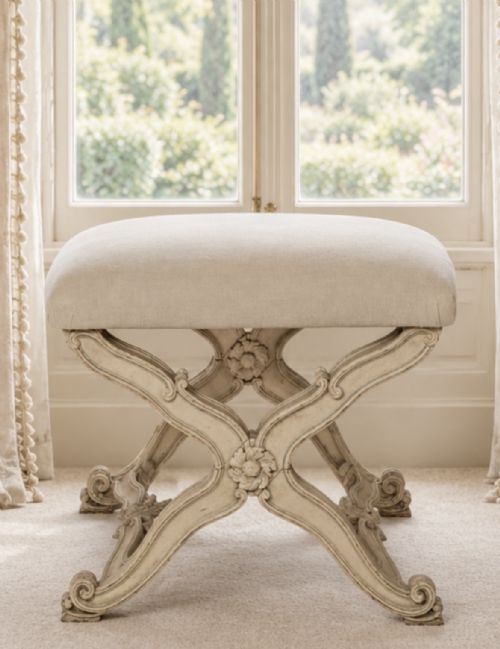
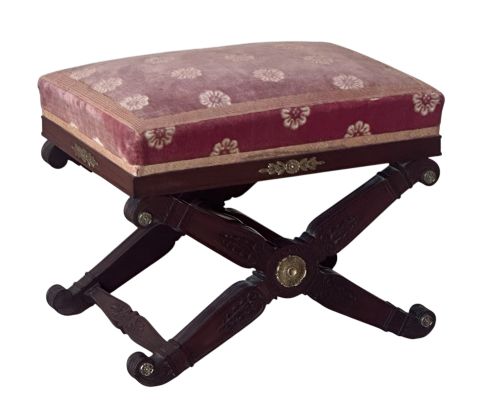
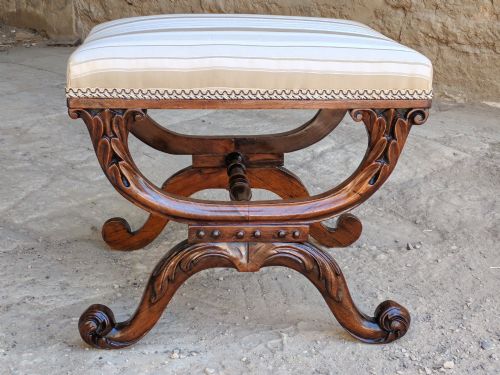


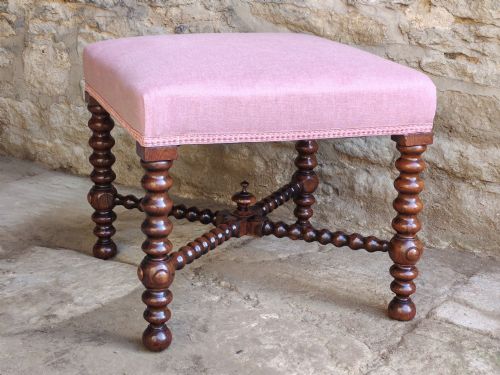
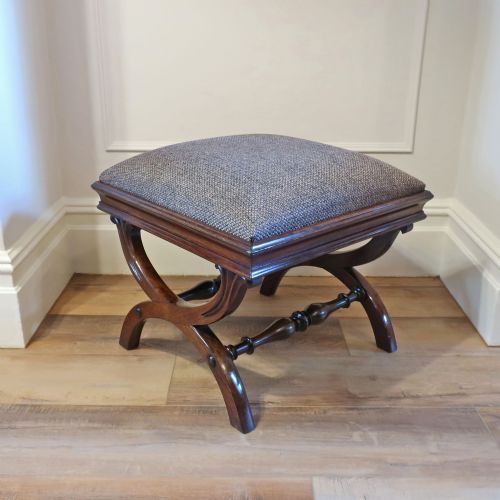


X Frame Vanity Stool
An x frame vanity stool brings classic intersecting supports and comfortable seating to bedrooms and dressing areas.
X Frame Vanity Stool
An x frame vanity stool is a compact seat designed primarily for dressing tables, bedrooms and pianos. When searching for an x frame vanity stool, buyers encounter numerous examples dating from the nineteenth century, including Victorian and Edwardian periods.
The primary forms on this page include dressing stools, piano stools and footstools featuring intersecting cross-frames or curule bases. These seating pieces originate from various design traditions such as Regency, Neoclassical, French Empire and the Aesthetic Movement.
Makers and manufacturers utilised timbers like mahogany, walnut, rosewood, satinwood and oak to build these structural frames. Many pieces incorporate upholstered seats covered in fabric, velvet, leather, beadwork or damask.
How they were made
Cabinetmakers constructed the characteristic intersecting frames from dense hardwoods like mahogany, walnut, rosewood and satinwood, often employing spiral carving, bobbin turning or giltwood and gesso finishes. These robust timbers provided the necessary structural strength for the crossed legs to support weight safely.
Seating surfaces relied on traditional upholstery methods, securing textiles such as velvet, leather, damask, fabric and beadwork over padded foundations. Details like inlaid wood decoration and carved ornamentation added refined visual texture to the finished frame.
Design influences span Regency, Neoclassical, French Empire, William IV, Aesthetic Movement and Edwardian periods.
What varies in quality
The refinement of the timber carving and the precision of the cross-frame joinery dictate the overall standard of each piece. Superior examples display crisp architectural lines in styles ranging from Neoclassical and French Empire to Edwardian and Victorian designs.
The choice of upholstery material and the integrity of the frame construction separate standard utility pieces from more ambitious decorative works. Walnut, rosewood and ebonised frames with detailed giltwood, gesso or inlay demonstrate elevated craftsmanship.
The X Frame Vanity Stool Glossary
- X-frame
- A furniture base formed by two intersecting diagonal members resembling the letter X. This structural form provides stability while maintaining a light visual profile.
- Curule
- An ancient form of cross-framed seat historically associated with magistracy and authority. In later centuries, cabinetmakers revived this curule shape for Neoclassical and Empire seating.
- Giltwood
- Wood that has been coated with a thin layer of gold leaf or gilt finish. This decorative treatment highlights carved details on frames from the nineteenth century.
- Damask
- A reversible figured fabric traditionally woven on a jacquard loom with patterns visible on both sides. This textile frequently appears as upholstery on period dressing stools.
- Bobbin leg
- Furniture legs turned on a lathe to resemble a string of beads or bobbins. This distinctive turning technique appears on mid-nineteenth century rosewood and walnut frames.
X Frame Vanity Stool: Frequently Asked Questions
Where do I place an x frame vanity stool?
These compact stools fit comfortably beneath dressing tables, in narrow hallways, or beside bedroom windows as occasional seats.
Their open cross-frame design maintains a sense of space in smaller rooms without blocking light.
How do I identify a Victorian x frame stool?
Victorian examples often feature dark hardwoods such as mahogany or walnut, frequently paired with needlework, beadwork or velvet upholstery.
Makers of this era drew inspiration from earlier French Empire and William IV styles, producing robust frames with deep turnings or carvings.
Were these stools used only for dressing tables?
Historical records show these pieces serving multiple domestic functions, including piano seating, window seats and general footstools.
Adjustable heights and compact proportions made them versatile additions to nineteenth-century drawing rooms and boudoirs.
What is the difference between an x frame and a curule stool?
While both share intersecting structural legs, curule stools specifically reference ancient Roman folding chair designs with sweeping curved supports.
Standard x-frame pieces utilise straight diagonal timbers forming a crisp geometric intersection.