


X Frame Library Armchair
An x frame library armchair brings architectural presence and sturdy seating to a study, built from robust timbers and upholstered for daily reading.
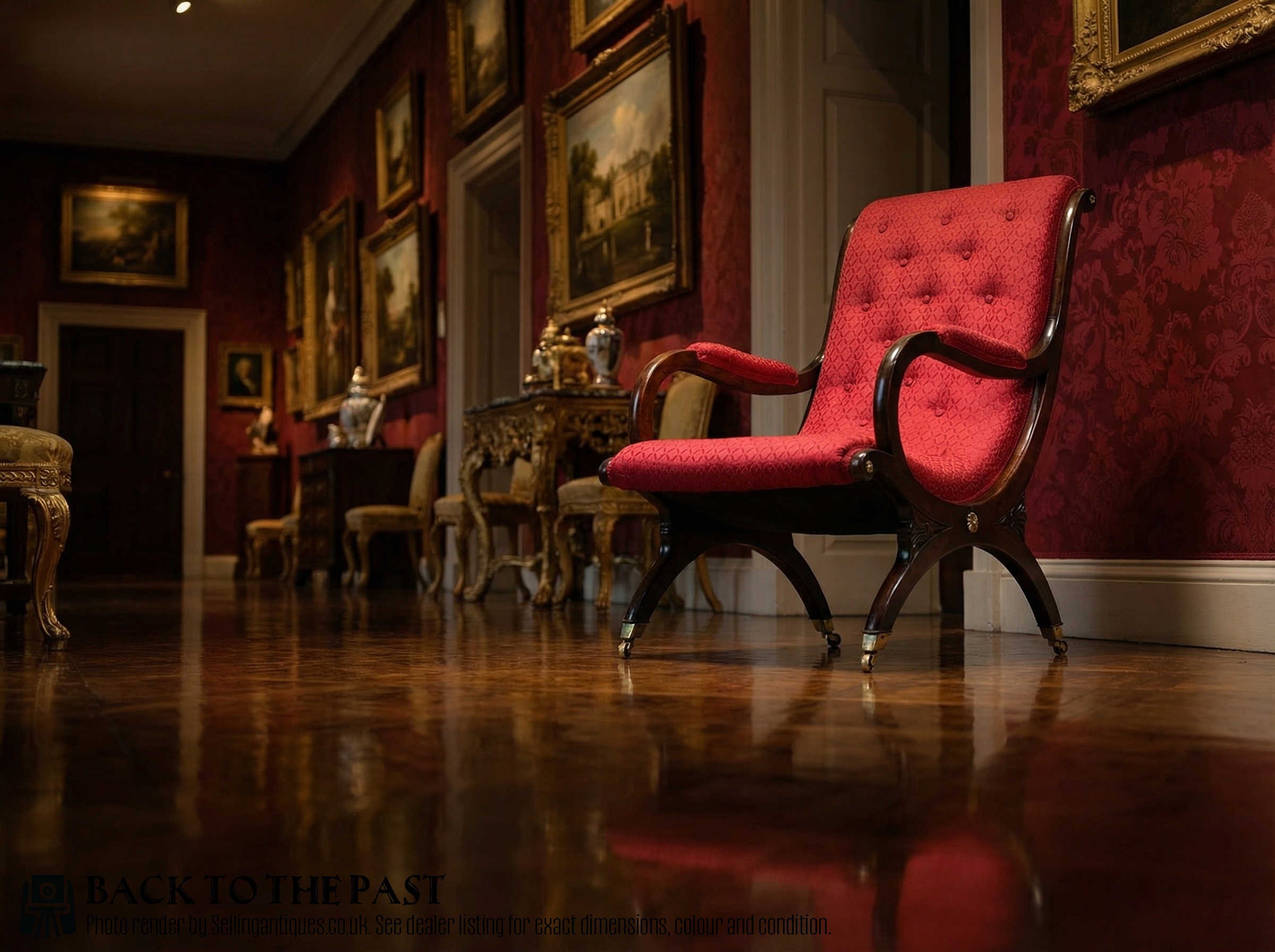
X Frame Library Armchair
An x frame library armchair is a seat designed for reading and writing in private studies, libraries and drawing rooms. These forms appear in a range of styles including Regency, Victorian, and later revivals from the nineteenth and early twentieth centuries.
The selections available here emphasise timber frames paired with soft coverings, ranging from compact desk chairs to large library armchairs. Oak, mahogany, and walnut dominate the structural framing, while leather and fabric provide the primary seating surfaces.
Materials and construction
Cabinet makers constructed the underlying frames using dense hardwoods such as mahogany, oak, walnut, and rosewood. These timbers provide the structural strength needed to support the crossed framework and heavy daily use.
Makers applied traditional upholstery methods to finish the seats and backs, using leather, velvet, fabric, and hessian over padding. Brass details often appear as nailhead trim or castors, securing the coverings and aiding mobility.
The inventory spans the nineteenth century through the early twentieth century, including Regency and Victorian examples.
Judging quality
The standard of a frame rests upon the crispness of the timber carving and the rigidity of the joints where the cross members intersect. Superior examples maintain tight structural integrity without excessive reinforcement.
Upholstery choice and execution distinguish fine library seating from standard utilitarian versions. Hand-stitched leather, high-grade velvet, and traditional stuffing indicate greater workshop attention during production.
Howard and Sons·Morison and Co·Gillows·White Allom and Co
The X Frame Library Armchair Glossary
- X frame
- A chair construction utilising intersecting diagonal members beneath the arms or seat to form an X shape. This geometry offers structural stability and a distinct architectural profile.
- Library armchair
- A comfortable upholstered seat designed for reading rooms, typically featuring padded arms and a supportive high back. These chairs prioritize ergonomic support for extended periods of study.
- Show frame
- Exposed timber framing around the perimeter of an upholstered back and seat. This design displays the polished wood grain alongside the fabric or leather.
- Gainsborough chair
- A wide, open-armed desk or reading chair originating in the eighteenth century with upholstered back and seat panels. They frequently appear in later revival periods using mahogany or walnut.
- Fauteuil
- An open-armed wooden armchair with upholstered arm pads originating in France. The style influences various nineteenth-century library and salon seating.
X Frame Library Armchair: Frequently Asked Questions
Where should I place an x frame library armchair?
These chairs suit studies, home libraries, and living rooms where reading and writing take place. Their distinctive profiles also allow them to sit effectively as standalone accent pieces in larger hallways.
Ensure adequate clearance around the crossed frame legs to protect the surrounding furniture and allow comfortable movement when sitting or standing.
How do I care for leather upholstery?
Maintain leather surfaces by dusting them regularly with a dry cloth and applying appropriate leather balms periodically. This prevents the material from drying out and preserves the traditional finish.
Keep these armchairs away from direct sunlight and heat sources to prevent the timber frames and leather coverings from warping or cracking over time.
What distinguishes a library armchair from a standard armchair?
Library armchairs focus specifically on upright posture and durability for working environments. They often feature firmer padding and supportive open arms designed for reading at a desk or table.
These pieces utilise robust hardwoods like oak and mahogany to withstand frequent repositioning in busy study spaces.
How do I identify the period of an x frame chair?
Examine the timber species, joinery techniques, and upholstery style to determine the likely era of manufacture. Regency and Victorian versions display distinct turning and carving traits tied to their specific design revivals.
Maker stamps or workshop labels found beneath the seat rails provide the most direct evidence of origin and date.