


Wrought Metal Candle Stands
Wrought metal candle stands bring industrial weight and hand-forged character to a room, offering both practical light and striking sculptural presence.
Wrought Metal Candle Stands
When you search for wrought metal candle stands, you encounter sturdy iron and brass holders designed to support tapers, pillars, or prickets. These items range from compact chambersticks to tall floor-standing candelabra made for architectural impact.
The selections available here span from the nineteenth century into the twentieth century, taking in forms influenced by Gothic Revival, Georgian, Victorian, Art Nouveau, and Art Deco design. Buyers will find single candlesticks, matched pairs, and substantial multi-candle floor pieces.
Originating from British, continental, and Dutch traditions, these stands showcase the shift from utilitarian blacksmithing to decorative workshop production. Whether utilitarian trench art or Secessionist stylings, each piece serves as a functional relic of historical metalworking.
How they were made
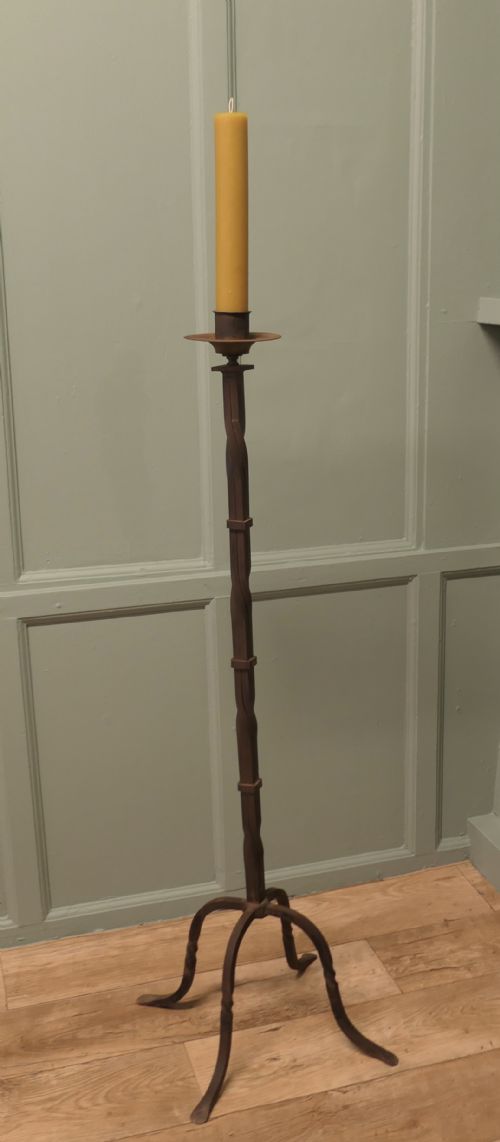
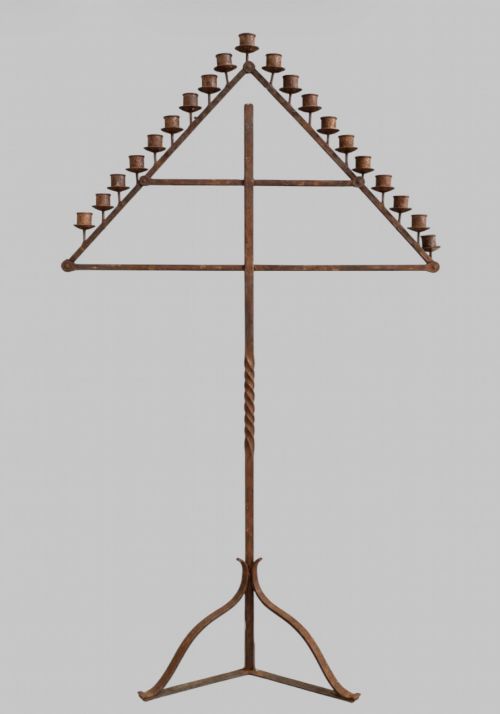
Makers shaped these stands primarily from wrought iron, cast iron, steel, and wrought brass, occasionally combining them with hardwood bases for added stability. Blacksmiths heated and hammered the metal to form twisted stems, scrollwork, and tripod legs.
Surface finishes include natural blackened iron, polished brass, and patinated metal surfaces achieved through prolonged handling and age. Construction methods range from traditional forge-welding to bolted cast components and riveted joints.
Some trench art stands were fashioned directly from spent artillery shell cases by soldiers sitting in muddy dugouts.
What varies in quality
The distinction between standard workshop output and superior production lies in the precision of the forging and the harmony of the design. Master blacksmiths achieved balanced proportions, clean lines, and purposeful manipulation of the metal rather than relying on heavy, clumsy assembly.
Integrity of construction and originality of components dictate the standing of a piece. Stands retaining their original prickets, drip pans, and surface patination without modern replacement parts command greater appreciation among collectors.
Hugo Berger Goberg
The Wrought Metal Candle Stands Glossary
- Pricket
- A sharp metal spike designed to impale and hold a candle, commonly found on ecclesiastical and early floor stands. This method predates the socket-style holder.
- Torchere
- A tall ornamental stand or candlestick intended to elevate a light source above eye level. These pieces often feature slender shafts supported by tripod bases.
- Chamberstick
- A low, portable candle holder fitted with a wide drip pan and a handle for carrying through rooms at night. They frequently include a small conical snuffer.
- Secessionist
- An artistic movement from the late nineteenth and early twentieth centuries that rejected historicism in favour of geometric simplification and stylised natural forms. It heavily influenced European metalwork of the period.
Wrought Metal Candle Stands: Frequently Asked Questions
What is a pricket candlestick?
A pricket candlestick uses an upward-pointing metal spike rather than a socket to secure the candle. The base of the candle is pressed directly onto this spike.
This design appears frequently on older ecclesiastical and architectural stands, requiring candles with a hollow base or a softened end to fit securely.
How do I date an iron candlestick?
Dating relies on observing manufacturing marks, construction techniques, and stylistic influences such as Art Nouveau curves or Gothic Revival motifs. Hand-forged joins and asymmetrical hammering often suggest nineteenth-century or earlier origins.
Machine-threaded screws, uniform cast components, and twentieth-century design movements like Art Deco point to later production periods.
Were these stands used outdoors?
While most candle stands were manufactured for interior illumination in halls, dining rooms, and chambers, heavy floor candelabra were sometimes positioned in large covered vestibules.
Exposing untreated wrought iron to outdoor moisture causes rapid oxidation, so historical indoor use remains the standard for surviving examples.
How should I clean wrought iron?
Cleaning should be limited to removing dust with a soft, dry cloth or a very gently dampened brush. Harsh cleaning agents strip the aged patination that collectors value.
Applying a microcrystalline wax can protect iron and brass surfaces from atmospheric moisture without altering their historical appearance.