
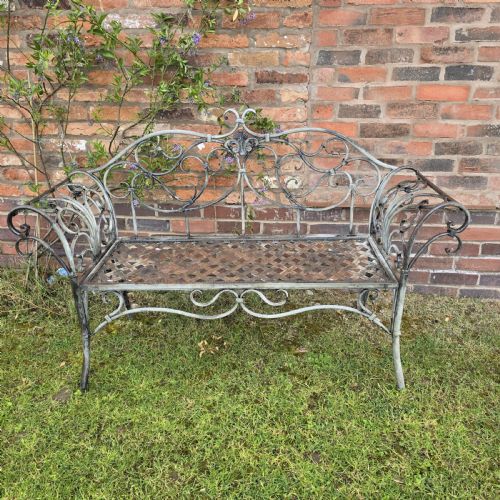


Wrought Iron Patio Furniture
These wrought iron patio furniture pieces bring enduring metalwork and resilient charm to outdoor spaces, built to withstand the elements.
Wrought Iron Patio Furniture
Wrought iron patio furniture encompasses durable outdoor seating and dining arrangements designed for gardens, terraces, and courtyards. These pieces span multiple eras, including Victorian, Edwardian, and Art Deco periods, alongside French Country and Gothic Revival styles.
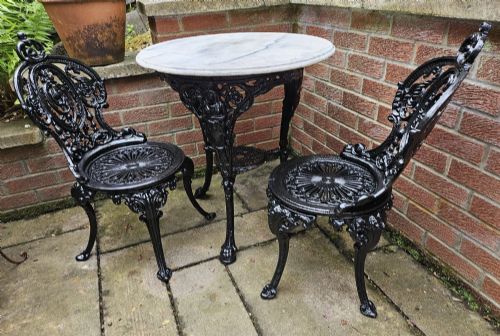
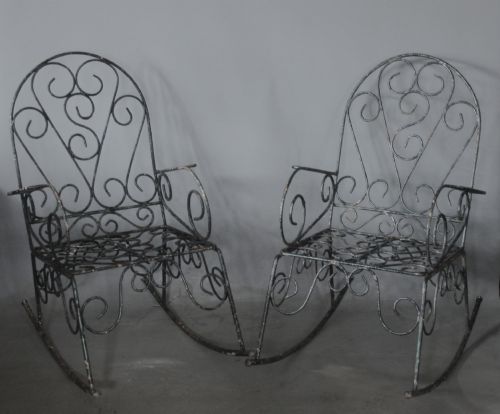
The selections available here range from folding garden tables and bistro sets to substantial garden benches, rocking chairs, and complete dining sets. Many items originate from French workshops or British makers, showcasing historical utility combined with ornamental design.
Buyers frequently encounter robust garden tables paired with matching chairs, as well as specialised items featuring strap work or wirework construction. These functional objects transformed outdoor spaces into social areas throughout the nineteenth and early twentieth centuries.
Materials and construction methods
Constructed primarily from heavy cast iron and wrought iron, these items rely on durable metal manipulation techniques established by traditional blacksmiths and foundries. Structural integrity stems from solid metal bars, welded or riveted joints, and supportive wirework.
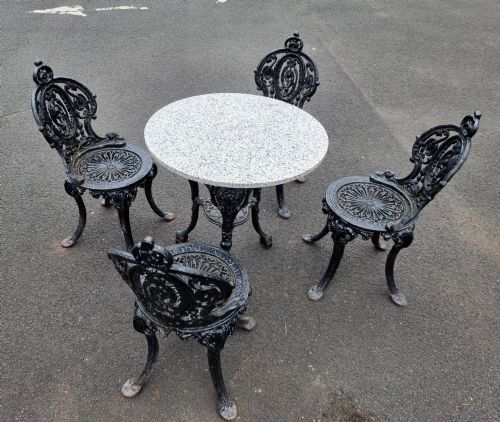
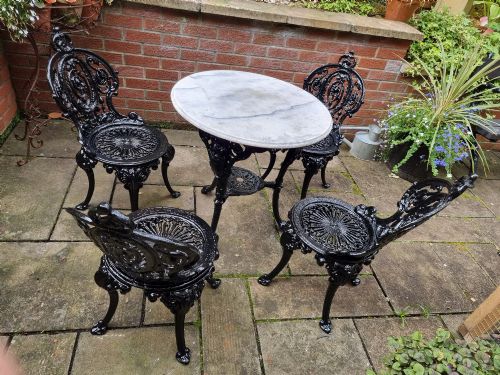
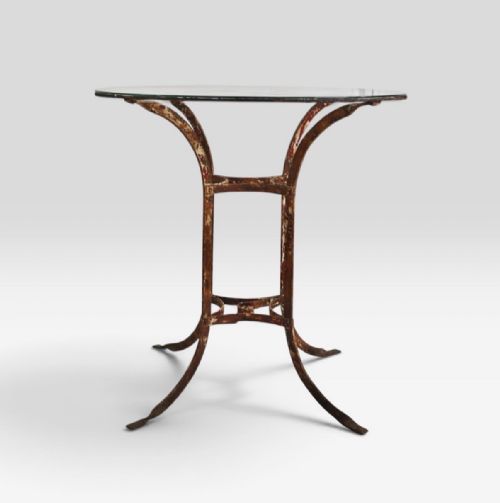
Surfaces often feature protective paint layers designed to prevent corrosion when exposed to outdoor weather conditions. Selected tables incorporate contrasting elements such as marble or granite tops fitted directly onto metal bases.
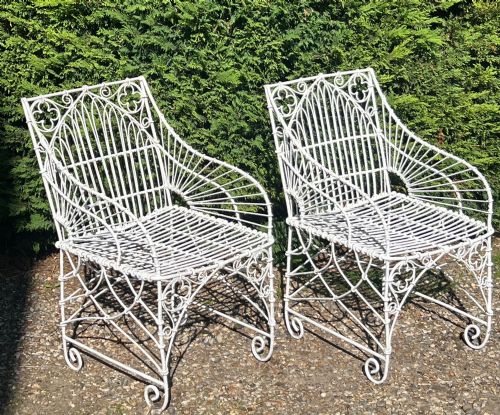
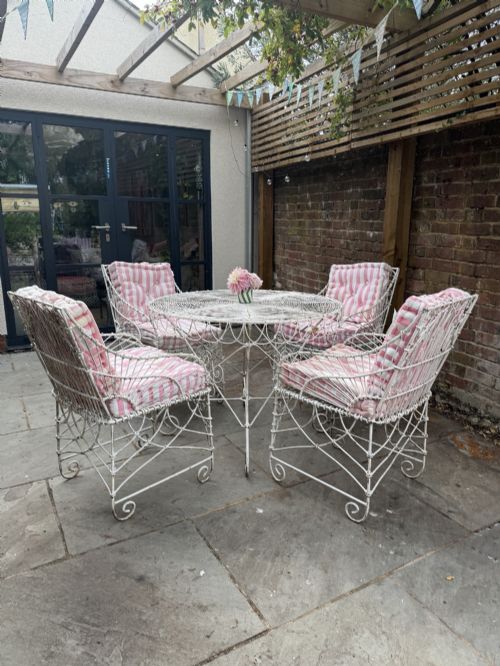
Decorative flourishes draw upon distinct stylistic periods, utilising strap work, gothic arches, and regency motifs shaped directly into the metal. The combination of sturdy iron frames and intricate wirework defines the structural approach of this furniture.
Some garden rocking chairs were cleverly weighted so they would not tip backward into the rose bushes during an enthusiastic afternoon nap.
Distinctions in quality
Quality in these garden pieces rests upon the heaviness of the casting and the precision of the metalwork. Substantial iron frames with well-defined decorative details demonstrate superior foundry work compared to lighter, plain utilitarian items.
The integrity of the construction, visible in the alignment of joints and the retention of original stone tops like marble or granite, marks the higher tier of these garden items. Surviving paint layers and minimal corrosion further distinguish better-preserved examples.
The Wrought Iron Patio Furniture Glossary
- Wrought iron
- Tough, malleable metal beaten and shaped by hand or machine into functional outdoor furniture. This material resists snapping under stress better than cast iron.
- Cast iron
- Molten metal poured into moulds to create rigid decorative patterns and heavy furniture frames. It provides crisp architectural details for garden benches and table bases.
- Wirework
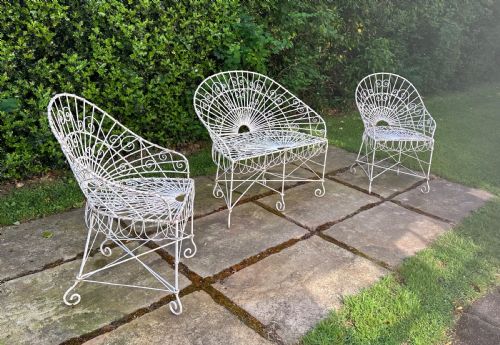
- Intricate arrangements of thin metal wires woven into lightweight, resilient garden seats and tables. This technique gained popularity during the Victorian era for delicate outdoor pieces.
- Strap work
- Flat strips of metal riveted or welded into geometric patterns across seat backs and table tops. It defines the aesthetic of specific Regency style garden pieces.
- Bistro set
- A small outdoor table accompanied by two matching chairs, designed for compact spaces. These sets originated in French sidewalk cafes and gardens.
Wrought Iron Patio Furniture: Frequently Asked Questions
How do I care for iron garden furniture?
Keep the metal protected by applying suitable outdoor paint whenever the surface shows wear. Store pieces under cover during harsh winter months to prevent excessive moisture accumulation.
Regular cleaning with mild soapy water removes dirt and debris without damaging the protective coating. Inspect joints periodically to ensure the structure remains stable.
Are these pieces suitable for year-round outdoor use?
Most items are built from heavy metals designed to withstand outdoor environments. However, extreme frost and continuous dampness can accelerate corrosion on unprotected surfaces.
Adding fitted protective covers during prolonged periods of bad weather helps preserve the finish. Placing furniture on stone flags rather than damp grass also reduces moisture transfer.
How do I identify a Victorian garden piece?
Victorian examples often feature ornate cast iron motifs, Gothic Revival arches, or delicate wirework structures. The weight of the metal and traditional joining methods help confirm the era.
Stylistic cues such as strap work and heavy decorative casting are common markers of nineteenth-century manufacture. Comparing the form to documented period catalogues provides further confirmation.
Can I leave marble-topped tables outside?
Marble and granite tops require extra care compared to solid iron surfaces because stone is porous. Freezing water trapped within the stone can cause cracking during cold weather.
It is advisable to store stone tops indoors or under a secure shelter during the winter months. Wiping up spills promptly also prevents staining on antique marble surfaces.