



Wrought Iron Jardiniere Stand
These wrought iron jardiniere stand pieces bring enduring utility and structure to garden spaces, offering robust support for potted plants through varied periods.
Wrought Iron Jardiniere Stand
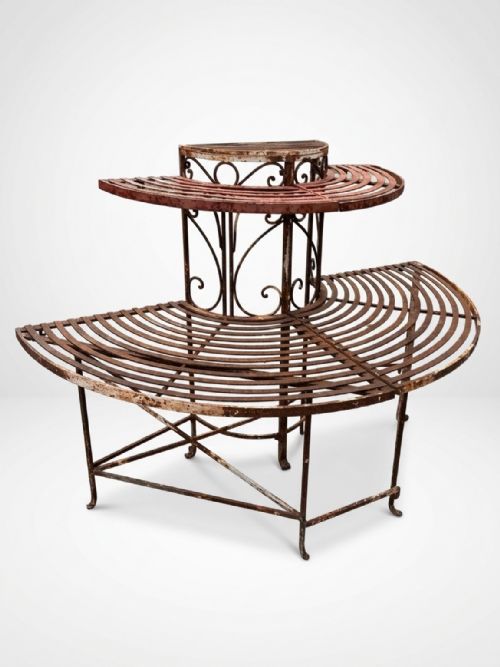
A wrought iron jardiniere stand is a structural furnishing designed to elevate plants and display garden flora across domestic and conservatory settings. Buyers browsing this selection encounter forms ranging from simple plant holders to elaborate tiered garden planters.
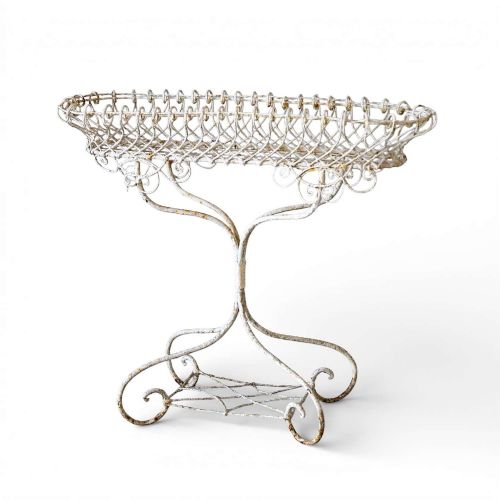
The pieces on this page span the Georgian, Victorian, and Edwardian eras, alongside later nineteenth and twentieth century examples. Common configurations include scrollwork baskets, wirework tiers, and paired conservatory stands.
Origins represented in the evidence include English and French traditions, utilising materials such as wrought iron, cast iron, copper, and zinc. These items serve functional roles in garden layouts and conservatory displays alike.
How they were made
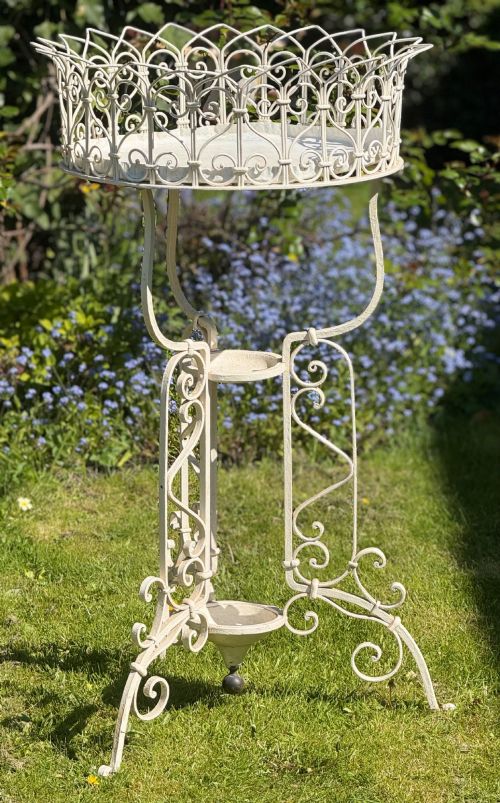
Construction relies heavily on hand-forged wrought iron and wirework, creating open lattice baskets and supportive scrollwork frames. Blacksmiths shaped metal bars through heating and hammering to achieve durable structural integrity.
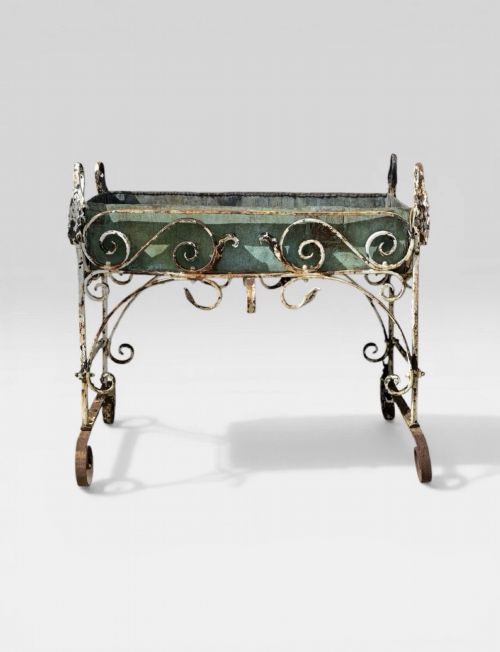
Many examples incorporate sheet metal components such as copper or zinc liners to hold soil and water safely within the decorative plant holders. Cast iron elements also appear on heavier stands, providing solid bases and detailed ornamental pedestals.
Materials recorded across the inventory include wrought iron, cast iron, wirework, copper, zinc, paint, and stone.
What varies in quality
Quality in these pieces rests upon the complexity of the scrollwork and the deftness of the wirework construction. Pieces featuring intricate hand-forged lattices and balanced proportions demonstrate superior blacksmithing skill.
The integrity of integrated metal liners, such as original copper or zinc trays, influences the overall character of a stand. Heavier cast iron bases and well-preserved weathered surfaces further distinguish the finer examples in the range.
The Wrought Iron Jardiniere Stand Glossary
- Jardiniere
- An ornamental pot or stand for holding plants or flowers. These vessels often sit within or atop metal frames.
- Wirework
- Metal strands bent and joined to form open-patterned baskets and stands. This technique was popular in Victorian and Edwardian conservatories.
- Scrollwork
- Ornamental metalwork formed into spiral or curved scroll shapes. It provides both decorative detail and structural bracing.
- Conservatory
- A glass-roofed room used for growing delicate plants and relaxing. These spaces commonly housed tiered plant stands.
Wrought Iron Jardiniere Stand: Frequently Asked Questions
What periods do these stands cover?
The available pieces span from the Georgian era through the Victorian and Edwardian periods up to the twentieth century.
Examples include items dated around eighteen-twenty alongside nineteenth-century pieces and later nineteen-thirty designs.
Where were these stands used?
These pieces were traditionally placed in country house conservatories, gardens, patios, and domestic interiors.
They served to elevate potted plants and display garden urns or floral arrangements within living spaces.
What materials are used?
Construction primarily utilises wrought iron, cast iron, and wirework, often paired with copper or zinc.
Some examples also feature painted surfaces, stone elements, and lattice baskets designed to hold planters securely.
How do French and English styles differ?
English examples frequently exhibit structured wirework tiers and Georgian or Victorian architectural lines.
French pieces often lean towards decorative garden urns and patio planters suited for French country aesthetics.