



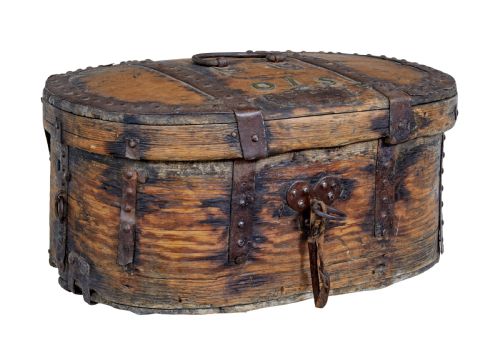
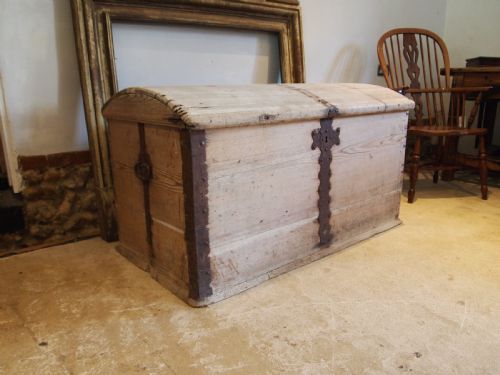


Wrought Iron Bound Box
A wrought iron bound box is a sturdy wooden chest secured with metal straps, built to protect valuables during centuries of travel and secure storage.
Wrought Iron Bound Box
A wrought iron bound box combines robust timber construction with exterior metal strapping, designed to safeguard documents, currency, and household treasures from theft and damage. When you search for a wrought iron bound box, you encounter forms ranging from compact travelling strongboxes to large marriage chests and trunks.
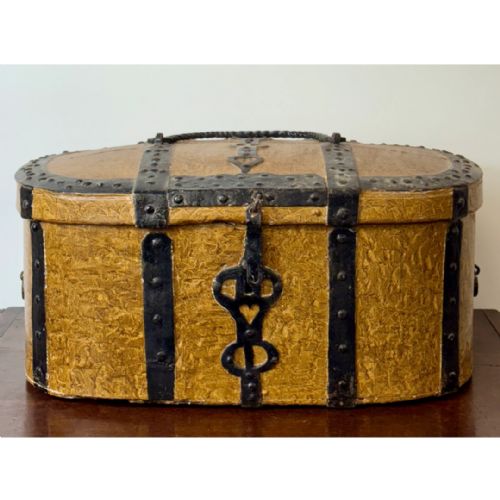
The pieces on this page span from the sixteenth century through the nineteenth century, drawing on Scandinavian, French, and British regional traditions. You are most likely to meet seventeenth and eighteenth-century Scandinavian folk art trunks and painted pine or oak strongboxes finished with hand-forged iron work.
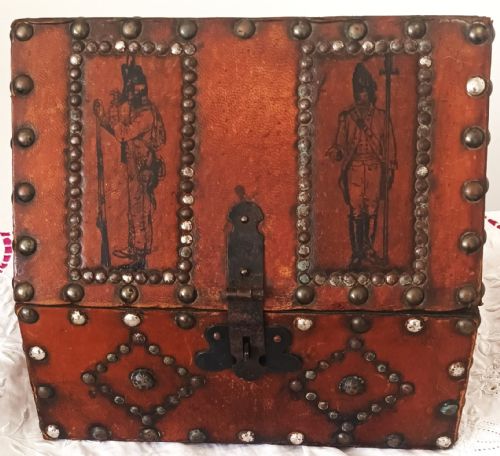
Substantial proportions and heavy-duty locking mechanisms characterise these vessels, which served practical security functions in domestic and institutional settings. Alongside plain timber surfaces, several examples feature period paintwork, leather coverings, or decorative motifs such as labyrinths.
How they were made
Carpenters constructed the carcases using indigenous timbers such as oak, pine, elm, and occasionally leather, joining boards with traditional peg or dovetail methods. These wooden bodies provide the solid core required to support heavy exterior iron reinforcements.
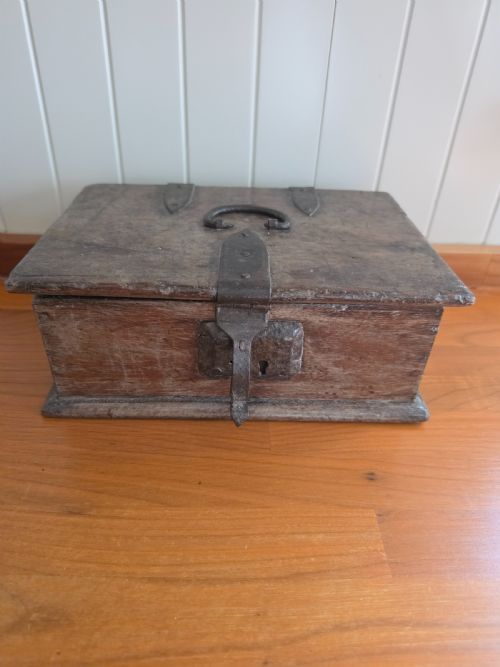
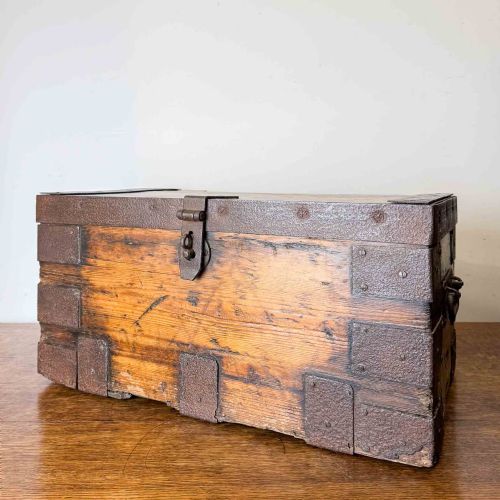
Blacksmiths shaped straps, hasps, hinges, and carrying handles from wrought iron, securing them to the wood with visible hand-beaten rivets and bolts. Surface decoration on selected pieces involves applied paint over the timber substrate, creating folk art finishes and regional colour schemes.
Wrought Iron Bound Box Retail Price Guide 2026
Typical asking prices for wrought iron bound box among the pieces listed under this phrase on Sellingantiques today, from the lower quarter to the upper quarter. They describe what is for sale here now, not the wider market.
The listings on this page span the sixteenth through the nineteenth centuries, incorporating oak, pine, elm, and iron materials across several regional styles.
What varies in quality
The standard of forging on the iron straps and the complexity of the locking mechanism dictate the primary tier of craftsmanship in these pieces. Heavy, intricate strapwork and operational original locks elevate a box above simple utilitarian storage containers.
The integrity of the primary timber carcase and the survival of original decorative paint surfaces or leather bindings separate exceptional survivals from heavily restored examples. Patina accumulated through centuries of handling and the balance between timber and metal elements determine overall visual presence.
The Wrought Iron Bound Box Glossary
- Wrought iron
- Iron that has been heated and hammered into shape by a blacksmith, yielding a fibrous texture and durable quality. It forms the protective bands and structural straps found on these boxes.
- Strongbox
- A secure chest reinforced to hold money, documents, or valuables against theft or fire. These containers often feature complex internal locking mechanisms.
- Armada chest
- A type of heavy iron-bound strongbox traditionally associated with Spanish naval supply transport, though frequently made in Germany and northern Europe. They typically feature elaborate false keyholes on the front.
- Marriage chest
- A painted or carved wooden box commissioned to celebrate a wedding, often bearing initials and dates. These pieces frequently double as storage for a bride's dowry.
- Hasps
- A slotted metal plate that fits over a staple and is secured with a pin or padlock. This component is central to the closure and security of period boxes.
Wrought Iron Bound Box: Frequently Asked Questions
How do I care for a wrought iron bound box?
Keep these boxes away from direct heat sources and damp environments to protect the historic timber and prevent rust formation on the ironwork. An occasional application of microcrystalline wax feeds the dry wood and preserves the surface metal.
Avoid harsh chemical cleaners on both the painted finishes and the bare iron straps. Gentle dusting with a soft, dry cloth is sufficient for routine maintenance.
Were these boxes used for travel?
Smaller examples, particularly those described as travelling strongboxes or cannonball boxes, were built for portability on coaches and military campaigns. Side lifting handles and robust iron straps equipped them for the rigours of transit.
Larger chests and marriage trunks remained stationary in homes or institutional buildings to safeguard family archives and valuables. Their weight alone provided a deterrent against removal.
How can I tell the period of a box?
Dating relies on assessing the construction methods of the timber carcase, the style of the hand-forged ironwork, and any regional decorative paint schemes. Sixteenth and seventeenth-century pieces often display heavy oak framing and simple board construction.
Later eighteenth and nineteenth-century examples incorporate pine and elm, sometimes featuring folk art painting or specific regional motifs. Examining the fasteners and hinges helps confirm the period of manufacture.
What is a marriage chest?
A marriage chest is a decorative storage piece commissioned to hold a bride's dowry linens and household goods. These items often feature painted details, initials, and dates marking the wedding year.
Scandinavian examples in this selection display folk art ornamentation and robust pine construction. They served both a practical storage function and a symbolic role in the new household.