

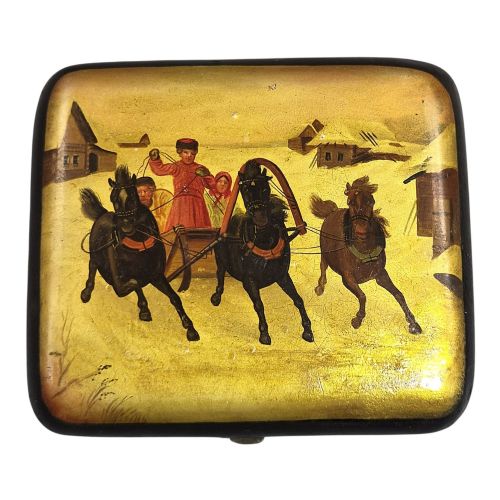


Black Painted Folk Box
A black painted folk box brings vernacular utility and dark, moody surface character into a modern room.
Black Painted Folk Box
A black painted folk box is a utilitarian container finished in dark pigment, frequently associated with Scandinavian country, maritime, and 19th century folk art traditions. These pieces range from small deed boxes and document holders to larger storage trunks and seaman's chests.
The versions most commonly met on this page date from the 18th century through to the mid 19th century, constructed primarily in pine and other accessible woods. They serve as robust storage items that carry the visual weight of regional European and British vernacular craft.
Materials and construction methods
Construction relies on solid timber boards joined simply, using pine for bodies and heavier woods for framing where durability is required. Wrought iron and cast iron hardware such as hinges, handles, and lock plates reinforce the structures.
Surfaces are finished with dark paintwork, sometimes incorporating lacquer or gold leaf details depending on the regional tradition. Original paint layers often show natural wear and patination accumulated over generations of domestic or maritime use.
Black Painted Folk Box Retail Price Guide 2026
Typical asking prices for black painted folk box among the pieces listed under this phrase on Sellingantiques today, from the lower quarter to the upper quarter. They describe what is for sale here now, not the wider market.
Some seaman carried chests bearing grand inscriptions of liberty into the teeth of the North Sea.
Assessing quality and character
Quality rests upon the integrity of the original surface and the crispness of any folk art decoration remaining on the dark ground. Boxes that retain their untouched paint skin and authentic ironwork command greater interest than those stripped or overly restored.
Proportion and construction depth also separate standard utility items from more considered regional pieces. A well-balanced form with original hinges and untouched interior surfaces demonstrates the true hand of the vernacular maker.
Vishnyakov Workshop
The Black Painted Folk Box Glossary
- Pine
- A softwood commonly used in vernacular furniture and box making for its accessibility and workability. It forms the primary structural body for many Scandinavian and British country pieces.
- Wrought iron
- Iron beaten into shape by hand, typically utilised for structural straps, hinges, and carrying handles on storage chests. It provides both physical strength and decorative contrast against dark painted wood.
- Folk art
- Utilitarian objects created by self-taught or traditional makers outside academic traditions. These pieces prioritise practical function combined with regional decorative expression.
- Marriage box
- A specific form of celebratory container commissioned for a wedding, often bearing specific dates, initials, or symbolic motifs. They frequently survive as treasured family heirlooms.
- Seaman's chest
- A robust storage box built for life at sea, designed to withstand damp conditions and heavy handling. They often feature reinforced corners and internal till compartments.
Black Painted Folk Box: Frequently Asked Questions
What were folk boxes originally used for?
These boxes served everyday storage needs in domestic, rural, and maritime settings, holding valuable documents, personal clothing, or currency. Their durable construction protected contents from dampness and pests.
Larger examples like seaman's chests travelled on ships, while smaller deed boxes remained secure in homes or offices for generations.
How do I care for painted wood surfaces?
Keep painted wooden boxes away from direct sunlight and fluctuating heat sources to prevent the wood from splitting and the paint from flaking. Dust gently with a dry, soft cloth rather than using liquid polishes.
Maintaining a stable indoor humidity helps preserve the original paint layer and underlying timber.
How can I tell the age of a box?
Age is determined by observing construction marks, timber types, and the method of joining the boards together. Hand-cut nails, forged iron hinges, and the natural oxidation of the wood all provide clues to the period.
Original paint surfaces show crackle and wear patterns that modern reproductions cannot genuinely replicate.
Are these boxes suitable for daily use?
Many of these sturdy containers remain entirely functional for storing household items, blankets, or keepsakes today. Their solid wood construction and robust iron hardware ensure they can handle normal everyday handling.
Care should be taken not to overload fragile historic hinges or place damp items directly onto aged interior wood.