





Woven Tribal Prayer Mat
A woven tribal prayer mat brings centuries of nomadic artistry and symbolic design directly into domestic interiors.
Woven Tribal Prayer Mat
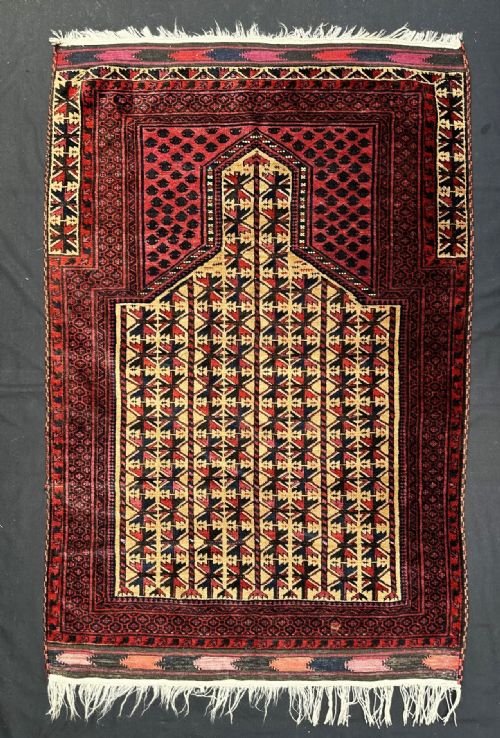
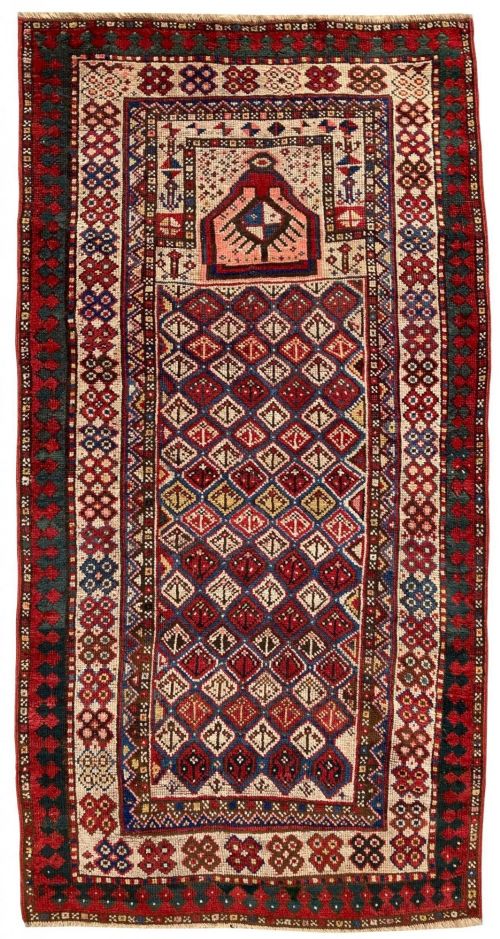
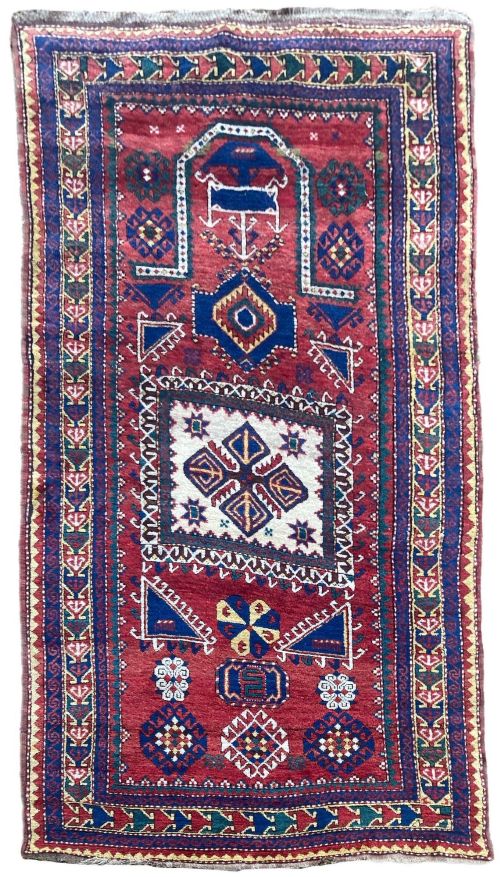
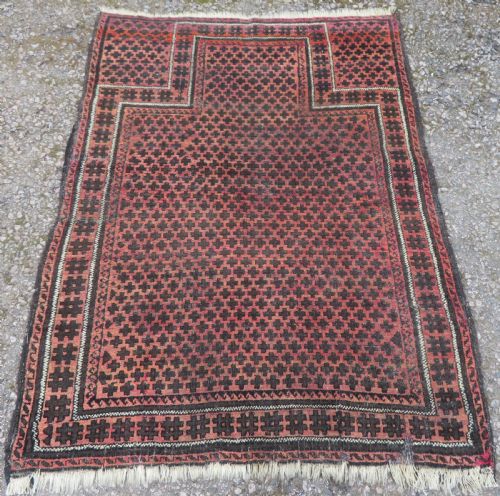
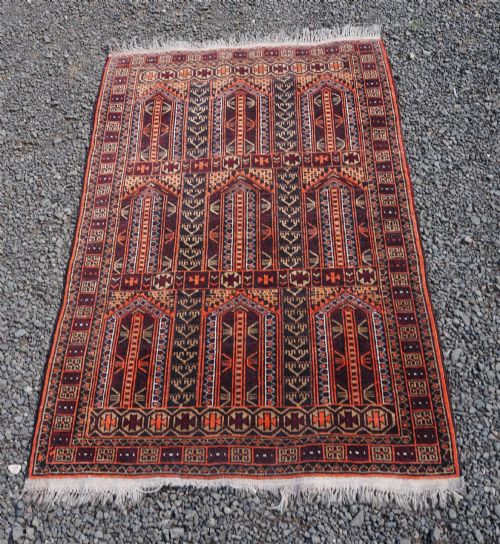
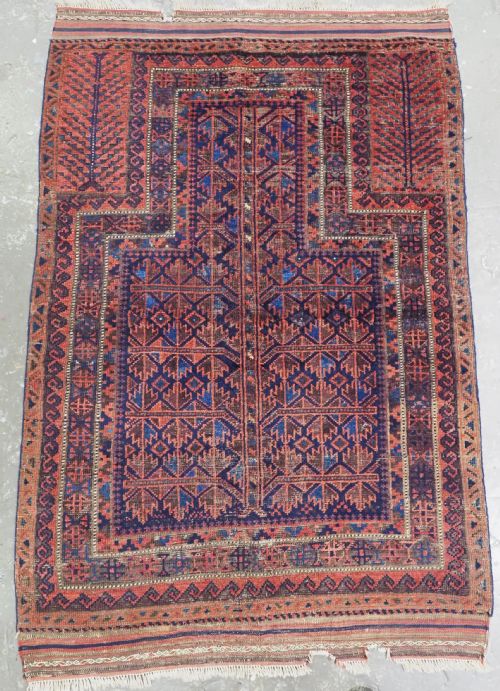
A woven tribal prayer mat is typically defined by its distinctive architectural niche motif, known as a mihrab, which historically directed the worshipper towards Mecca. These pieces originate from various regions including the Caucasus, Anatolia, and territories associated with Afghan, Baluch, and Turkmen tribal groups. The selections found on this page span from the mid-nineteenth century through the early twentieth century, encompassing village and nomadic weaving traditions.
Buyers will encounter specific regional subgroups such as Kazak, Gendje, and Dagestan examples from the Caucasus, alongside Bergama, Milas, and Kirsehir pieces from Anatolia. Baluch and Afghan tribal weavers produced numerous variants featuring repeated mihrabs, lotus leaf motifs, or tree of life designs. These formats generally serve as smaller area rugs or dedicated prayer pieces intended for portable domestic devotion.
Assessing quality
Quality in these textiles rests upon the precision of the weave, the depth and saturation of the natural dyes, and the integrity of the wool. Superior examples display crisp drawing within the geometric or floral lattice designs and a supple handle that indicates high-grade animal fibre. The balance of proportion between the central niche, borders, and spandrels reveals the weaver's mastery over traditional pattern repertoires.
The grading of an individual piece also depends on the survival of its original outer guard stripes and kilim ends, which protect the knotted structure. Artisanal skill appears in how evenly the pile was clipped and how faithfully archaic motifs like the seh mihrab or Dokhtar-e-Qazi patterns were executed. Subtle variations in shade resulting from natural dye batches contribute positively to the visual rhythm of the surface.
Woven Tribal Prayer Mat Retail Price Guide 2026
Typical asking prices for woven tribal prayer mat among the pieces listed under this phrase on Sellingantiques today, from the lower quarter to the upper quarter. They describe what is for sale here now, not the wider market.
Materials documented in the inventory include wool, cotton, camel hair, and hand-spun fibres coloured with natural dyes.
The Woven Tribal Prayer Mat Glossary
- Mihrab
- The arched niche design at one end of a prayer rug that mimics the architectural prayer focal point in a mosque. It serves as the primary visual orientation for the person using the mat.
- Seh Mihrab
- A design layout featuring three distinct architectural arches or niches across the upper field. This multi-headed variant occurs frequently in Baluch and Afghan tribal weaving.
- Kazak
- A style of geometric rug originating from the Caucasus region, known for bold primary colours and rectilinear medallion structures. These pieces were traditionally woven by village and nomadic communities.
- Dokhtar-e-Qazi
- A traditional Baluch pattern name associated with specific repeating geometric motifs and field arrangements. It translates literally to the judge's daughter.
- Ghiordes
- An Anatolian town and historical weaving centre famous for prayer rugs featuring pronounced central niches and floral border designs. The name also designates a symmetrical double-warp knot structure.
Woven Tribal Prayer Mat: Frequently Asked Questions
How do I use a prayer mat at home?
These historical textiles function exceptionally well as small wall hangings, decorative accents on tables, or statement pieces on wooden floors.
Because the pile can wear under heavy foot traffic, placing them in low-traffic areas or mounting them safely preserves the delicate wool and foundation structure.
What is the difference between Caucasian and Baluch rugs?
Caucasian rugs typically feature crisp, saturated geometric medallions and structured borders derived from mountainous weaving traditions. They rely on bright primary tones and distinct village iconography.
Baluch rugs, conversely, utilise darker palettes of deep blues, browns, and reds, often incorporating camel hair and repetitive field motifs associated with nomadic life across Persia and Afghanistan.
How can I date an antique tribal rug?
Dating relies on stylistic indicators, structural analysis, and the chemical composition of the dyes used in the wool. Pieces exhibiting archaic drawing styles, highly variable natural dye lots, and primitive hand-spun foundations often point towards the nineteenth century.
Later examples from the early twentieth century frequently show more standardised village production methods while retaining traditional tribal patterns.
Why do some rugs feature camel hair?
Weavers incorporated un-dyed camel hair to introduce soft golden-brown tones and varied textures into the wool pile. This material appears notably in specific Baluch and tribal groups, adding natural durability and a distinct tactile quality to the ground or border elements.