




Woven Tapestry Panel
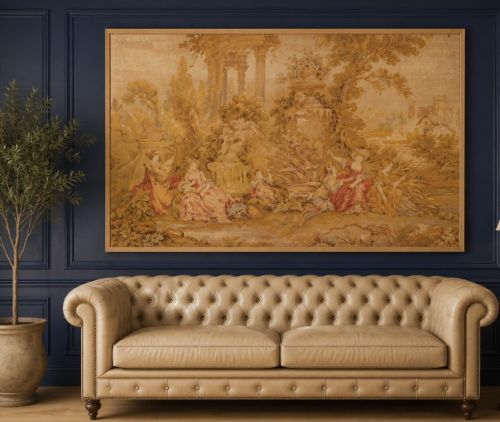
A woven tapestry panel brings centuries of textile artistry indoors, offering rich botanical scenes or geometric tribal designs to anchor a room.
Woven Tapestry Panel
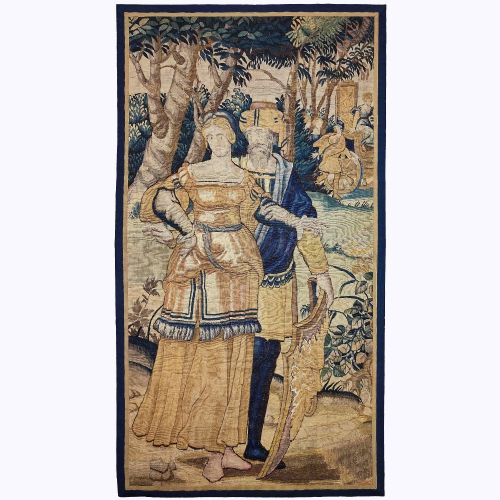
A woven tapestry panel is a textile artwork designed to hang on a wall, function as a room screen, or serve as upholstery. When searching for a woven tapestry panel, buyers encounter both grand European wall hangings and detailed tribal weavings.
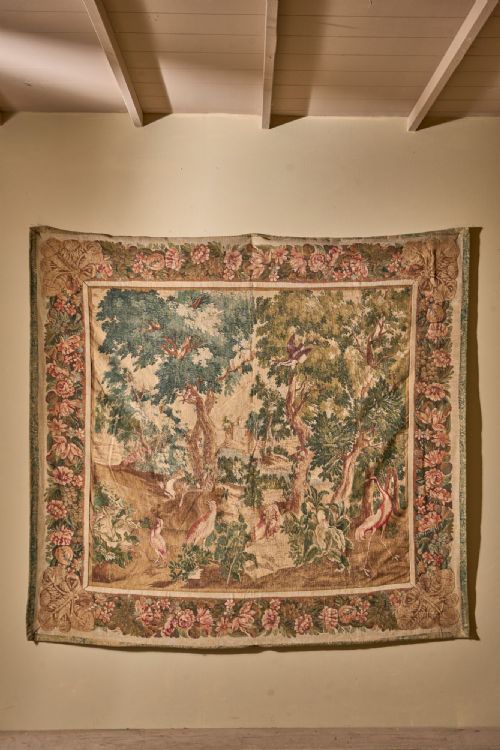
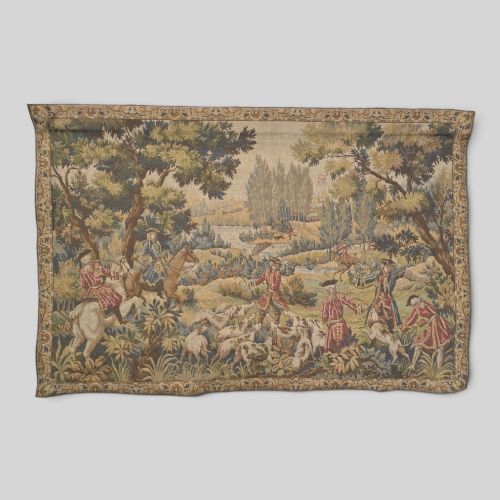
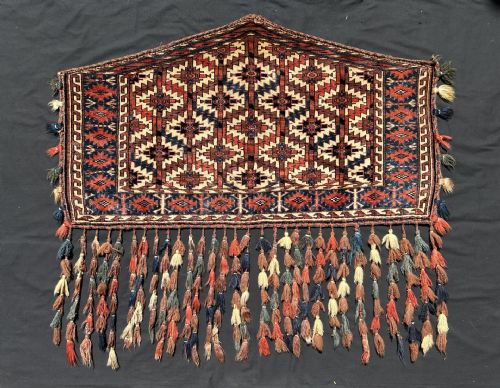
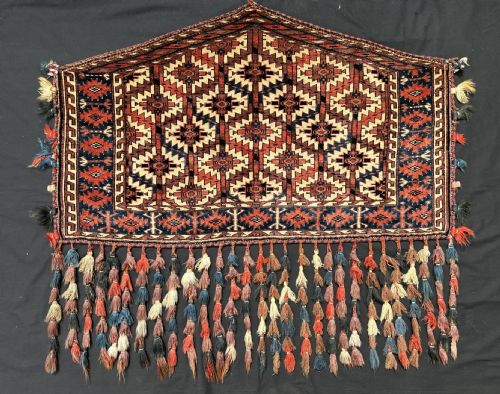
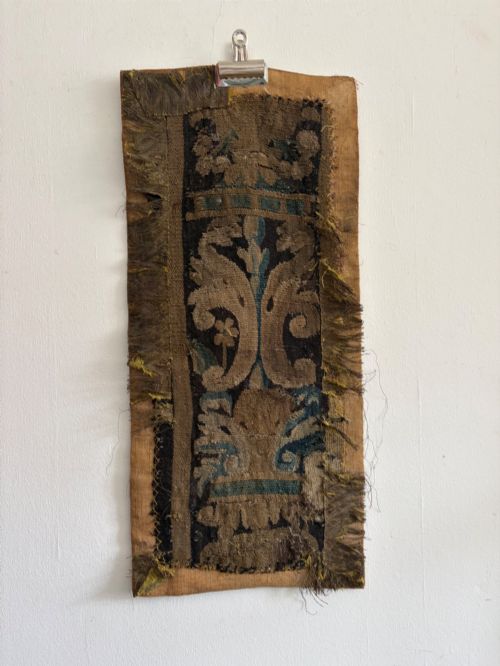
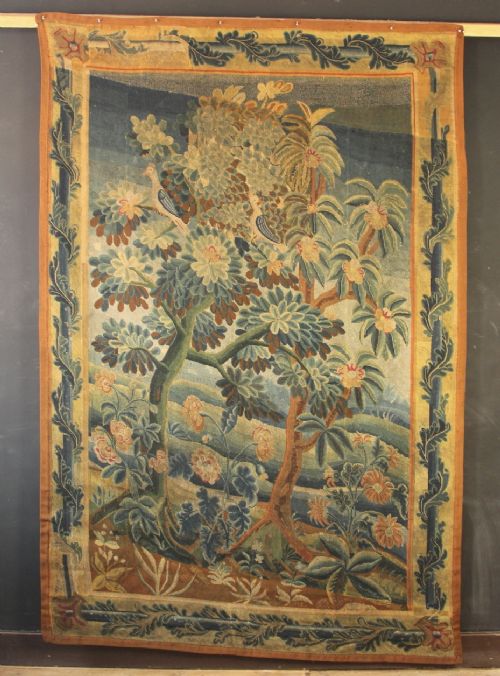
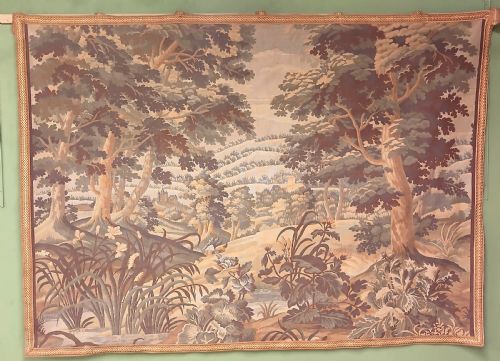
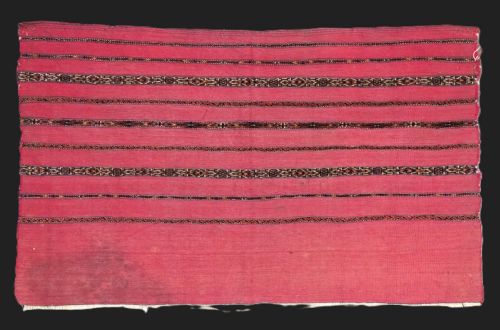
The pieces on this page span several centuries, reaching from sixteenth-century European fragments to nineteenth-century French verdure scenes and Central Asian flatweaves. French and Flemish workshops supply the large pastoral and wooded landscape panels, while nomadic makers contribute tribal asmalyks, chuvals, and kilim panels.
Forms range from full-scale wall art and framed panels to smaller cushion covers and border fragments mounted to linen. Buyers select these textiles to introduce historical depth, texture, and complex coloration into domestic interiors.
Materials and construction methods
Weavers constructed these panels primarily using wool, silk, cotton, and linen on timber frames, occasionally incorporating metal threads for added illumination. Natural dyes provided the deep greens, blues, and earth tones seen in European verdure and pastoral designs.
Nomadic and village workshops relied on flatweave techniques, sumac work, and fine hand-knotting to create geometric tribal textiles. European looms produced pictorial tapestries through intricate weft-faced weaving, sometimes mounting fragile fragments onto linen for structural support.
Listings span from the 16th century to the early 20th century, combining European pastoral scenes with Central Asian tribal textiles.
Factors that distinguish quality
Quality rests on the density of the weave, the complexity of the design, and the survival of the original colour palette. Finer yarns and tightly packed wefts allow for sharper pictorial detail and greater structural integrity over time.
The depth of the natural dye palette and the preservation of the edges or borders distinguish finer examples. Intact compositions with clear iconography hold greater visual coherence than fragmented or heavily repaired pieces.
The Woven Tapestry Panel Glossary
- Verdure
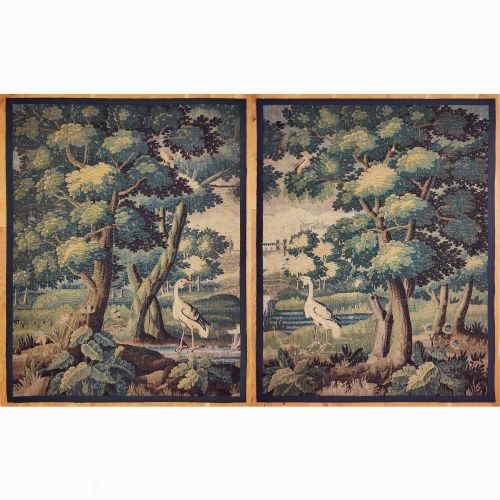
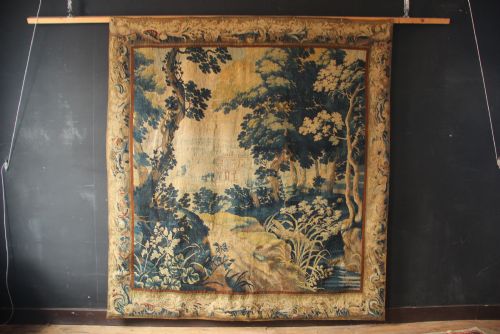
- A tapestry style dominated by foliage, trees, and landscapes, often featuring birds or distant chateaus.
- Asmalyk
- A pentagonal or hexagonal wedding trapping produced by Turkmen tribes, designed to decorate the flank of a camel.
- Flatweave
- A textile produced without knotted piles by interweaving warp and weft threads directly on a loom.
- Entre-fenêtre
- A tall, narrow tapestry panel specifically proportioned to hang on the wall space between two windows.
- Chuval
- A large Turkmen storage bag face woven in intricate geometric patterns for domestic utility.
Woven Tapestry Panel: Frequently Asked Questions
How do I hang a tapestry?
Large panels require a concealed timber batten or a sewn-in fabric sleeve along the reverse edge to distribute weight evenly across the wall.
Smaller fragments and framed panels can utilise standard picture wire fixed securely to a timber frame.
What is a verdure tapestry?
A verdure tapestry depicts a lush landscape filled with stylized trees, foliage, and occasionally animals or architectural ruins.
Popular in seventeenth and eighteenth-century European workshops, these panels brought woodland scenes into formal domestic interiors.
How should I clean my textile?
Surface dust can be removed gently using a soft-bristled brush or a low-suction vacuum applied through a protective mesh screen.
Water and chemical cleaning agents should be avoided unless handled by a professional textile conservator.
Can these panels be used as rugs?
European pictorial panels and delicate silk or wool wall hangings lack the pile density required for floor traffic.
Certain Central Asian flatweaves and tribal panels were made for utilitarian purposes, but antique wall panels require protection from friction.