

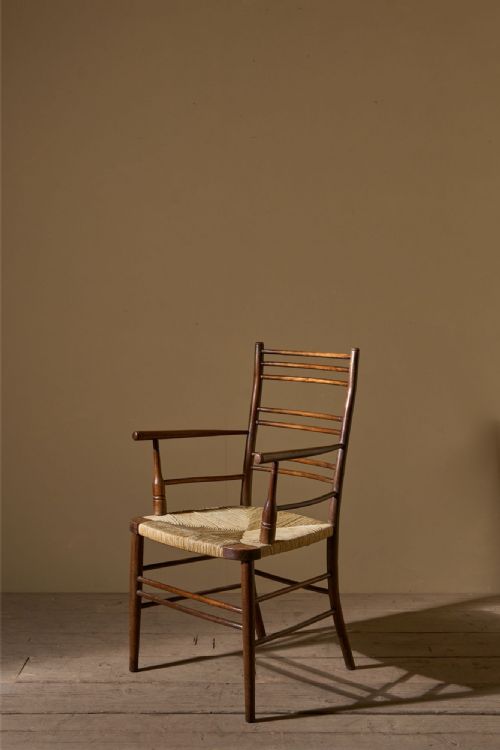
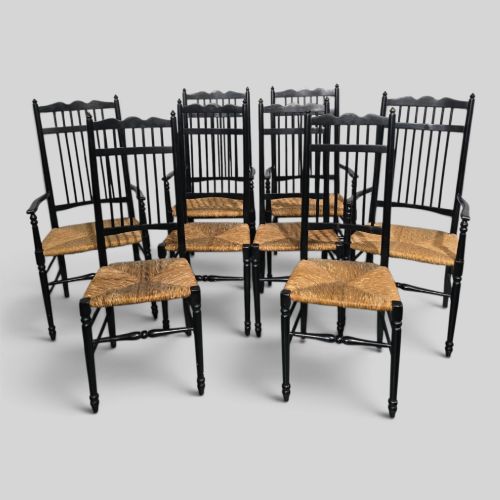


Woven Rush Seat Carver
A woven rush seat carver brings enduring regional character to a room, offering sturdy wooden frames and tactile seating shaped by traditional craftsmanship.
Woven Rush Seat Carver
A woven rush seat carver combines an armchair or dining chair frame with a hand-woven seating material, originating in domestic and vernacular traditions across Britain and beyond. These pieces emerge from periods including the eighteenth, nineteenth, and early twentieth centuries, spanning styles such as Arts and Crafts, Victorian country, and Scottish vernacular.
The versions most frequently met on this page include sturdy oak, elm, and fruitwood armchairs alongside ladderback and spindleback designs. Makers and regional workshops such as Liberty and Co, E W Godwin, and St Ives studio pieces appear among these selections, alongside country kitchen and provincial seating.
Materials and Construction
Frames are constructed from solid timbers such as oak, elm, fruitwood, ash, teak, and ebonised wood, often shaped using traditional turning and joinery techniques. Wood selection dictates the weight and rigidity of the frame, from heavy solid kitchen seating to lighter regional armchairs.
Seats are formed from natural rush woven tightly across the frame to create a resilient, textured surface. This fibrous material provides a durable platform that complements the timber structure beneath.
Listings feature items spanning from the eighteenth century through the Arts and Crafts movement and the nineteen-thirties, utilising natural rush alongside oak, elm, and teak.
Evaluating Quality and Character
Quality rests in the integrity of the timber frame, the tightness and regularity of the rush weaving, and the harmony of the overall proportions. Finer examples display careful turning, balanced joinery, and well-preserved structural joins without excessive timber replacement.
Attribution to known makers or specific design movements adds distinct interest, distinguishing standard provincial utility seating from considered Arts and Crafts or studio pieces.
Liberty Morris And Co·E W Godwin·Dicon Nance St Ives Studio·Liberty And Co
The Woven Rush Seat Carver Glossary
- Carver
- An armchair, traditionally placed at the head of a dining table or used as a desk or occasional chair. These chairs feature armrests integrated into the upper frame.
- Rush
- A pliable wetland plant material used for basketry and bottoming chairs. It is twisted and woven by hand into a strong, patterned seat.
- Ladderback
- A chair back featuring two or more horizontal arched slats between the upright rear posts. This regional form provides robust support.
- Vernacular
- Architecture and objects built by traditional craftspeople using local materials to satisfy immediate practical needs. These pieces reflect regional design traits rather than high-style academic rules.
- Ebonised
- Wood treated with a chemical stain or finish to resemble ebony. This dark surface treatment is often found on nineteenth-century decorative furniture.
Woven Rush Seat Carver: Frequently Asked Questions
How do I care for a woven rush seat?
Keep rush seats dry and clean them gently with a soft brush to remove dust. Avoid excess moisture, which can weaken the natural fibres over time.
Positioning the chair away from direct heat sources prevents the dried plant material from becoming brittle and cracking.
Are these chairs suitable for daily dining use?
Most of these pieces were originally constructed for domestic dining or kitchen tasks and handle regular seating well. Solid timber frames and tight rush weave offer practical durability.
Checking the stability of the joints ensures the chair safely supports everyday weight and movement.
What is the difference between a carver and a side chair?
A carver includes integrated armrests, making it larger and suited for use at the head of a table or as an occasional armchair. Side chairs lack arms, allowing multiple pieces to tuck closely together.
Matching sets often pair several side chairs with one or two matching carvers for the table ends.
How do I identify Arts and Crafts examples?
Arts and Crafts pieces emphasise honest construction, visible joinery, and straightforward materials without excessive surface ornamentation. Designers associated with this movement favoured simplified ladderback forms and exposed natural timbers.
Maker marks or association with studios like Liberty provide clearer attribution for these designs.