




Woven Floor Covering
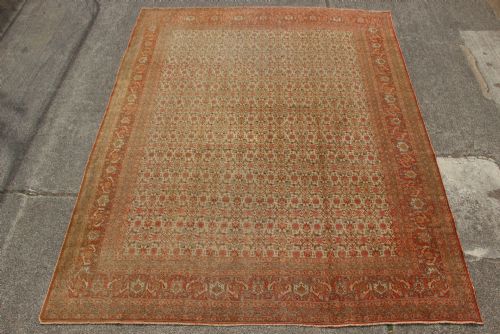
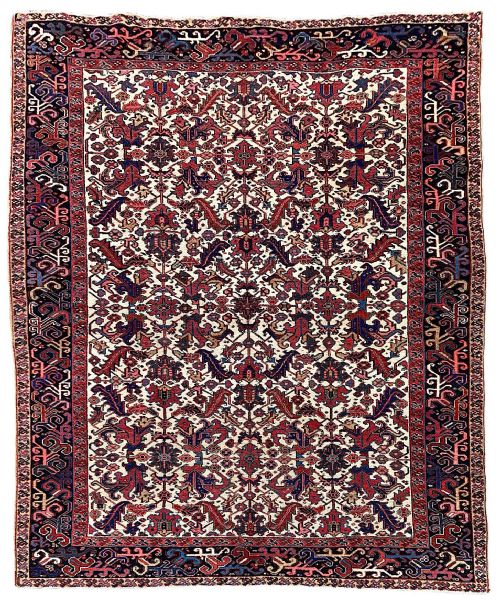
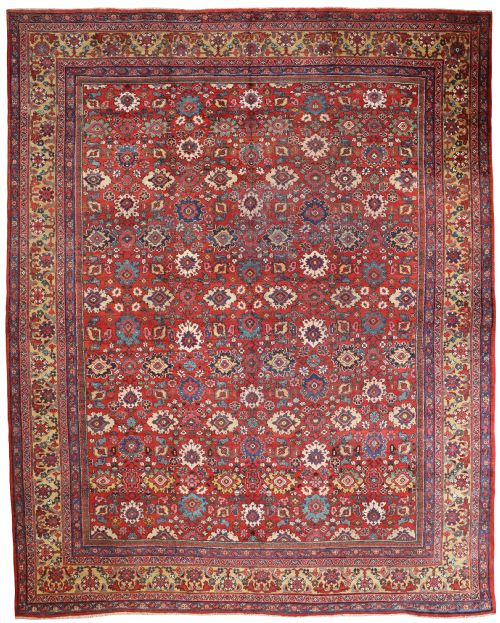
These woven floor covering examples bring centuries of Persian and Caucasian hand-knotting traditions straight into your interior.
Woven Floor Covering
When searching for a woven floor covering, buyers encounter a wide variety of room-sized carpets, large rugs, and smaller tribal pieces originating from Persia and the Caucasus. These textile objects range from room-size carpets dating back to the mid-nineteenth century down to smaller scatter rugs from the early twentieth century.
The selections span several distinct regional classifications, including Heriz, Tabriz, Isfahan, Kazak, and Khamseh. Buyers are most likely to meet traditional Persian carpets and tribal rugs displaying classic geometric or floral designs across wool foundations.
Beyond standard floor rugs, the category encompasses related domestic textiles such as saddlebags and cushions fashioned from the same hand-woven methods. Each piece reflects the specific village, town, or tribal region of its creation, identifiable through distinct border motifs and colour palettes.
Assessing quality in antique carpets
Quality separates along the precision of the knotting and the integrity of the materials. Tighter knots allow for sharper definition in intricate medallion and floral patterns, marking the distinction between standard village production and finer urban workshop output.
The condition of the wool pile and the stability of the foundation dictate durability. Pieces retaining substantial pile depth and original edge finishes demonstrate superior preservation compared to examples showing heavy surface wear or structural compromise.
Woven Floor Covering Retail Price Guide 2026
Typical asking prices for woven floor covering among the pieces listed under this phrase on Sellingantiques today, from the lower quarter to the upper quarter. They describe what is for sale here now, not the wider market.
The listings span periods from 1850 to 1930, showcasing wool and cotton materials across Persian tribal, Caucasian, and Isfahan styles.
Benlian
The Woven Floor Covering Glossary
- Pile
- The upright yarn loops that form the soft surface of a carpet. This layer absorbs foot traffic and displays the woven design.
- Warp
- The vertical foundation threads stretched lengthwise on the loom. Weft threads pass across them to lock the knots in place.
- Saddlebag
- A utilitarian container woven in two joined sections for transport on animals. Collectors prize the surviving bag faces as decorative wall or floor pieces.
- Medallion
- A central ornamental design motif placed in the middle of a carpet field. It often anchors the surrounding geometric or floral layout.
Woven Floor Covering: Frequently Asked Questions
How do I clean an antique woven floor covering?
Gentle surface vacuuming without the beater bar helps remove embedded dust and loose grit.
Professional specialist cleaning remains essential for deep washing to protect old wool fibres.
Can I place these rugs in high traffic areas?
Durable wool construction allows many of these carpets to withstand regular daily foot traffic.
fragile or distressed antique pieces benefit from placement in quieter rooms to preserve them.
What is the difference between a village rug and a town carpet?
Village rugs display geometric tribal motifs woven from memory by nomadic or rural makers.
Town carpets exhibit precise floral designs planned on paper cartoons in established urban workshops.
How do I secure a rug on a hard floor?
A breathable, high-friction underlay prevents slipping and cushions the foundation against hard surfaces.
Correct sizing ensures the underlay remains hidden entirely beneath the outer edges of the carpet.