

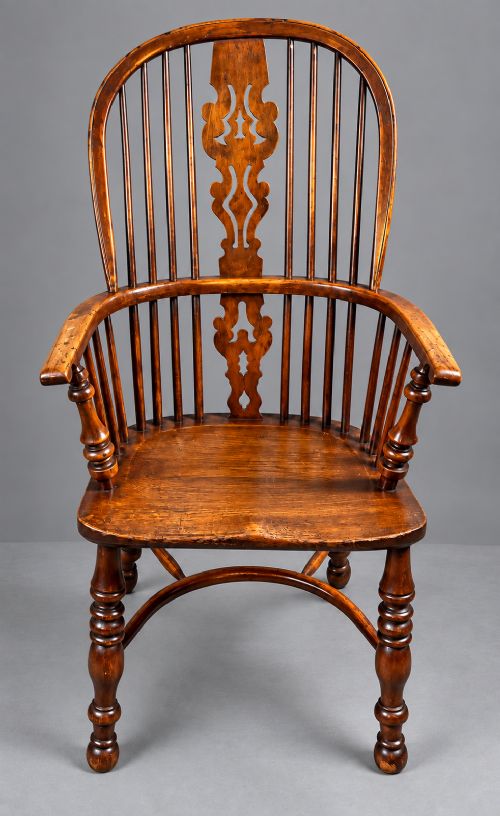
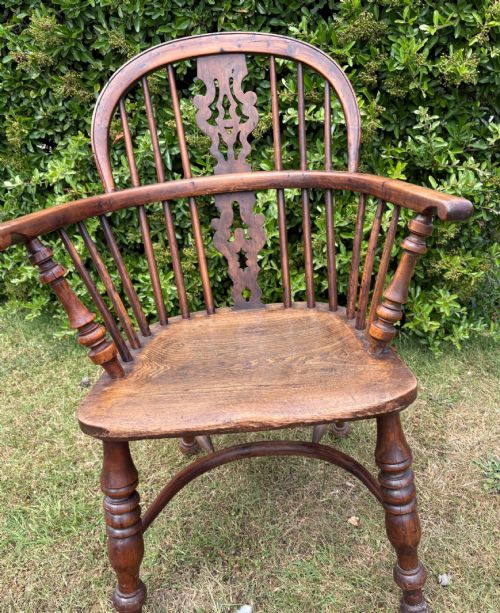


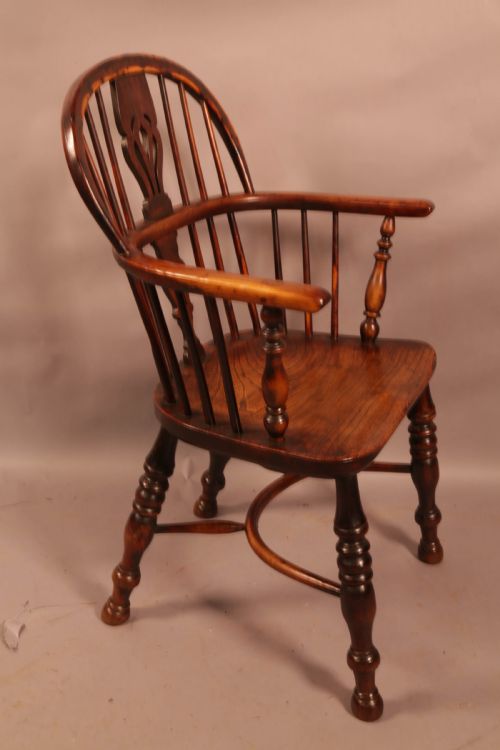


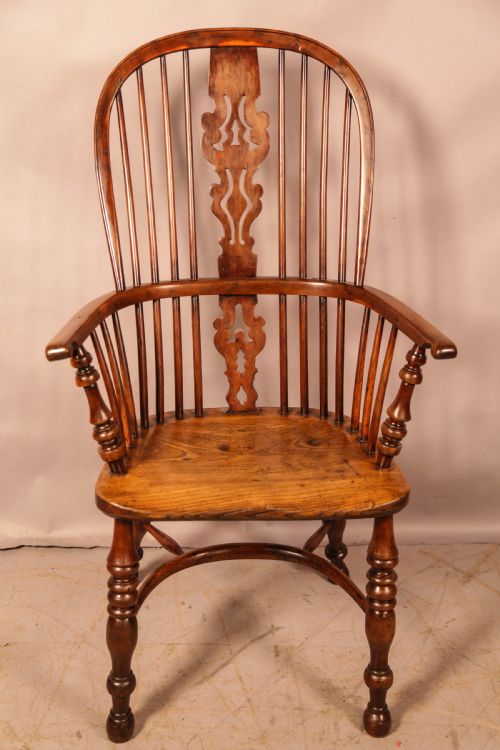
Worksop Windsor Armchair
A worksop windsor armchair is a regional English country seat built from native timber, prized for its distinctive local turnery and expressive grain.
Worksop Windsor Armchair
A worksop windsor armchair is a regional English country seat built by makers operating in Nottinghamshire, most commonly encountered from the nineteenth century and the Victorian period. These pieces belong to English vernacular and rustic farmhouse traditions, featuring sturdy wooden construction designed for everyday use.
The selections available here include both low back and high back configurations, alongside pad arm and broad arm variations. Makers frequently utilised native hardwoods, giving each armchair a distinct local character that sets it apart from other regional windsor styles.
How They Were Made
Makers constructed these armchairs using a combination of elm and yew wood, often selecting burr yew for its complex, figured grain pattern. The framework relies on traditional vernacular joinery, where turned spindles and legs are fitted directly into solid timber seats.
Regional craftsmen shaped the arm rails and back supports from single pieces of timber where possible, ensuring structural strength. The natural properties of the yew and elm dictated the final profile, balancing rigid support with comfortable seating contours.
Worksop Windsor Armchair Retail Price Guide 2026
Typical asking prices for worksop windsor armchair among the pieces listed under this phrase on Sellingantiques today, from the lower quarter to the upper quarter. They describe what is for sale here now, not the wider market.
Every listed piece in this selection dates from the nineteenth century or the Victorian period, constructed entirely in yew, elm, or burr yew.
What Varies in Quality
The distinction between standard examples and superior pieces rests upon the choice of timber and the complexity of the turnery. Chairs featuring highly figured burr yew display a richer visual depth compared to plain yew or standard elm variants.
Execution of the arm scrolls and the crispness of the turned spindles further separate the output of different makers. Superior specimens retain their original timber surfaces and structural integrity without heavy replacement parts.
Gabbitass Worksop·Benjamin Gilling·Allsop Worksop·John Moss Worksop
The Worksop Windsor Armchair Glossary
- Broad arm
- A Windsor chair arm featuring a wide, flat elbow rest that provides an expansive surface for writing or resting. This design is frequently associated with regional Nottinghamshire production.
- Burr yew
- A growth deformity in yew trees that produces highly swirled, knotty wood grain patterns. Craftsmen prized this material for prominent parts of high status armchairs.
- Pad arm
- An upholstered or padded addition integrated into the wooden arm structure of a Windsor chair. It offers extra comfort while maintaining the traditional regional silhouette.
- Low back
- A Windsor chair design where the back rail sits below shoulder height, often supported by a central splat and curved arm bow. This form allows easier movement in domestic spaces.
- Vernacular
- Objects designed and built by local craftsmen using traditional regional methods and materials rather than following academic metropolitan patterns.
Worksop Windsor Armchair: Frequently Asked Questions
What defines a worksop windsor armchair?
These armchairs are distinct regional seats produced in Nottinghamshire during the nineteenth century. They utilise native yew and elm, often featuring characteristic local turnery and broad or pad arm configurations.
The regional style separates them from Thames Valley or West Country windsor chairs through specific spindle arrangements and seat shaping.
How were these armchairs used originally?
They served as principal seating in domestic farmhouses and country homes, positioned near hearths for warmth. The sturdy construction suited daily indoor use.
Broad arm variants additionally provided a convenient flat surface for holding books or writing materials.
How do I live with a yew armchair?
Yew wood furniture requires stable indoor humidity levels away from direct heat sources to prevent timber splitting. Regular dusting and occasional wax application maintain the natural sheen of the wood.
Positioning the chair away from direct sunlight protects the warm colour of the yew grain over time.
How can I tell periods apart?
Nineteenth century examples in these listings typically display the darker patination and denser timber selection associated with Victorian vernacular production. Earlier pieces often incorporate simpler elm seats combined with yew spindles.
Turnery details and structural proportions evolved slightly across the decades, shifting from lower backs toward taller high back formats.