
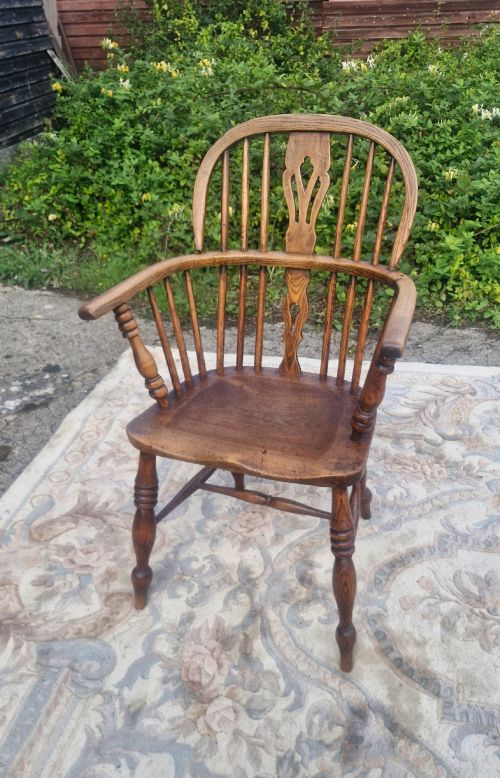
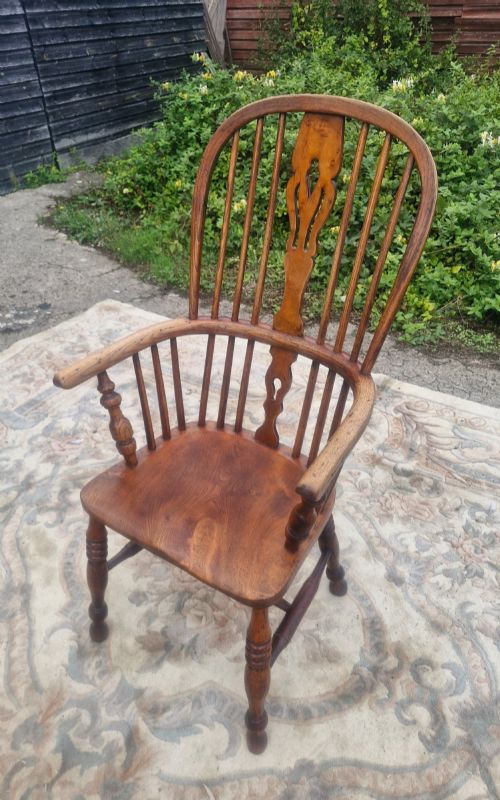


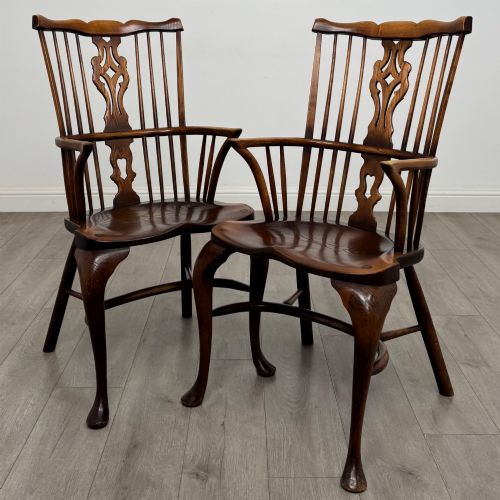
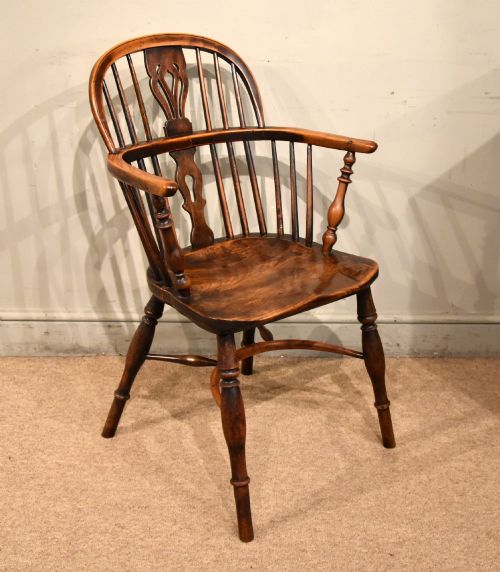
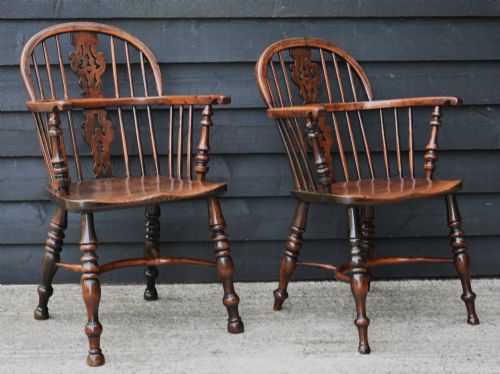
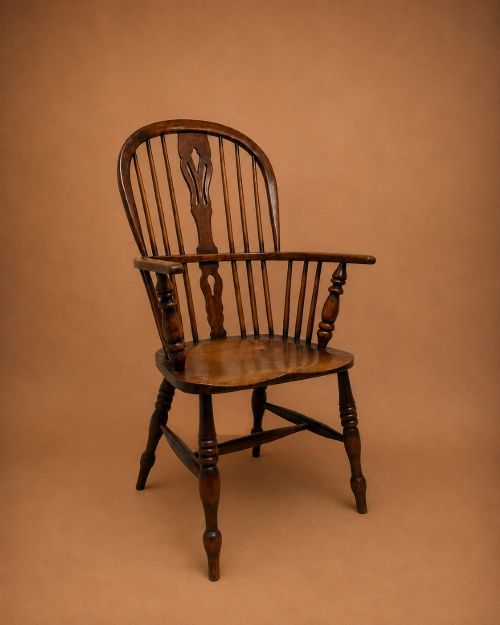
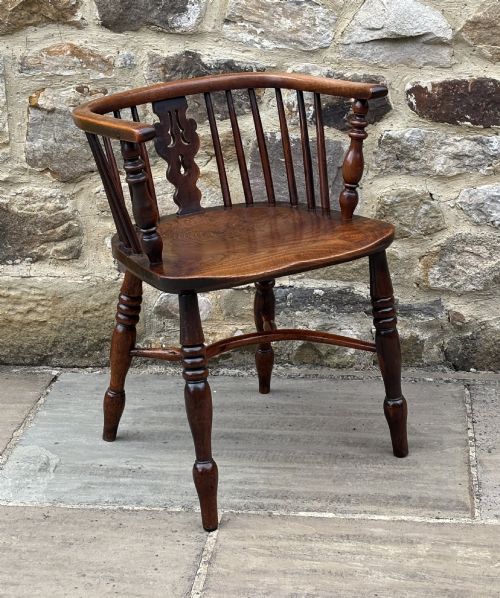
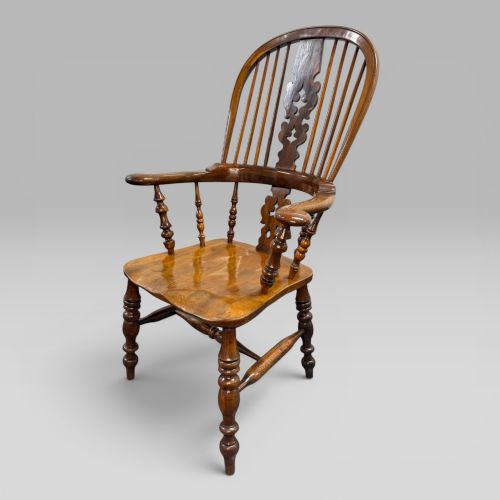
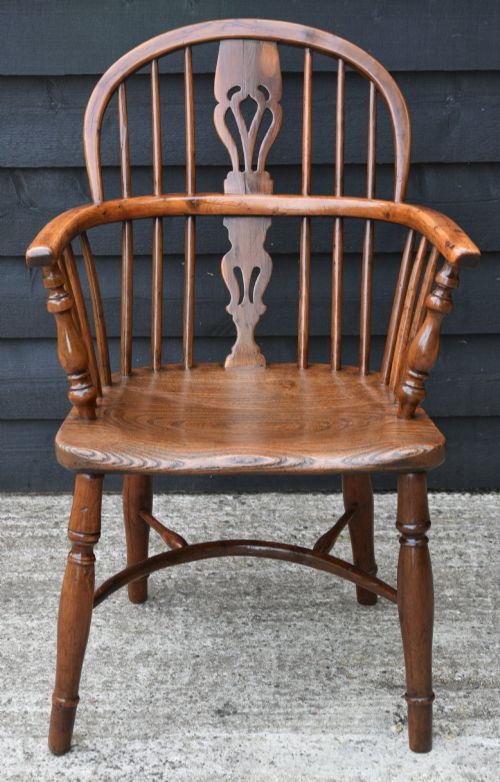
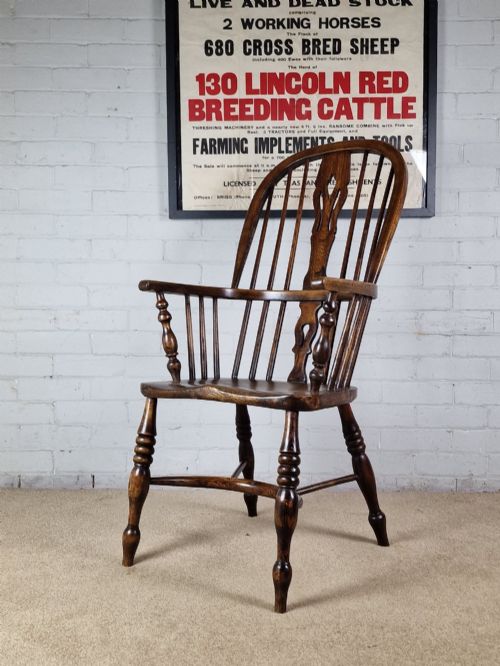
Pierced Splat Windsor Armchair
A pierced splat windsor armchair brings vernacular strength into a room, offering sturdy timber framing shaped for the sitting body.
Pierced Splat Windsor Armchair
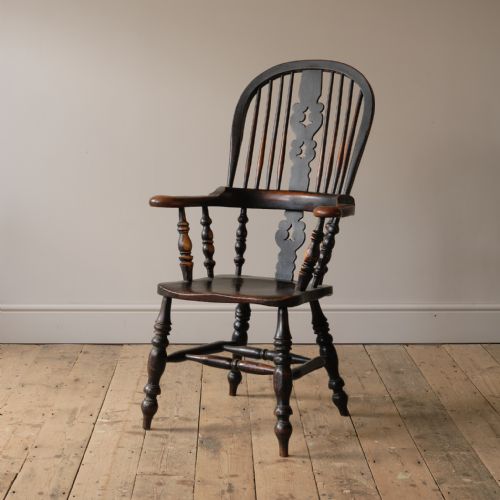
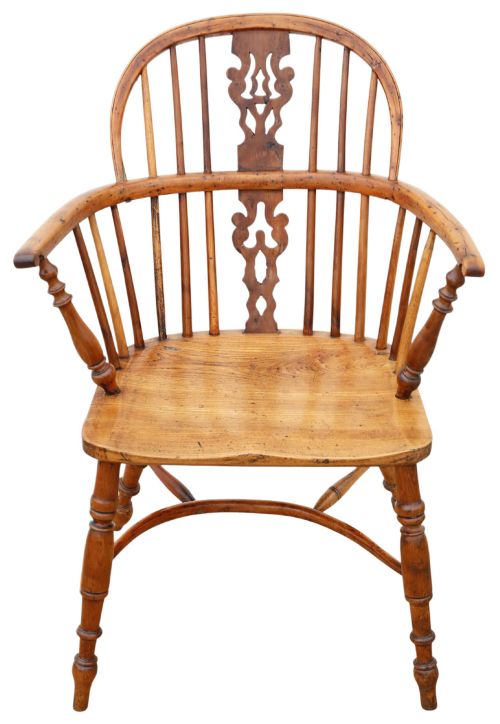
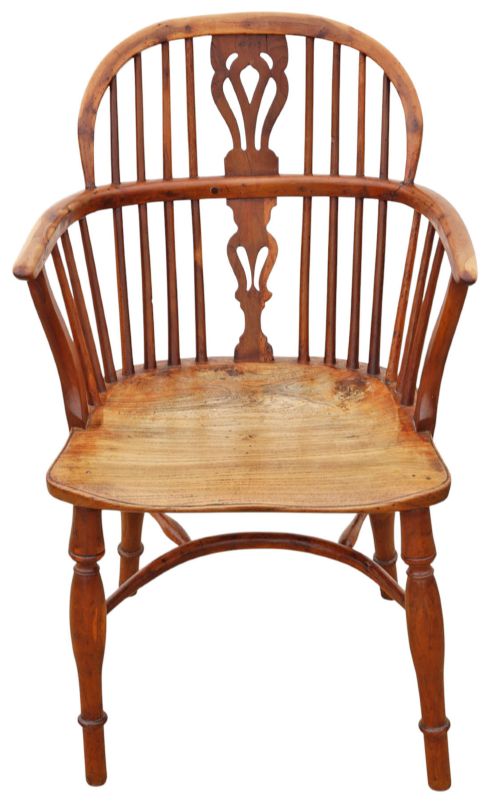
A pierced splat windsor armchair is a traditional wooden seating form characterised by a solid shaped seat and a back incorporating a central wooden splat pierced with a decorative shape. These chairs originate from English country and provincial traditions, spanning Georgian, Victorian and Edwardian periods.
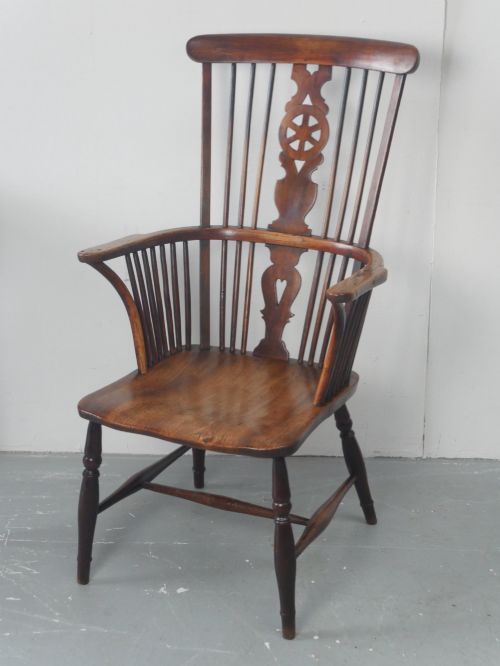
The most common examples encountered on this page belong to the nineteenth century, utilising regional vernacular forms such as hoop backs, high backs and comb backs. They function as robust seating designed for farmhouse kitchens, parlours and country houses.
Makers shaped these armchairs using a combination of turned spindles, bentwood hoops and solid plank seats. The resulting forms range from low-backed library chairs to tall comb-backed dining armchairs.
What Varies in Quality
Quality rests upon the selection of timber and the harmony of the proportions. Yew wood examples with rich grain patterns and deep patination generally command greater appreciation than plain elm or mixed hardwood versions.
The archive includes regional forms from Nottinghamshire and Lincolnshire alongside English country and provincial armchairs.
Gabbitass Worksop maker
The Pierced Splat Windsor Armchair Glossary
- Splat
- The central vertical wooden upright within the back of a chair. It is frequently pierced or shaped for visual interest.
- Crinoline stretcher
- An arched under-framing connecting the legs of a chair in a curved loop. It adds structural rigidity while referencing earlier seventeenth-century seating fashions.
- Hoop back
- A continuous steam-bent wooden bow that forms both the backrest and the arms of the chair. It slots directly into the solid wooden seat.
- Comb back
- A Windsor chair design where the vertical spindles rise to support a horizontal top rail resembling the teeth of a comb. This regional variation often dates to the eighteenth century.
- Vernacular
- Objects made by regional craftsmen following local traditions rather than academic architectural patterns. These pieces prioritise utility and local timber availability.
Pierced Splat Windsor Armchair: Frequently Asked Questions
How do I identify a pierced splat windsor armchair?
Look for a solid plank seat into which the legs and back spindles are wedged directly, paired with a central back splat pierced by a cutout design. These chairs combine turned underframes with steam-bent arms.
Check for regional variations in the backrest, such as hoop or comb constructions, which help date the piece alongside the choice of timbers like yew and elm.
Where were windsor armchairs traditionally used?
These armchairs served primarily in English country houses, farmhouses and provincial homes. Their robust timber construction made them ideal for everyday domestic tasks.
Over time, they moved from working kitchens and parlours into libraries and reception rooms as country house style gained wider appreciation.
What is the difference between yew and elm in these chairs?
Yew wood was selected for its decorative grain and warm colour, often reserved for finer provincial armchairs and comb-back designs. Elm possessed a tough, interlocking grain that prevented cracking, making it the preferred choice for solid saddle seats.
Many chairs combined both timbers, using yew for the bent framework and elm for the seat base.
How do I care for an antique wooden armchair?
Keep the timber away from direct heat sources and sudden temperature fluctuations to prevent the wood from drying out or splitting. Apply natural wax polish sparingly to maintain the surface sheen.
Avoid using modern liquid cleaners that can strip the historic polish and patination accumulated over centuries of use.