


Worcester Highland Cattle
Worcester highland cattle pieces bring pastoral Scottish landscapes onto fine porcelain surfaces.
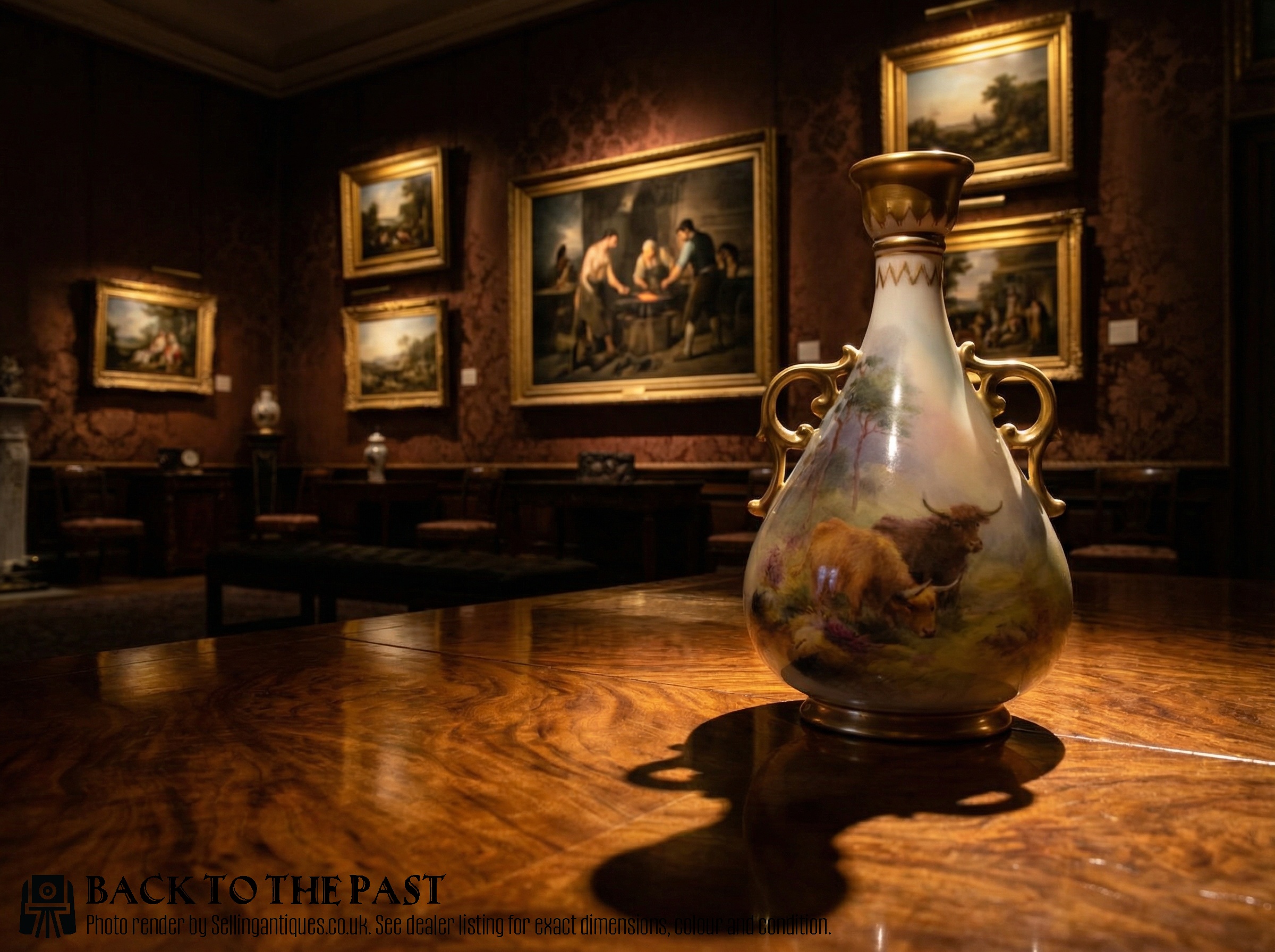
Worcester Highland Cattle
When you search for worcester highland cattle, you encounter hand-painted scenes of long-horned cattle set against misty moorland backgrounds. These porcelain objects date predominantly from the Edwardian period through to the nineteen thirties, capturing a romanticized view of the Scottish highlands on English ceramic bodies.
Vases, cabinet plates, ewers and pot pourri jars form the majority of the surviving shapes on this page. The painting sits centrally on the body of the vessel, often framed by ornate gilt borders and rich enamel detailing.
Smaller items such as spill vases, cream jugs and demi tasse cups also appear alongside large covered urns and decorative wall plaques. Each piece serves primarily as a decorative canvas rather than a utilitarian object.
Materials and Technique
The body consists of fine porcelain or bone china, shaped into classic forms before receiving its painted decoration. Artisans applied delicate enamel colours by hand, building up the texture of the cattle hair and the atmospheric mist of the landscape.
Gold leaf, gilding and rich giltwood accents highlight handles, rims and shoulders. Firing fixed the mineral pigments permanently into the glaze, protecting the fine detail of the artwork across decades of handling.
Worcester Highland Cattle Retail Price Guide 2026
Typical asking prices for worcester highland cattle among the pieces listed under this phrase on Sellingantiques today, from the lower quarter to the upper quarter. They describe what is for sale here now, not the wider market.
Materials span fine porcelain, bone china, enamel, glass and gold leaf gilding across pieces dated between nineteen hundred and nineteen thirty.
Quality and Artistry
The skill of the individual hand painter dictates the artistic merit of each piece, distinguishing simple factory decoration from masterwork artistry. Detail in the rendering of the cattle and the depth of the background landscape separate standard items from exceptional examples.
The complexity of the porcelain shape itself also influences the standing of the piece. Large covered vases and twin-handled urns demand greater technical mastery in both ceramic production and subsequent gilding than flat cabinet plates or small spill vases.
Royal Worcester·Harry Stinton·John Stinton·Townsend·D. J. Scyner
The Worcester Highland Cattle Glossary
- Ewer
- A large jug with a wide spout and scroll handle, often used purely for decorative display in porcelain.
- Pot Pourri
- A vessel featuring a pierced cover designed to hold dried scented plant material, frequently painted with landscape scenes.
- Gilt
- A thin layer of gold applied to the ceramic surface to accent rims, handles and framing borders.
- Enamel
- A vitreous composition fused to the porcelain body to provide durable, coloured decoration.
- Bone China
- A type of soft-paste porcelain incorporating bone ash, yielding a strong and translucent white ceramic body.
Worcester Highland Cattle: Frequently Asked Questions
Who painted these highland cattle scenes?
Specialist artists attached to the pottery works painted these pastoral scenes by hand, most notably members of the Stinton family alongside artists such as Townsend and Scyner. Their signatures frequently appear near the base of the painted landscape.
Each artist brought a distinct brushwork style to the depiction of the cattle hair and the surrounding Scottish mist, making signed pieces particularly sought after by collectors.
How should I display these porcelain pieces?
These decorative items suit placement in cabinets, on mantelpieces or mounted securely as wall art where natural light can illuminate the enamel colours. Direct sunlight should be avoided to protect the integrity of the painted surface.
Pairing matching vases or placing cabinet plates on suitable stands helps present the artistry of the landscape compositions to full effect in a room.
What periods do these ceramics come from?
The surviving pieces date primarily from the early twentieth century, spanning the Edwardian era and continuing through the nineteen twenties and thirties. This timeframe represents the peak period for hand-painted landscape ceramics at the factory.
Earlier nineteenth-century examples are less common, while production shifted in character as artistic fashions changed toward the middle of the twentieth century.
Are these items meant for daily use?
These porcelain vessels and plates were created primarily for decorative display rather than functional dining or utility. The delicate enamel work and extensive gilding require gentle care to prevent wear.
Cleaning should be limited to dusting with a soft dry cloth, avoiding immersion in water or abrasive cleaning agents that could damage the hand-painted details.