


Wool Turkmen Mat
A wool turkmen mat brings rich tribal geometry and deep red colourways into a room, offering genuine historical depth for everyday use.
Wool Turkmen Mat
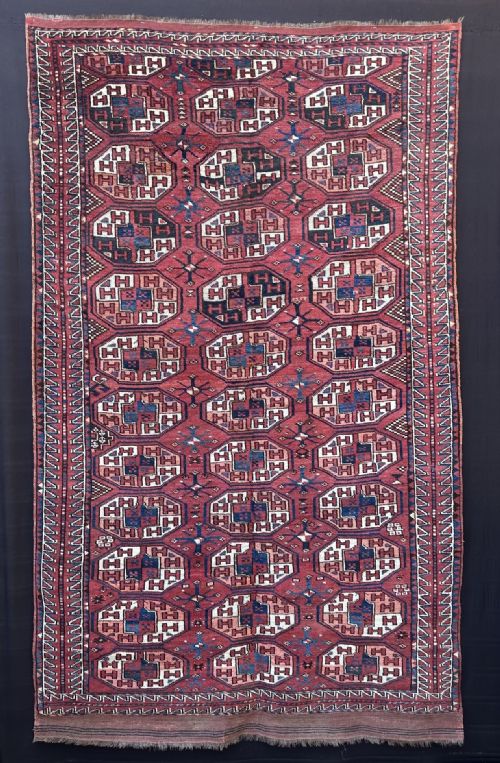
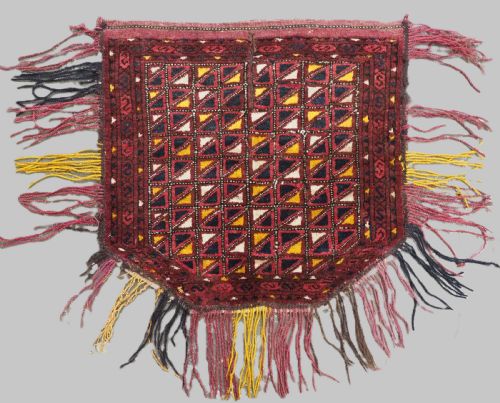
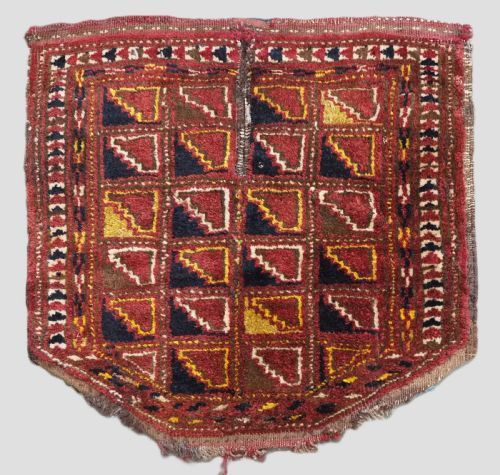
A wool turkmen mat encompasses small-scale tribal weaving, prayer rugs, and bag faces produced by nomadic and village groups across Central Asia. Buyers encountering these pieces will frequently find formats such as saddle covers, torba faces, and mafrash panels alongside standard mats.
The objects span from the mid-nineteenth century through the early twentieth century, reflecting traditional tribal patterns passed down through generations. Formats range from portable tent bags to larger village carpets and mosque prayer rugs with specific niche designs.
Tribal groupings such as the Yomut, Ersari, Saryk, Tekke, and Kizil Ayak dominate the selection, each carrying distinct structural characteristics and tribal motifs. These textiles served functional roles within tribal life before entering the decorative market.
Materials and construction
Weavers utilised local wool for the pile and foundation structures, paired with natural dyes to achieve deep red, brown, and ivory tones. Cotton frequently appears in the foundational warps or supplementary details of specific tribal pieces.
Construction techniques include standard pile knotting for rugs and carpets alongside flatweave methods such as soumak found on kilims and utilitarian bags. Original elements like braided tassels and long kilim ends occasionally survive on well-preserved examples.
Listings feature wool construction paired with natural dyes across prayer rugs, bag faces, and main carpets dating from the mid-nineteenth to the early twentieth century.
Grading quality and execution
Quality rests in the precision of the tribal guls and the saturation of the natural dyes across the wool pile. Finer knot density and crisp secondary border details separate standard village work from master tribal weaving.
Kizil Ayak Tribe·Ersari Turkmen·Saryk Turkmen·Yomut Turkmen·Tekke Turkmen
The Wool Turkmen Mat Glossary
- Gul
- A primary octagonal medallion motif repeated across Turkmen carpets and mats. This geometric design identifies the specific tribal group responsible for the weaving.
- Mihrab
- The arched prayer niche design depicted on prayer rugs and mosque rugs. It points the worshipper toward Mecca during daily prayers.
- Torba
- A wide tribal wall-hanging bag used for storage inside a yurt. Faces of these bags often survive independently as collectible mats.
- Soumak
- A flatweave technique involving wrapping weft threads over warps to create a durable textured surface. It appears on kilims and specialised utilitarian pieces.
- Mafrash
- A large rectangular storage box panel woven in pile or flatweave technique. These sections formed parts of nomadic luggage containers.
Wool Turkmen Mat: Frequently Asked Questions
What is a wool turkmen mat?
A wool turkmen mat is a hand-knotted tribal textile originating from Central Asian nomadic and village weavers during the nineteenth and early twentieth centuries. These pieces typically feature geometric gul patterns executed in rich natural dyes on a wool foundation.
Such textiles served practical roles within tribal households as floor coverings, prayer mats, and storage bag faces. Today they function as decorative floor rugs or wall hangings valued for their tribal heritage.
How do I identify a prayer rug?
Prayer rugs feature a distinct mihrab or arch design at one end, which represents the prayer niche found in mosques. Variations include single arches, double lanterns, and multiple niches known as seh-mihrab.
These formats were specifically woven for devotional use rather than general floor placement. The orientation of the niche guides the user on how the rug was intended to be laid.
Where were these textiles made?
The pieces originate from Central Asia, including regions associated with modern Turkmenistan and Afghanistan. Different tribes such as the Yomut, Ersari, and Kizil Ayak inhabited distinct territories across these landscapes.
Nomadic and village groups produced these textiles within their tribal camps and settlements. The regional styles reflect the specific traditions and visual vocabulary of each participating group.
How should I care for a antique rug?
Antique wool rugs require gentle maintenance, beginning with regular light vacuuming without a rotating power brush. Keeping the textile out of direct sunlight prevents the natural dyes from fading over time.
Using a breathable underlay helps keep the rug stable and protects the wool pile from excessive friction. Professional cleaning tailored for antique textiles should be used when deep maintenance is necessary.