





Wool Pile Rug
A wool pile rug brings tactile warmth and deep regional character to a room, drawn from centuries of tribal and village weaving traditions.
Wool Pile Rug
A wool pile rug encompasses nomadic textiles, village runners, and tribal floor coverings originating from Persia, Anatolia, Central Asia, the Caucasus, and North Africa. These pieces range from substantial carpets and runners to smaller utility bags, tent bands, and fragments produced across the nineteenth and early twentieth centuries.
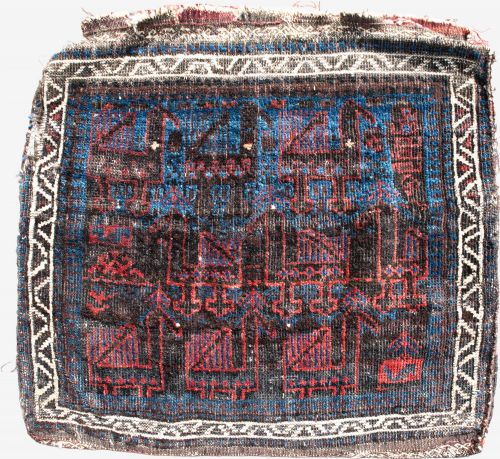
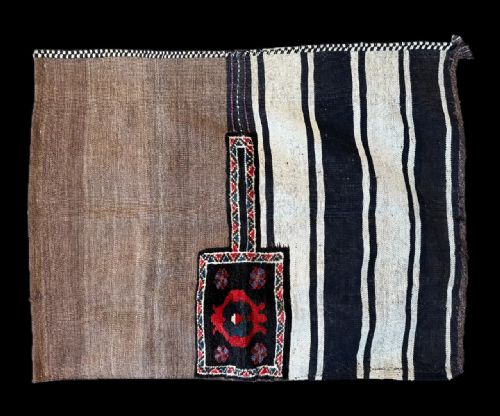
The wool pile rug most commonly met on this page is a nineteenth or early twentieth-century tribal creation, such as a Persian Qashqai or Baluch piece, an Anatolian runner, or a Central Asian tent bag. Buyers encounter formats spanning long hallway runners, square tribal rugs, and woven wheat-sacks retaining their dense tactile surface.
Makers include various nomadic and village groups like the Yomut Turkmen, Luri-Bakhtiari, Quchan Kurd, and Uzbek weavers. Each group imparted distinct regional designs, from repetitive guls to asymmetric tribal patterns executed in durable wool.
Construction and materials
Construction relies primarily on wool and cotton foundations, utilising hand-spun wool and dyed yarn for the knotted pile surface. Weavers knotted soft wool onto sturdy warp and weft threads to create durable floor coverings and heavy utility sacks.
Natural dyes provide the enduring palette seen across these textiles, interacting with hand-spun wool to create subtle variations in tone over decades of use.
Listings feature wool pile rugs from the nineteenth and early twentieth centuries, spanning periods up to nineteen-thirty.
Assessing quality and retention
Quality rests upon the density of the knotting and the integrity of the full pile surface. Pieces retaining a thick, even pile and complete original structure demonstrate superior craftsmanship compared to worn examples.
The refinement of the natural dyes and the precision of regional patterns distinguish finer tribal weaving. Structural completeness, particularly along borders and edges, marks the higher tier of surviving nineteenth and twentieth-century textiles.
The Wool Pile Rug Glossary
- Pile
- The upright loops or cut ends of yarn that form the soft surface of the rug. This textured layer absorbs wear and displays the primary design.
- Gul
- A repeating medallion or octagonal motif often found in Central Asian and Turkmen tribal weaving. These geometric symbols identify specific tribal groups.
- Asmalyk
- A pentagonal trapeze-shaped camel trapping produced by Yomut Turkmen tribes. These decorative hangings were made for wedding processions.
- Tacheh
- A woven wheat-sack originating from Luri-Bakhtiari tribes in Western Persia. These utilitarian containers feature dense wool pile on the front face.
- Julkyrs
- A shaggy yurt rug woven by Uzbek nomads for sleeping or sitting. The term translates directly to heart catcher.
Wool Pile Rug: Frequently Asked Questions
How do I care for a wool pile rug?
Vacuum gently without a rotating brush to protect the delicate pile and natural wool fibres from excessive friction.
Keep the textile out of direct sunlight to preserve the natural dyes and prevent fading over time.
Were these rugs used on floors?
Many examples served utilitarian functions inside tents and homes as floor coverings, sleeping mats, or animal trappings.
Other formats like wheat-sacks and tent bands were strictly practical items for storage and transport during nomadic migration.
How do I identify a tribal rug's origin?
Look closely at the specific repeating motifs, structural format, and regional colour palettes employed in the weave. Turkmen pieces often feature characteristic guls, whereas Persian tribal pieces show distinct regional dyeing habits.
Examining the weave structure and materials gives further clues to whether a piece originates from Anatolia, the Caucasus, or Central Asia.
What is a tent band?
A tent band is a long, narrow woven textile used historically by nomadic groups to secure and decorate the exterior of yurt structures.
These pieces often display intricate geometric patterns and dense wool construction designed to withstand harsh weather.