

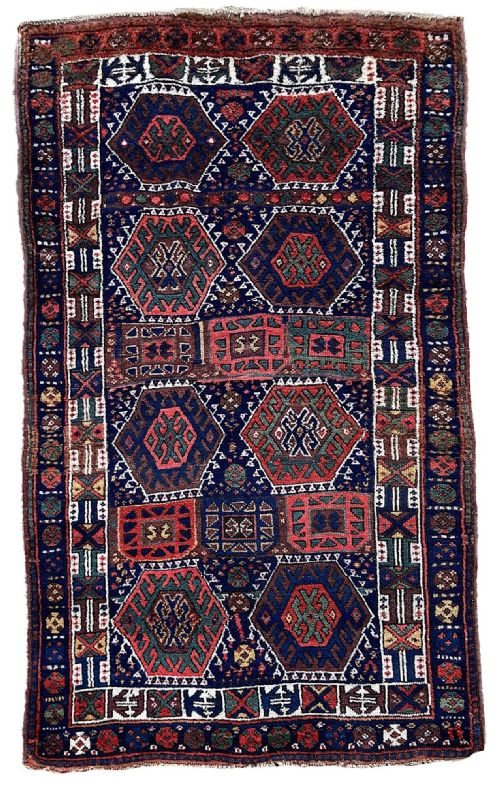
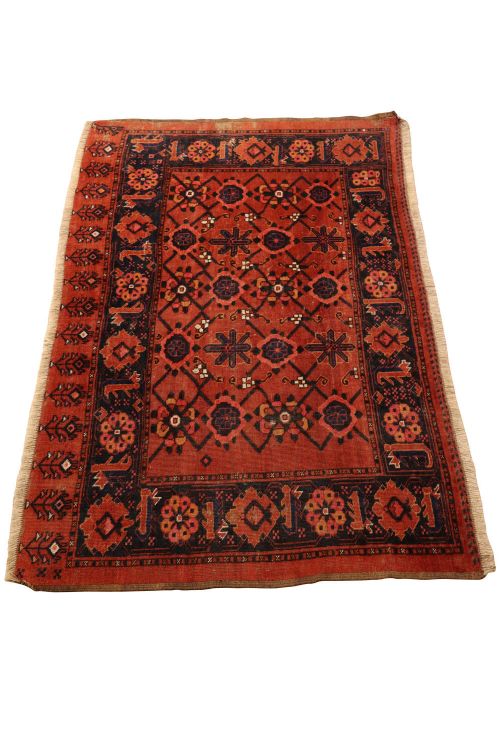


Wool Kurdish Weaving
Wool Kurdish weaving spans dense village carpets and nomadic saddlebags created across Persia, Anatolia and the Caucasus during the nineteenth and early twentieth centuries.
Wool Kurdish Weaving
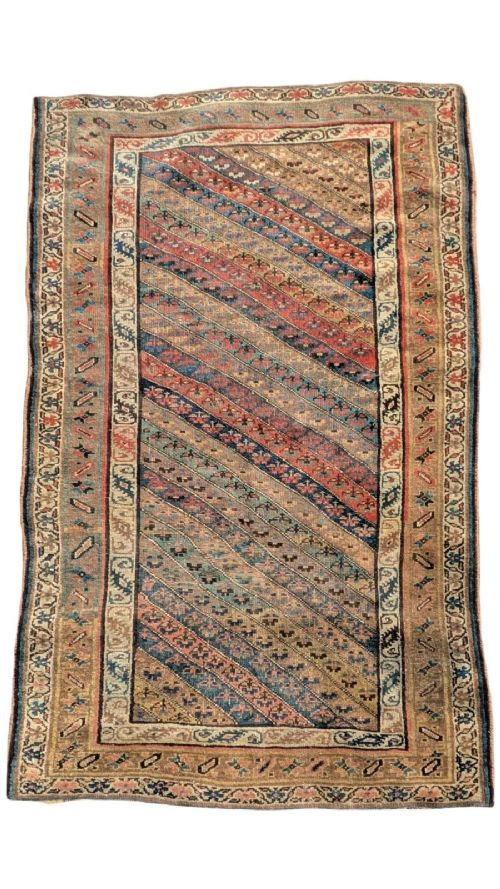
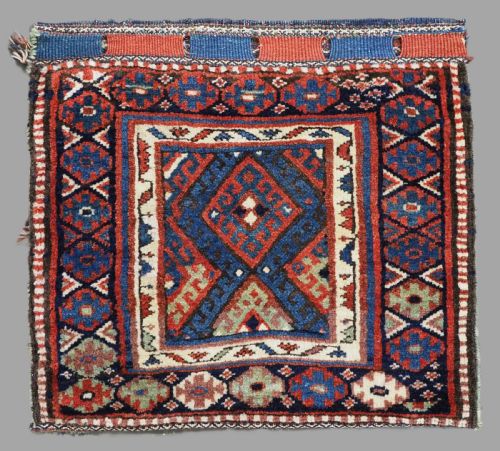
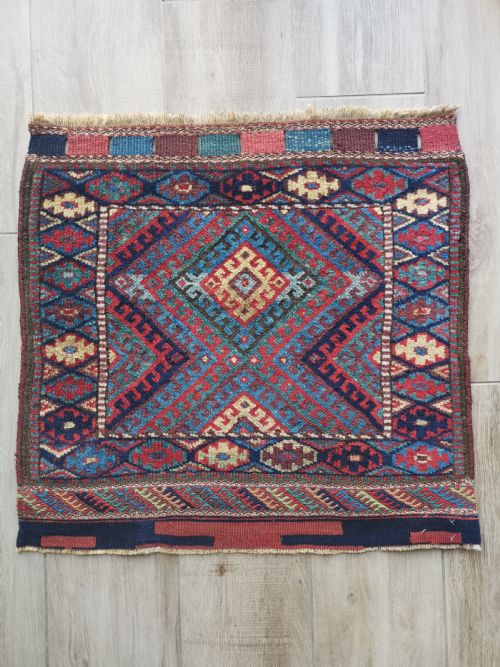
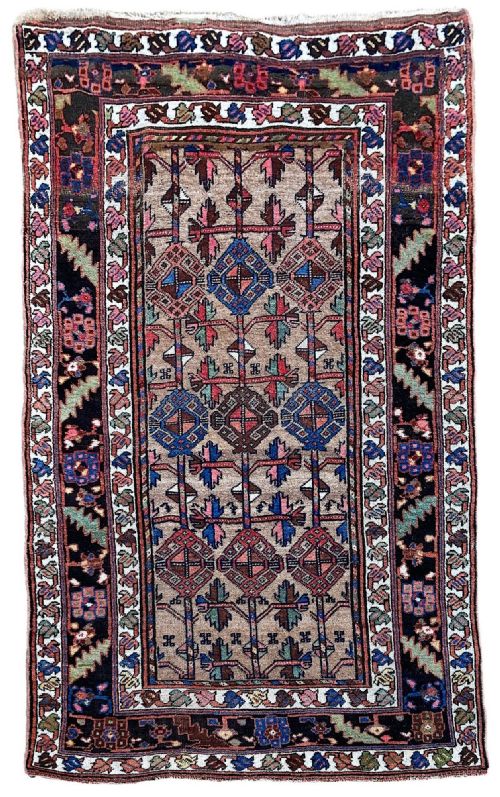
Wool Kurdish weaving covers a diverse range of tribal formats, including area rugs, long runners, kelleh carpets and smaller utilitarian items such as chantehs, bagfaces and wheat sacks. These textiles originate from Kurdish groups inhabiting varied regions like Bidjar, Senneh, Hamadan, Quchan and East Anatolia.
The most common examples on this page are room-sized rugs and compact tribal bags dating from the late nineteenth century to the early twentieth century. Pieces span styles described as Kurdish Tribal, Persian Bidjar, Kolyai and Jaf, reflecting distinct regional weaving traditions.
How they were made
Pieces rely primarily on hand-spun wool for the pile, combined with cotton foundations or goat hair elements in specific tribal bagbacks. Natural dyes provide the palette, yielding stable tones across yellow grounds and darker fields.
The construction is hand-knotted, producing dense structures designed for daily domestic use or transit. Plain weave techniques appear on the backs of complete bags alongside pile-woven faces.
Several items double as ancient storage solutions, meaning your rug once spent time strapped to the side of a Kurdish pack animal.
What varies in quality
Quality rests on the density of the hand-knotting, the clarity of the design motifs such as Memlinc guls or shrub patterns, and the vitality of the natural dyes. Superior examples exhibit tightly packed foundations and well-balanced colour distribution.
The handle and weight of the textile indicate the quality of the wool and the tightness of the beating during the weaving process. Complete saddlebags retaining their original plain weave backs hold particular interest for structural integrity.
The Wool Kurdish Weaving Glossary
- Kelleh
- A long carpet format, typically longer and narrower than standard room-sized carpets, suited for narrow spaces or hallways.
- Chanteh
- A small tribal vanity bag or small pouch, woven in pile or flatweave techniques for personal belongings.
- Gul
- A medallion or repeating gush-like motif often found in tribal and nomadic carpet designs.
- Bidjar
- A Persian town known for producing exceptionally dense, heavy carpets often associated with Kurdish weavers.
Wool Kurdish Weaving: Frequently Asked Questions
What is a Jaf bag?
Jaf bags are utilitarian storage pieces woven by the Jaf tribe, featuring pile faces and often retaining original plain weave backs.
They served nomadic purposes for transporting goods on animals before entering the decorative market.
How do I care for a tribal rug?
Protect the wool by vacuuming gently without a rotating brush and keeping the textile away from direct sunlight.
Professional specialist cleaning is recommended when dirt accumulates within the pile.
Where were Senneh rugs made?
Senneh rugs originate from Sanandaj in the Kurdistan province of western Iran, known for fine knotting.
They often display intricate geometric layouts or Herati patterns on light fields.
Are these pieces strictly nomadic?
The listings include both nomadic tribal work from groups like the Jaf and village productions from established centres like Bidjar and Hamadan.
Techniques and materials overlap, but format and design geometry distinguish village workshops from camp weavings.