
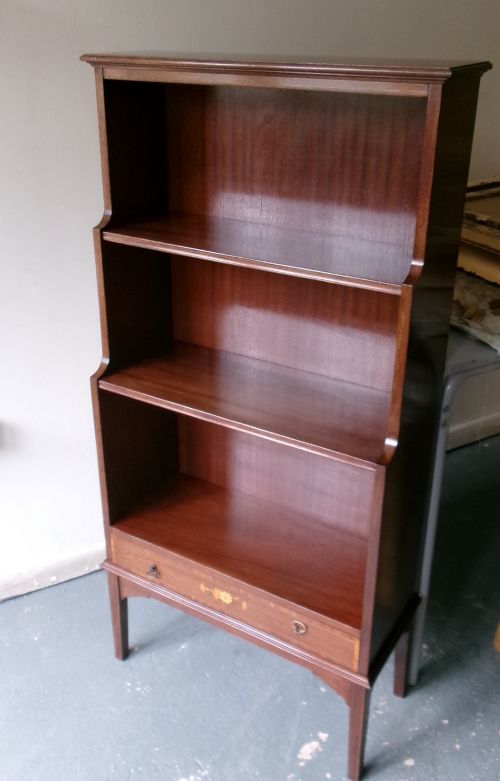
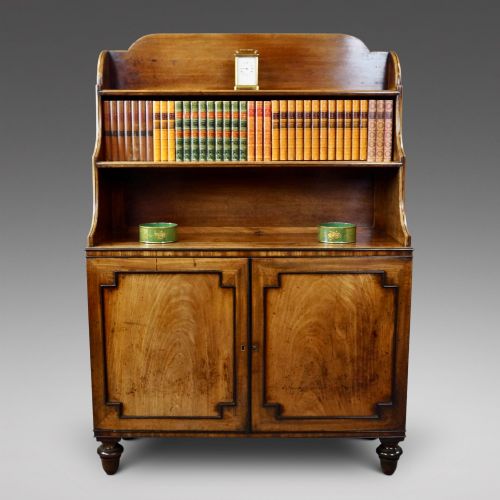


Wooden Waterfall Shelves
Wooden waterfall shelves step forward in graduated tiers, offering an ingenious display for books and treasured objects.
Wooden Waterfall Shelves
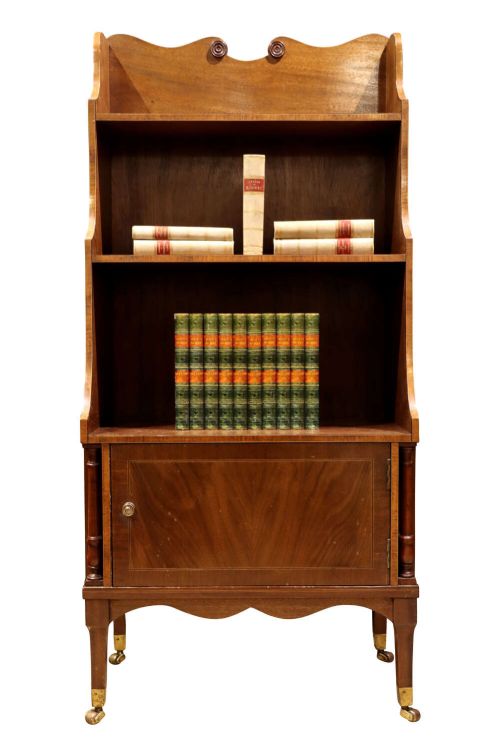
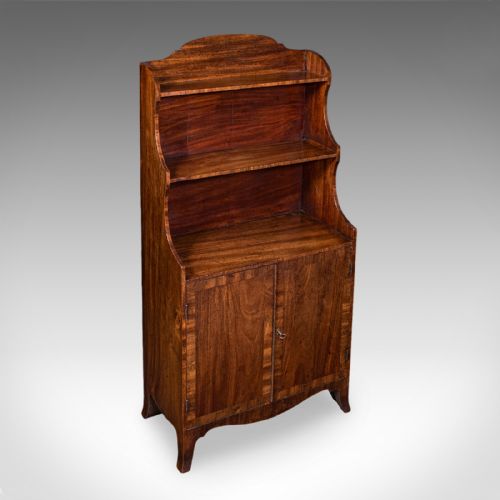
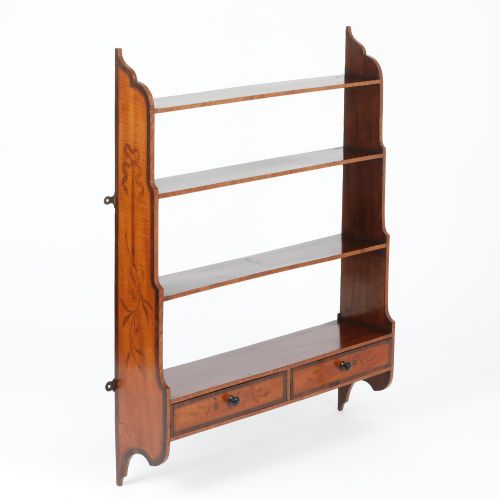
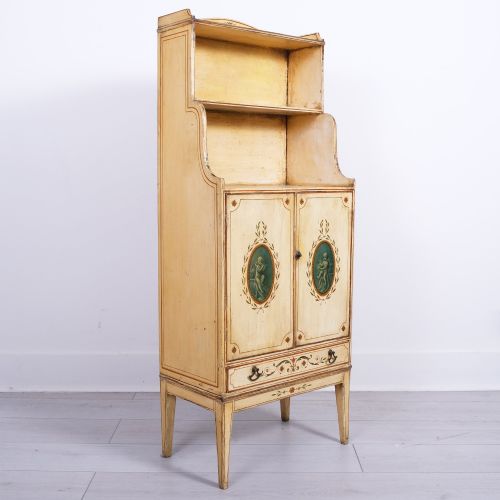
Wooden waterfall shelves comprise stacked tiers that recede as they rise, creating the characteristic stepped profile found in bookcases, wall shelves, and chiffoniers. These pieces appear across the Georgian, Regency, Victorian, and Edwardian periods, stretching from the late eighteenth century into the early twentieth century.
Most examples found here utilise rich hardwoods like mahogany, flame mahogany, and yew wood, sometimes enhanced with satinwood or painted finishes. Formats range from large floor-standing open bookcases with drawers and cupboards to small hanging bookshelves and mirrored wall units.
Materials and construction methods
Cabinetmakers built these tiered structures primarily from solid timber and selected veneers, employing contrast cross-banding and boxwood stringing to define the stepped edges. Open tiers often feature six-tier configurations or galleries supported by slender uprights.
Floor-standing variants frequently incorporate brass castors for mobility, while wall-mounted options utilise sturdy backboards and hanging fixings to support the graduated weight of stacked volumes.
Some nineteenth-century makers added brass castors so owners could wheel their cascading book collections gracefully across the parlour floor.
Assessing quality in tiered shelving
Quality rests upon the selection of timber, where figured flame mahogany or choice yew wood displays superior grain patterning compared to plain timber. The crispness of inlay, such as boxwood stringing and cross-banding, reveals the cabinetmaker's precision.
Structural integrity dictates the standing of a piece, distinguishing sturdy open bookcases with well-fitted drawers and cupboards from simpler, less refined shelving units.
The Wooden Waterfall Shelves Glossary
- Waterfall bookcase
- A tiered shelving unit where each shelf is deeper than the one immediately above it, creating a cascading silhouette. This design gained popularity during the Regency and Victorian periods for displaying books and ornaments.
- Cross-banding
- A decorative border of veneer laid across the grain of the primary wood to frame a shelf or panel. Cabinetmakers used this technique on high-end Georgian and Regency furniture to add visual contrast.
- Chiffonier
- A low cabinet or sideboard, sometimes incorporating a waterfall bookcase superstructure with drawers and cupboards below. These multifunctional pieces served domestic storage needs in nineteenth-century interiors.
- Stringing
- Thin inlay lines of contrasting wood, such as boxwood, embedded into the surface of furniture. It delineates the edges of shelves and drawers in finer period pieces.
- Gallery
- A raised ornamental border around the top or edges of a shelf to prevent items from sliding off. Open gallery versions appear frequently on nineteenth-century mahogany bookcases.
Wooden Waterfall Shelves: Frequently Asked Questions
What are wooden waterfall shelves?
Wooden waterfall shelves are tiered storage units where the shelves step back progressively from bottom to top. They serve as practical furniture for displaying books, ceramics, and decorative objects while taking up minimal floor space.
Originating in periods like the Georgian and Regency eras, these pieces combine utility with elegant stepped architecture. They appear as hanging shelves, floor-standing open bookcases, and cabinets featuring graduated tiers.
How do I date a waterfall bookcase?
Dating relies on observing the timber choice, secondary woods, and decorative details like stringing and inlay. Regency and Georgian pieces often display solid mahogany or yew wood with fine cross-banding.
Later Victorian and Edwardian examples introduce oak and alternative veneer treatments. Examining the construction of drawers and the presence of period hardware helps narrow down the manufacturing decade.
Where should I place wall shelves?
Wall shelves suit study rooms, hallways, and living spaces where floor area is limited. Hanging versions require secure fixings into solid walls to support the weight of books and timber.
Pairing them above a desk or sideboard creates a balanced display area. Ensure the chosen wall can bear the combined load of the shelving unit and its contents.