

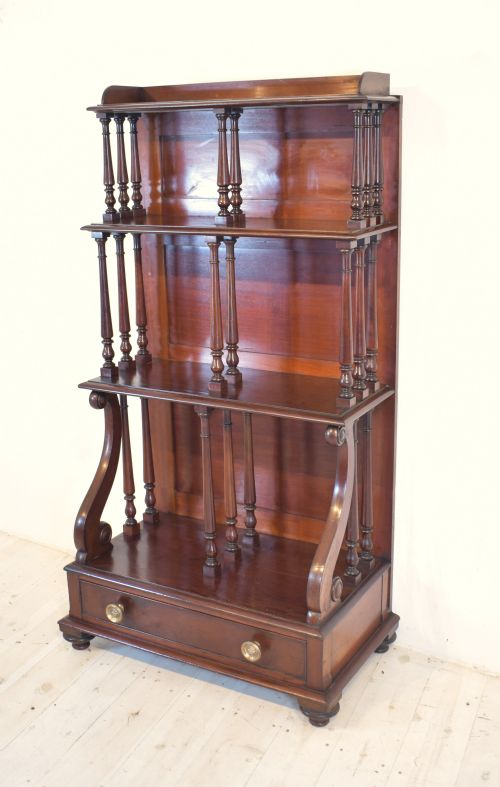


Mahogany Waterfall Shelving
Mahogany waterfall shelving steps back tier by tier, offering a practical display for books and small objects that suits traditional rooms.
Mahogany Waterfall Shelving
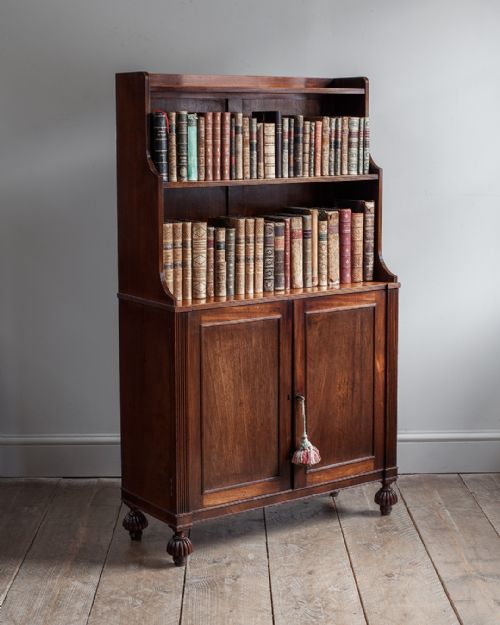
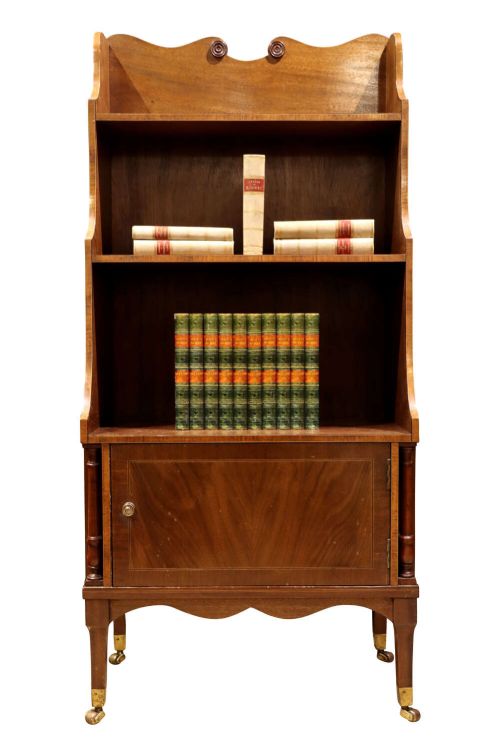
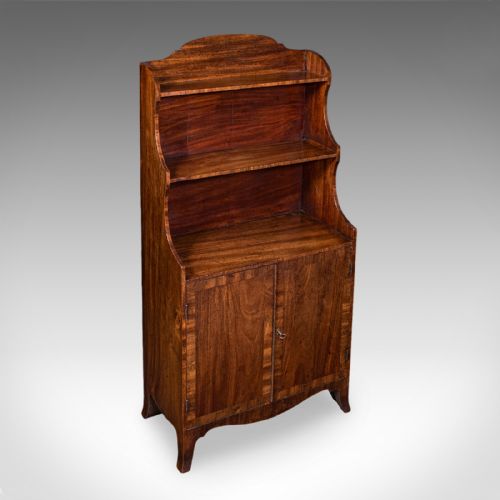
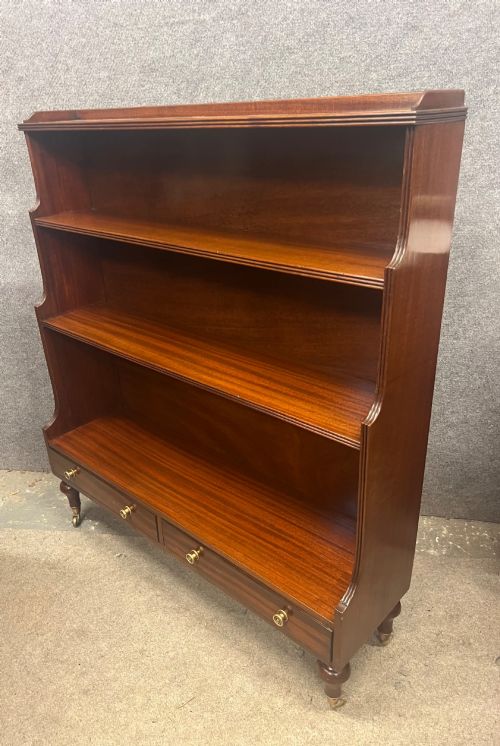
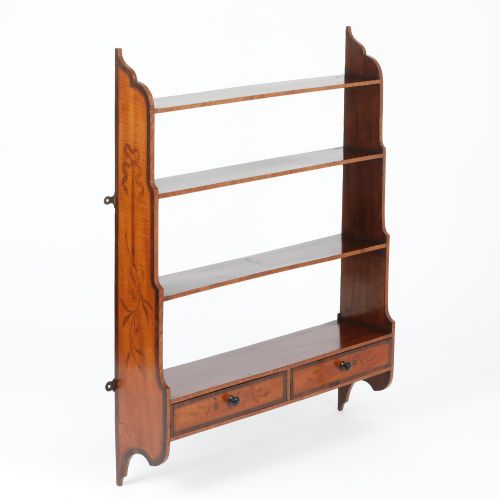
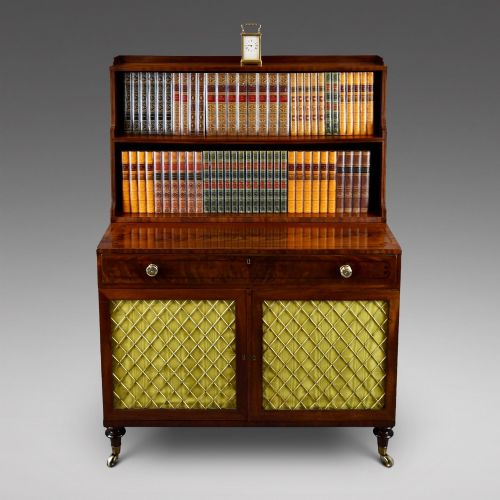
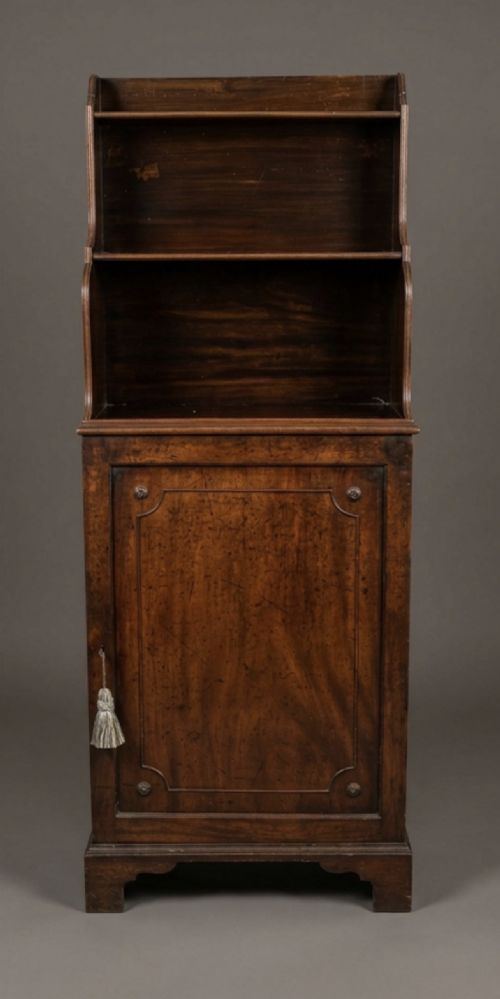
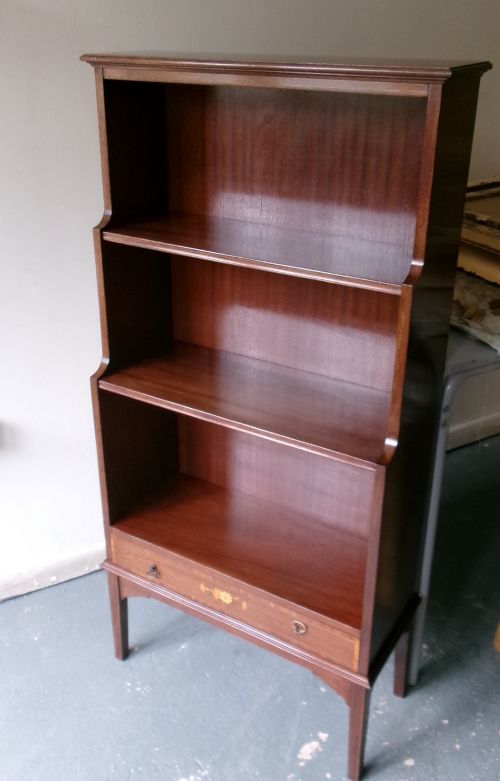
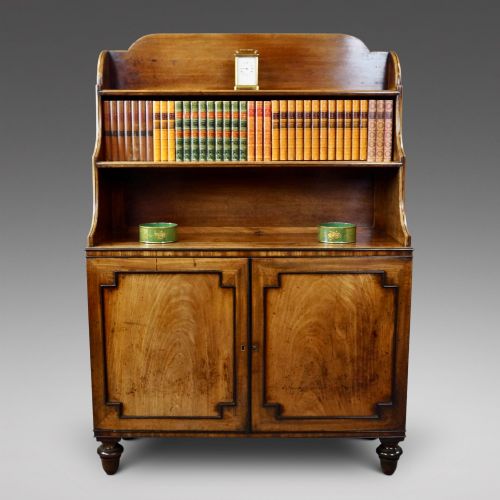
Mahogany waterfall shelving appears primarily as bookcases and wall-hanging shelves across Georgian, Regency, Victorian, and Edwardian periods. Pieces range from open freestanding bookcases to closed cabinet bases fitted with cupboards and drawers.
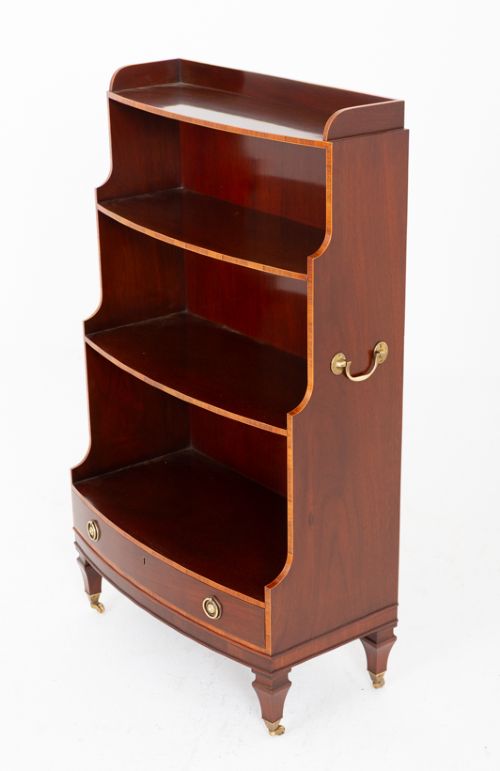
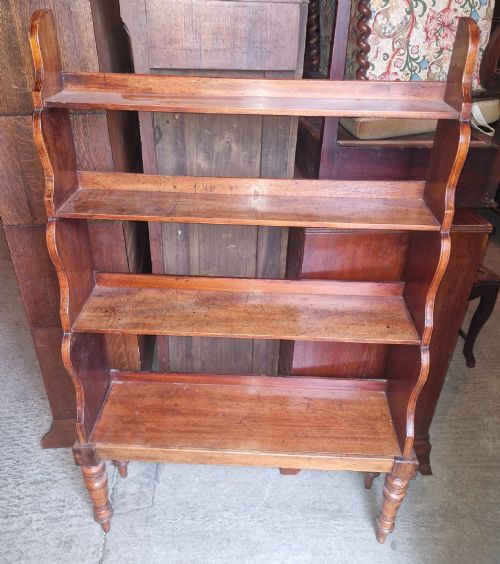
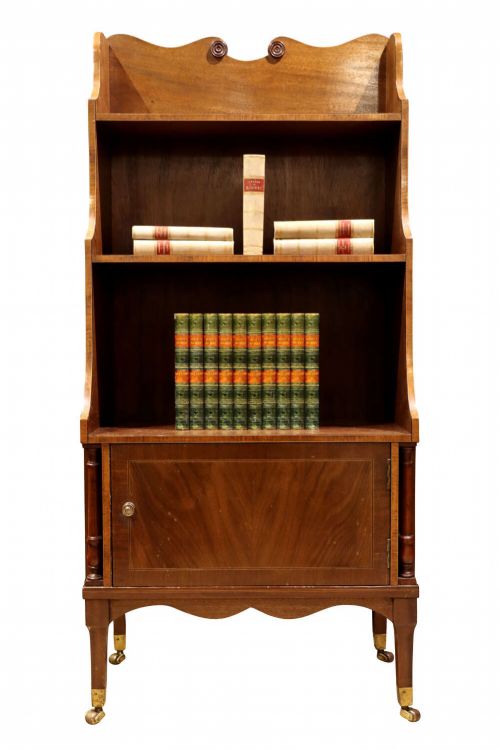
The defining stepped tiers ascend towards the back, creating a cascading profile that organises volumes by height. Smaller iterations work as wall shelves, while larger library editions rest upon brass castors.
Makers adapted the form through the nineteenth century, producing revival pieces alongside Georgian originals. Wall-hanging versions utilise fixed brackets, whereas freestanding examples rely on sturdy side supports.
Materials and construction
Cabinet makers utilised solid mahogany alongside flame mahogany veneer to achieve rich grain patterns across the graduated shelves. Secondary woods provide structural integrity, while decorative touches involve satinwood, boxwood stringing, and contrasting cross-banding.
Inlay and brass hardware appear frequently on nineteenth-century pieces, marking distinct periods of craftsmanship. Open shelf joints and dovetailed drawers reveal traditional joinery methods employed by period workshops.
Some nineteenth-century pieces come with castors so eager they practically roll out to greet your novels.
Evaluating craftsmanship
Quality rests upon the selection of timber, particularly the depth and movement within flame mahogany veneers. Superior pieces display precise boxwood stringing and meticulous cross-banding that follows the stepped contours accurately.
Structural stability distinguishes standard production from finer workshop output, especially where tiers meet the vertical supports. Original brass castors and intact inlaid details indicate higher-status commissions.
Shapland and Petter
The Mahogany Waterfall Shelving Glossary
- Waterfall bookcase
- A set of open shelves stepped back progressively from bottom to top. This form emerged to display books and decorative objects efficiently.
- Cross-banding
- A border of veneer laid with the grain running perpendicular to the central panel. It frames the shelves and top surfaces of finer cabinets.
- Stringing
- A narrow inlay of contrasting wood, such as boxwood, embedded into the mahogany surface. It creates delicate linear patterns around drawers and borders.
- Flame mahogany
- Timber cut from the fork of the tree where branches meet the trunk, revealing a dramatic flickering grain. Cabinet makers reserved this veneer for prominent surfaces.
- Chiffonier
- A low cabinet featuring shelves or a cupboard section beneath. Examples sometimes incorporate stepped upper tiers.
Mahogany Waterfall Shelving: Frequently Asked Questions
Where should I place these shelves?
Freestanding waterfall bookcases suit studies or living rooms where books remain within easy reach. Wall-hanging variants work well in smaller spaces above sideboards or desks.
Ensure walls support the weight of timber shelving before hanging antique pieces. Freestanding editions require level flooring to keep the stepped tiers balanced.
How do I date a mahogany waterfall piece?
Georgian and Regency examples show crisp cross-banding and fine boxwood stringing executed in solid mahogany. Victorian and Edwardian iterations often introduce heavier proportions or revival styling.
Hardware offers another clue, with brass castors and dovetail construction varying across the eighteenth, nineteenth, and early twentieth centuries.
Can these shelves hold heavy books?
Lower tiers handle substantial volumes easily due to their deeper proportions and solid wood construction. Upper tiers suit smaller octavos and decorative objects.
Avoid overloading the highest, narrowest shelves to protect the structural integrity of the stepped uprights.
What is the difference between open and closed versions?
Open waterfall shelving displays books entirely from the side and front, maintaining a light profile in a room. Cupboard and drawer combinations below provide concealed storage for papers and small items.
Both forms utilise the cascading stepped tiers above, but cabinet bases add weight and formal presence.