

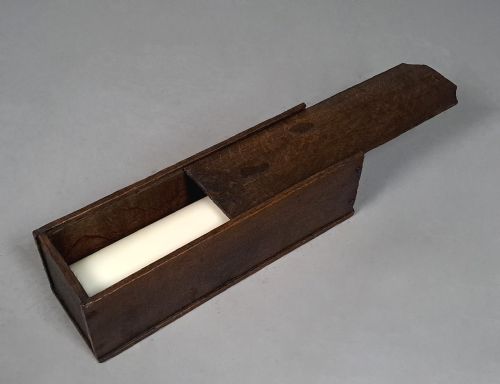


Wooden Wall Candle Box
These wooden wall candle box pieces are utilitarian domestic items valued for their rich oak patination and practical period charm.
Wooden Wall Candle Box
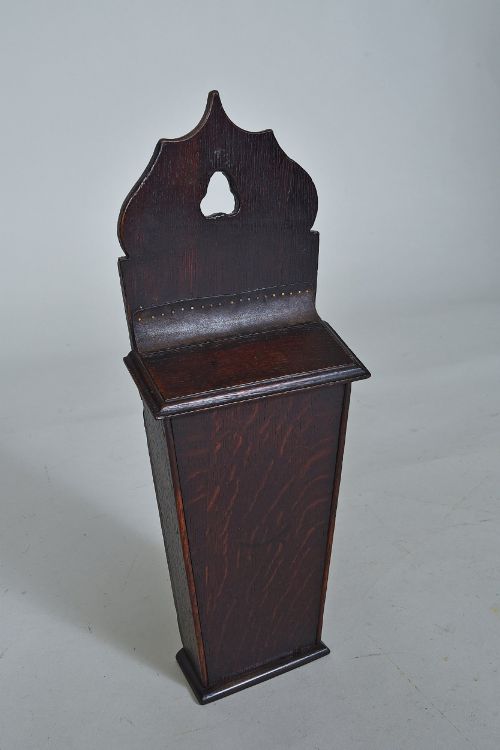
A wooden wall candle box is a domestic storage container designed to hold tallow dips or wax tapers securely near a hearth or doorway. These functional items date principally from the seventeenth, eighteenth, and nineteenth centuries, spanning Georgian and Victorian periods.
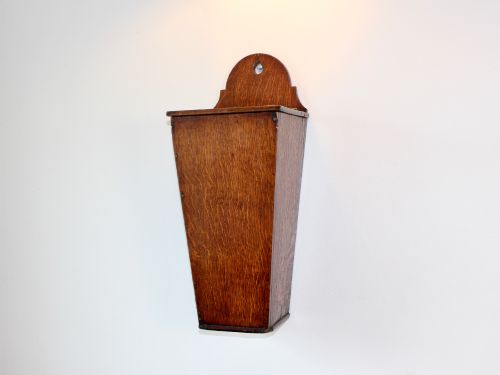
The versions met most often on this page are constructed from oak, reflecting a vernacular English country aesthetic. Examples range from plain pine salt or candle boxes to tapered rectangular shapes intended for wall hanging.
Makers shaped these containers using robust local timbers, frequently incorporating hanging holes and sliding lids to protect fragile lights from dust and dampness. Their simple geometric forms and domestic utility make them quintessential examples of early treen.
How they were made
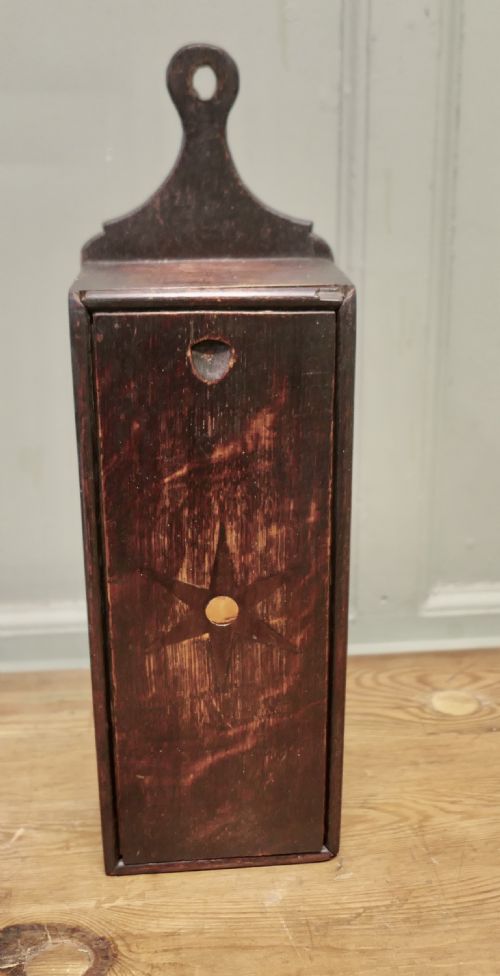
Carpenters utilised solid oak, pine, and boxwood inlay, shaping boards with hand tools before joining them with wooden pegs or early iron hardware. These construction methods produced sturdy wall receptacles built to withstand daily household handling.
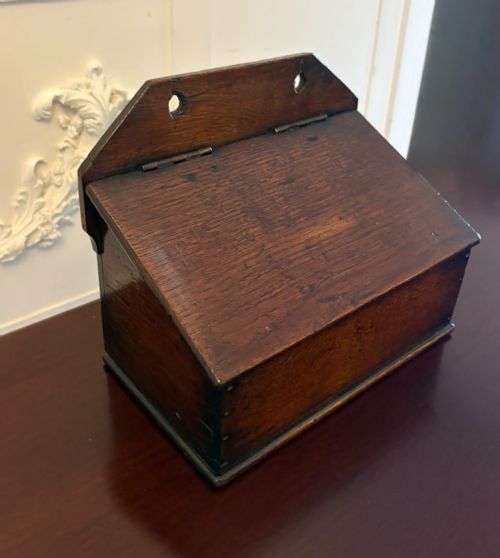
Surfaces often show traces of original red paint, hand carving, or simply decades of beeswax polish applied by generations of users. The marriage of timber and metal fittings, such as brass or iron hinges, defines the physical character of each box.
Wooden Wall Candle Box Retail Price Guide 2026
Typical asking prices for wooden wall candle box among the pieces listed under this phrase on Sellingantiques today, from the lower quarter to the upper quarter. They describe what is for sale here now, not the wider market.
A faint trace of old red paint hidden beneath a lid reminds us that our ancestors liked their kitchen storage bright.
What varies in quality
The distinction between ordinary and superior examples lies in the depth of timber patination, surface texture, and the survival of original hardware. Boxes retaining early sliding lids and untouched surface finishes command greater appreciation among collectors.
Proportion and restraint in vernacular decoration also set better pieces apart from heavier or later replacements. Subtle details, such as tapered bodies or careful boxwood inlay work, elevate a utilitarian container into a sophisticated piece of country furniture.
The Wooden Wall Candle Box Glossary
- Treen
- Small wooden domestic objects created before the widespread use of plastic and modern metalware. These items encompass trenchers, bowls, and candle boxes formed by local turners and joiners.
- Patina
- The deep surface lustre developed on timber through decades of handling, exposure to light, and application of wax. A genuine patina provides historical depth that artificial finishes cannot replicate.
- Vernacular furniture
- Everyday objects made by regional craftsmen for local use rather than following high-style London fashions. This tradition embraces sturdy oak storage boxes and rustic country seating.
- Tallow dip
- An inexpensive candle manufactured from rendered animal fat used widely in vernacular households before paraffin wax became common. These dips required protective storage in enclosed wall boxes.
Wooden Wall Candle Box: Frequently Asked Questions
What is a wooden wall candle box?
A wooden wall candle box is a small storage container designed to keep household tapers clean and dry. They feature flat backs with hanging holes so they could be mounted securely on cottage walls.
These utilitarian pieces kept expensive lighting materials safe from household pests and damp conditions. Their compact dimensions made them convenient fixtures near doorways and fireplaces.
How were candle boxes used?
Householders used these containers to store tallow dips and wax candles close to where light was needed most. The sliding or hinged lids kept dust away from the vulnerable wax.
In many period homes, salt and candles shared similar storage receptacles depending on household needs. Their placement ensured that evening illumination remained within easy reach of the hearth.
How do I date an antique candle box?
Dating relies upon examining the timber species, joinery techniques, and the nature of any associated hardware. Eighteenth-century examples frequently utilise native oak with hand-cut peg construction and wrought iron hinges.
Subsequent Victorian pieces often display machine-sawn timber or decorative carving styles distinctive to the eighteen-sixties. Comparing the surface patination with known period pieces helps confirm the age of the timber.
Where should I hang a wall candle box?
These boxes suit placement in kitchens, hallways, or living spaces where their historic character can be appreciated. Direct exposure to strong sunlight and rapid temperature fluctuations should be avoided to protect the aged timber.
Using sturdy fixings suited to the weight of the oak or pine body ensures secure wall mounting. They function well as standalone decorative pieces or as practical containers for modern trinkets.