





Wooden Trinket Container
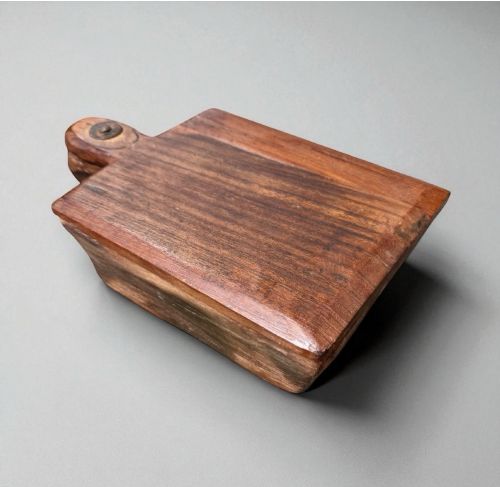
A wooden trinket container brings small-scale craftsmanship to a dressing table or desk, offering a tactile receptacle for everyday keepsakes.
Wooden Trinket Container
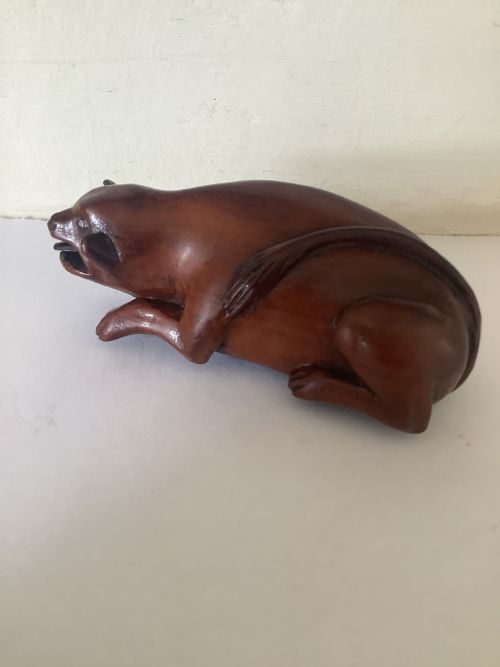
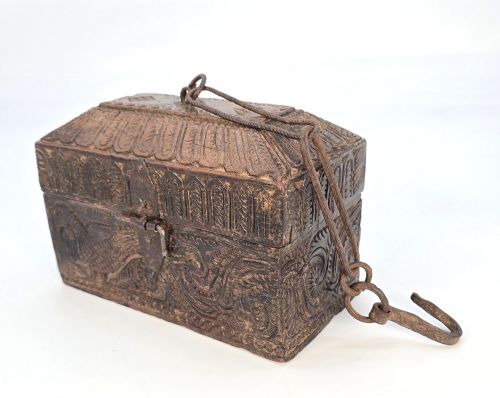
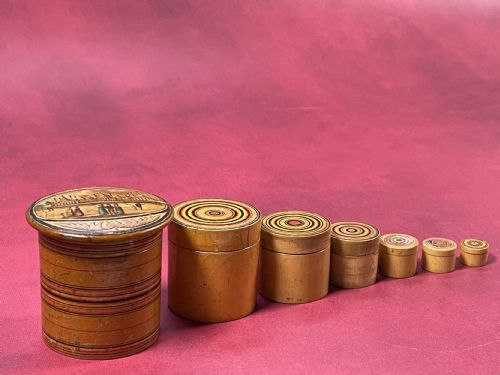
When searching for a wooden trinket container, buyers encounter a diverse selection of small wooden receptacles including snuff boxes, spice boxes, tea caddies, and novelty caskets spanning several centuries. These pieces cross various stylistic traditions, ranging from European treen and Tunbridge Ware to Anglo-Indian and Kashmiri vernacular workshops.
The 19th Century is particularly well represented on this page, alongside Georgian, Regency, and early 20th century examples up to the 1930s. Forms vary widely from simple turned circular mahogany vessels and rectangular tea caddies to intricately carved footwear, books, and footballs.
Utility and display intersect in these containers, which were originally made to hold snuff, spices, tea, or personal trinkets. Their survival demonstrates both durable construction and the enduring appeal of small wooden objects fashioned with decorative intent.
Materials and construction
Makers utilised a wide palette of timbers, including walnut, rosewood, mahogany, teak, oak, amboyna, and various unspecified hardwoods. These woods were chosen for their grain patterns, colour, and suitability for intricate turning or carving.
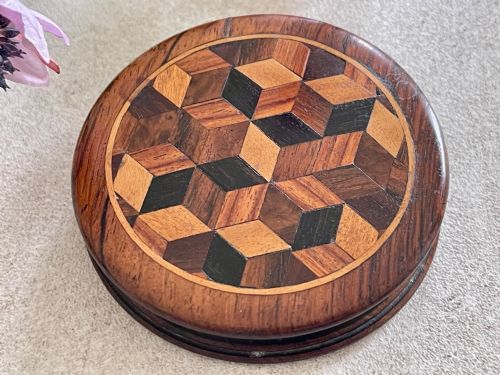
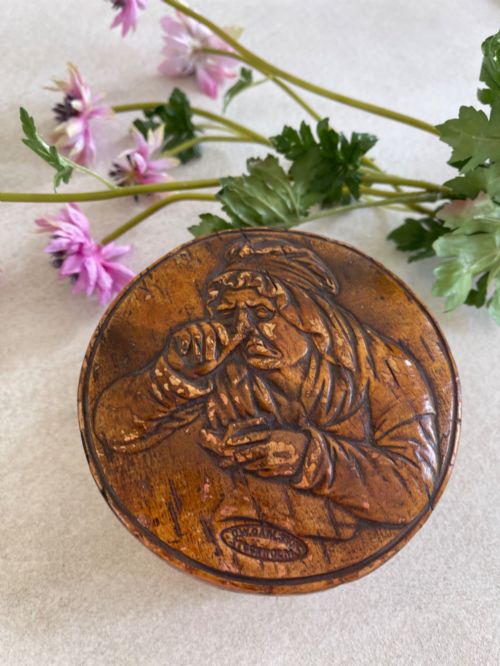
Surface decoration frequently involves contrasting materials and applied techniques, such as brass fittings, tortoiseshell inlay, hand painting, and mosaic Tunbridge Ware. Carving ranges from naive folk art motifs to finely detailed relief work on spice and snuff boxes.
Someone carved a sturdy wooden box into the exact shape of a lace-up lady's shoe, preserving a fleeting fashion in solid hardwood.
Assessing quality
Quality in a wooden trinket container rests upon the precision of the joinery and the depth of the carving. Finely rendered details, crisp turning, and well-fitted lids distinguish superior examples from simpler utilitarian pieces.
The condition of the timber surface and the development of a rich, natural patina over time contribute significantly to the appeal of an older box. Intricate decorative elements like micro-mosaic inlay or hand painting demand high technical skill from the maker, elevating the status of the piece.
The Wooden Trinket Container Glossary
- Treen
- Small handmade wooden household objects. These items range from domestic utensils to turned boxes.
- Tunbridge Ware
- Woodworking characterised by mosaic veneer patterns. Small blocks of various coloured woods form pictorial designs.
- Tea caddy
- A box designed for storing tea leaves. These containers often feature interior compartments and secure lids.
- Snuff box
- A small pocket or table receptacle for holding powdered tobacco. Many surviving examples display imaginative carving.
- Patina
- The surface sheen and colour acquired by wood through age and handling. A deep patina indicates long-term care and use.
Wooden Trinket Container: Frequently Asked Questions
What did people keep in these boxes?
These containers served various functional purposes depending on their original design and period. Many held snuff, spices, tea leaves, or personal valuables like trinkets and nibs.
Over time, owners repurposed these small wooden receptacles to store modern keepsakes, rings, or desk accessories while keeping them on display.
How do I date an old wooden box?
Dating relies on observing the timber species, construction methods, hardware, and stylistic indicators such as carving motifs or inlay techniques. Georgian and Regency pieces often show distinct proportions and joinery compared to later 19th Century or Edwardian examples.
Associated historical context, labels, or regional styles like Tunbridge Ware and Anglo-Indian carving also help narrow down the period of production.
Are these boxes fragile?
While made from durable hardwoods, these objects require sensible handling due to their age and delicate decorative elements. Inlay, painted surfaces, and fine carvings can be susceptible to impacts or extreme environmental changes.
Keeping them away from direct heat sources and sudden humidity shifts helps preserve the timber and any sensitive surface treatments.