


Wooden Tray Top Table
A wooden tray top table combines the mobility of a serving platter with the stability of a dedicated stand, offering versatile surfaces for lamps, drinks, and bedside storage.
Wooden Tray Top Table
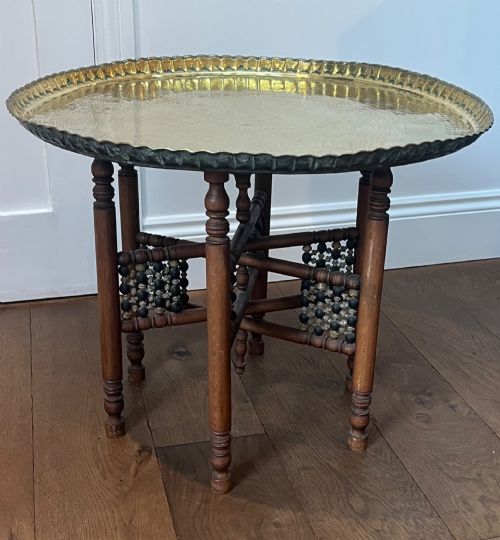
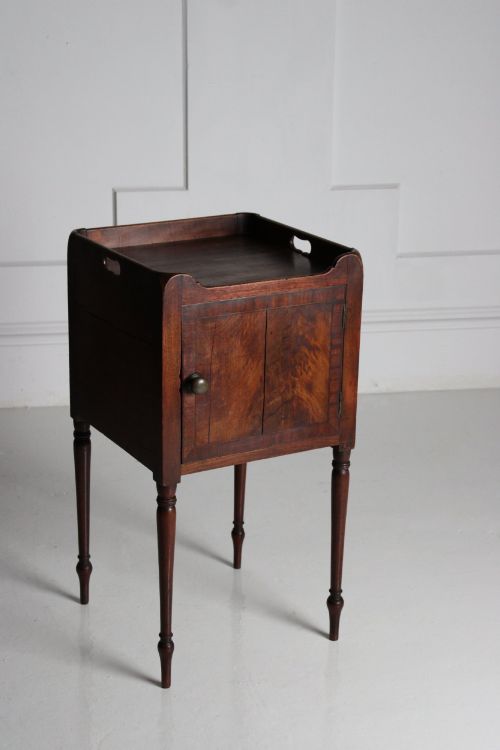
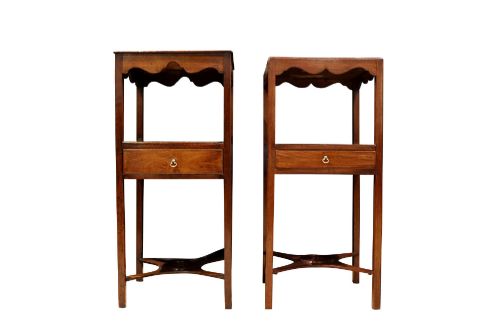
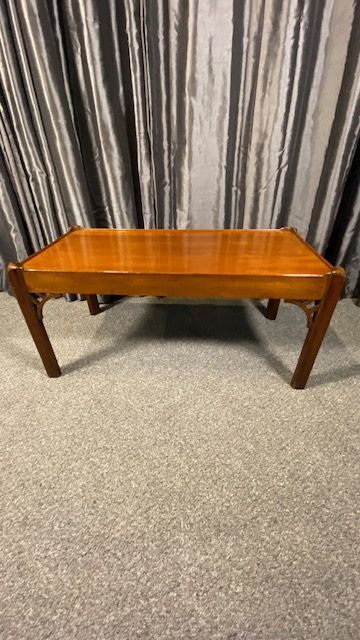
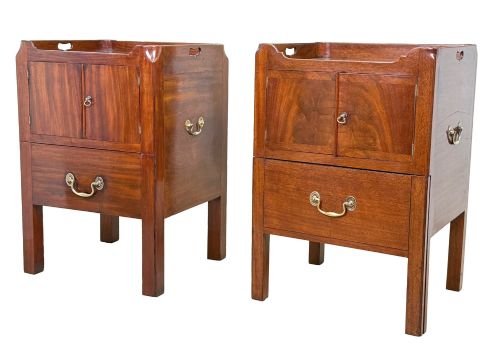
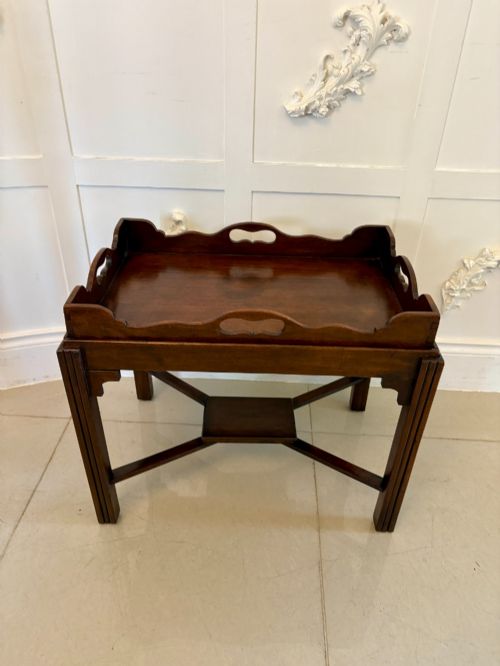
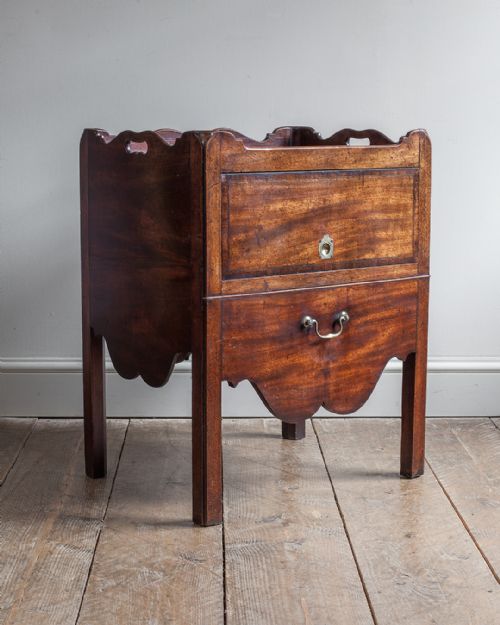
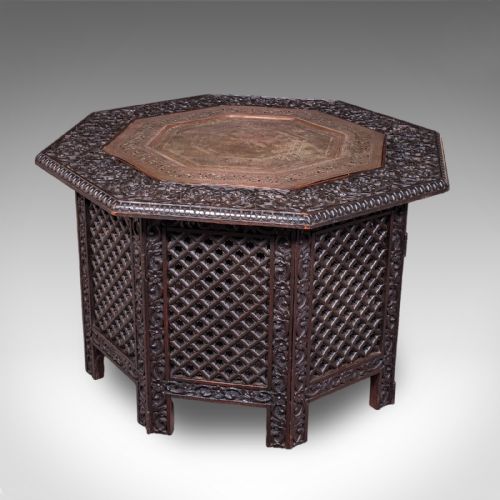
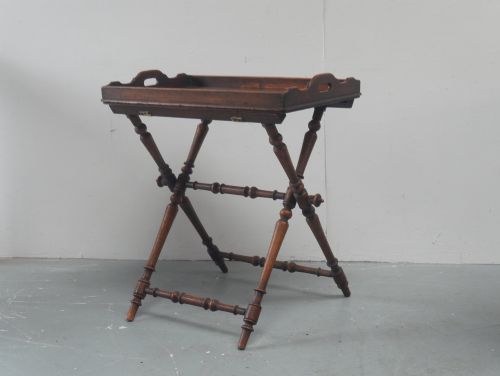
A wooden tray top table serves multiple functions across the home, appearing frequently as bedside nightstands, occasional coffee tables, and removable butler's trays on folding stands. These pieces range from compact 18th century George III commodes to early 20th century Edwardian and Anglo-Indian variations.
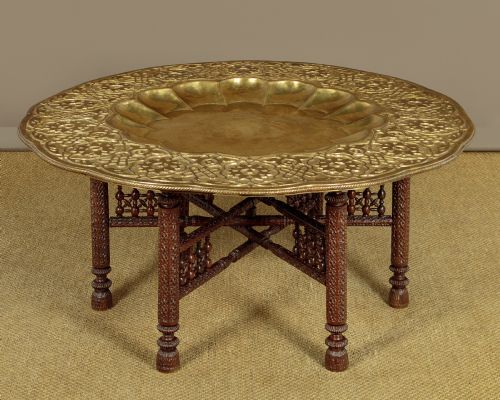
Buyers will most commonly encounter mahogany examples from the Georgian and Victorian periods, often featuring raised gallery edges designed to prevent items from slipping. Forms span from simple lamp tables to sophisticated silver tables with cabriole legs and brass or copper inset details.
Materials and construction methods
Cabinet makers relied heavily on dense timbers such as mahogany, walnut, and teak, frequently enhancing surfaces with delicate satinwood inlay and intricate woodwork. Metal elements like brass and copper appear both structurally and decoratively, particularly in Anglo-Indian and Benares occasional pieces.
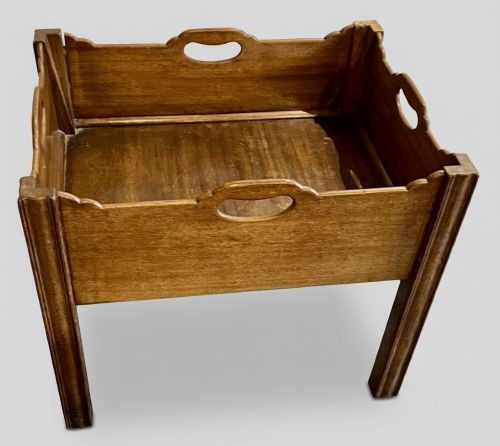
Joinery techniques define the period, utilising solid timber frames, dovetailed drawers, and precision-fitted galleries carved directly from the solid wood or assembled with pegged joints. Stands were engineered either as fixed pillar supports or as folding trestles designed to hold removable serving trays securely.
Wooden Tray Top Table Retail Price Guide 2026
Typical asking prices for wooden tray top table among the pieces listed under this phrase on Sellingantiques today, from the lower quarter to the upper quarter. They describe what is for sale here now, not the wider market.
Listings feature mahogany predominantly, alongside walnut, teak, and inlaid satinwood across 18th, 19th, and early 20th century periods.
Distinctions in craftsmanship and design
Quality rests in the handling of the timber and the crispness of the gallery moulding, where superior examples feature continuous grain and hand-cut details rather than applied mouldings. The integration of the tray to its stand dictates the piece's stability and intended function.
Finer pieces display sophisticated secondary elements such as precise string inlay, figured burr walnut veneers, or well-executed brass handles and gallery pierced work. The proportion between the upper tray and the supporting base separates standard utility furniture from high-status salon pieces.
The Wooden Tray Top Table Glossary
- Gallery
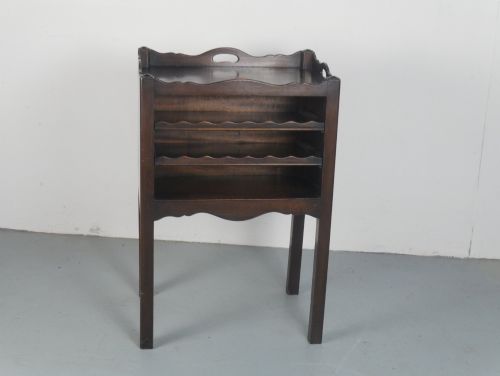
- A raised wooden border surrounding the perimeter of a tabletop or tray to secure objects from rolling off. It is often pierced or fret-cut in George III and Edwardian examples.
- Butler's tray
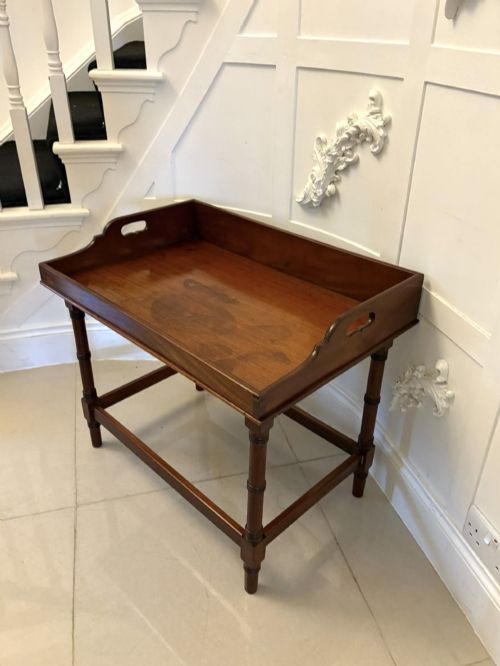
- A removable wooden tray with hinged or fixed sides, traditionally used for carrying service items and paired with a folding wooden stand. They frequently appear in 18th and 19th century mahogany.
- Cabriole leg
- A furniture leg that curves outward in a convex arc and tapers inward in a concave arc, terminating in a pad or claw foot. This form is typical of mid 18th century Georgian design.
- Nightstand
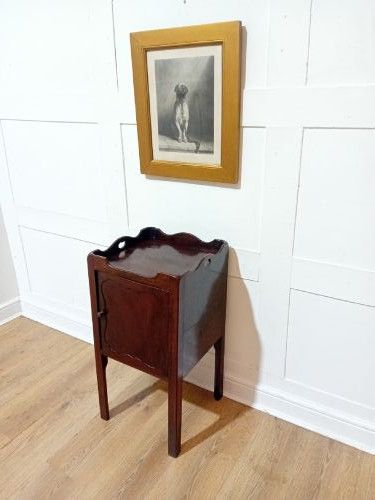
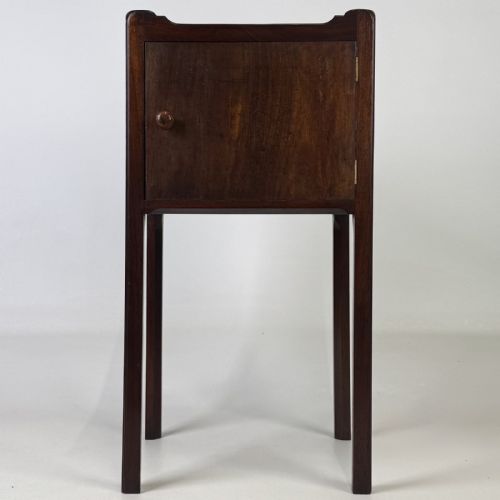
- A small bedside table utilised for nocturnal storage, often constructed as a cabinet with a cupboard door or enclosing a commode. These forms are prevalent throughout the Georgian era.
Wooden Tray Top Table: Frequently Asked Questions
How were tray tables originally used?
These pieces functioned primarily for serving tea, holding bedside lighting, or transporting dining items between rooms before being left on stationary stands.
Servants moved the upper trays independently of the folding bases, allowing the furniture to double as functional service equipment in formal households.
Are tray tops removable?
Many traditional butler's trays lift completely off their folding wooden stands, while bedside cabinets and lamp tables have fixed tops with raised galleries.
Examining the underside reveals whether the surface was built to detach or secured permanently to the frame.
What distinguishes George III tables?
George III pieces typically employ solid Cuban mahogany, understated bracket feet, and finely fretted gallery edges shaped from single boards.
The proportions remain balanced and structural ornamentation stays minimal compared to later Victorian and Edwardian revivals.
How do I style a tray table today?
These tables suit small spaces as bedside surfaces, lamp holders, or compact cocktail tables where a traditional coffee table proves too bulky.
The raised edges make them practical for holding glassware, books, and decorative objects safely in daily use.