


Wooden Travel Trunk
A wooden travel trunk offers robust storage built for movement, taking physical form here in periods from the Georgian era through the twentieth century.
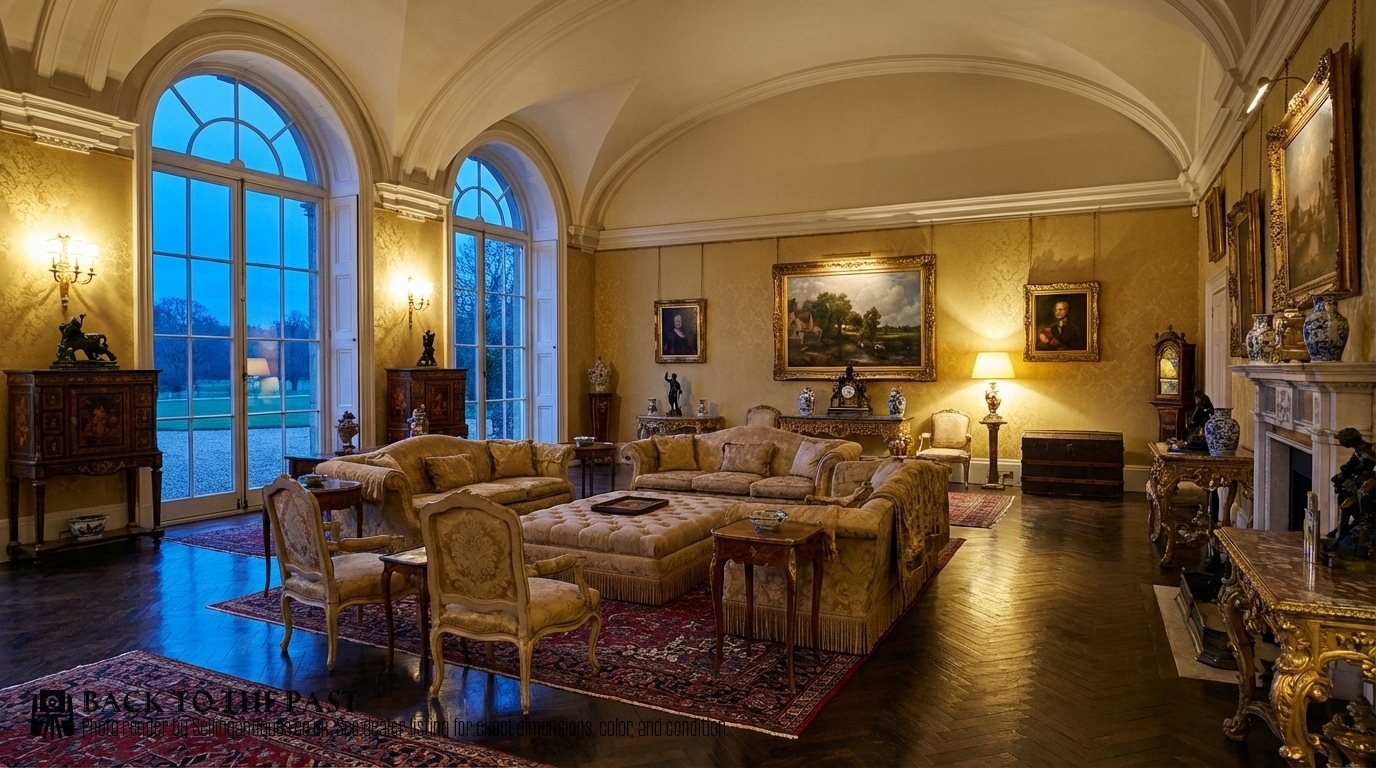
Wooden Travel Trunk
When searching for a wooden travel trunk, buyers encounter utilitarian luggage and heavy-duty storage pieces designed to withstand long journeys by land and sea. These items range from compact steamer luggage to large military transport chests intended for officer use abroad.
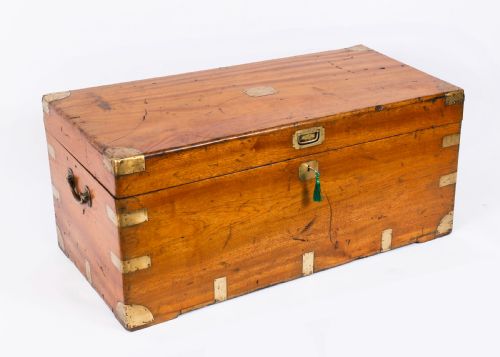
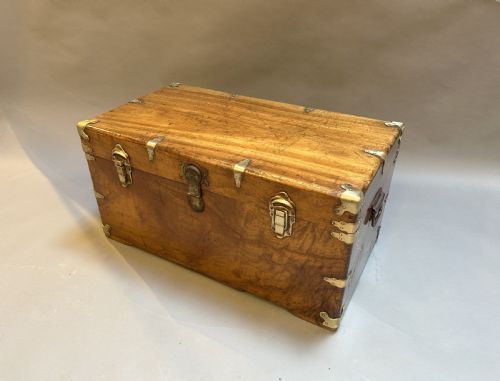
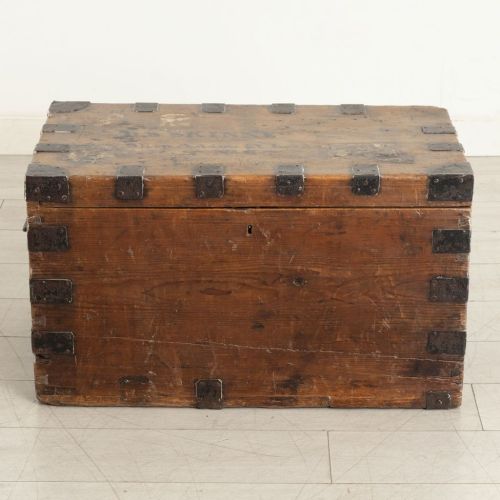
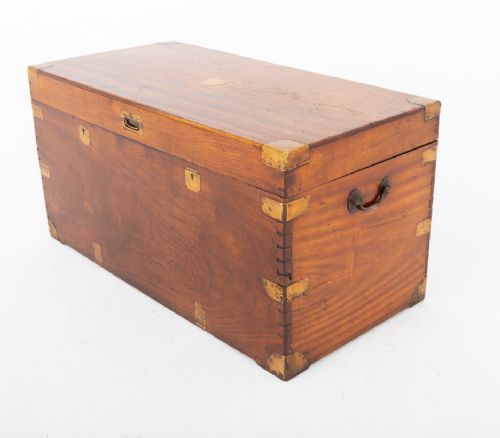
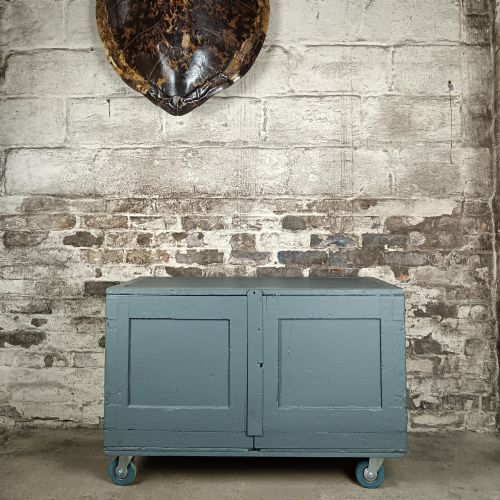
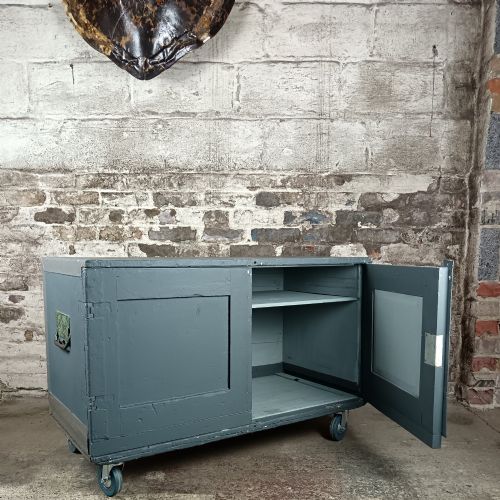
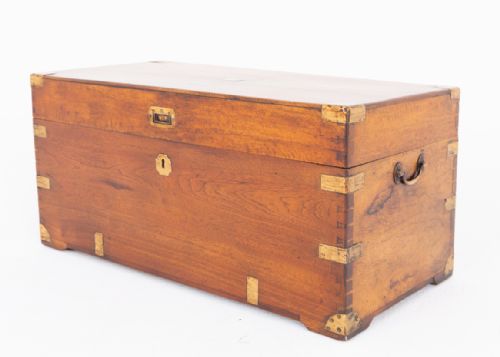
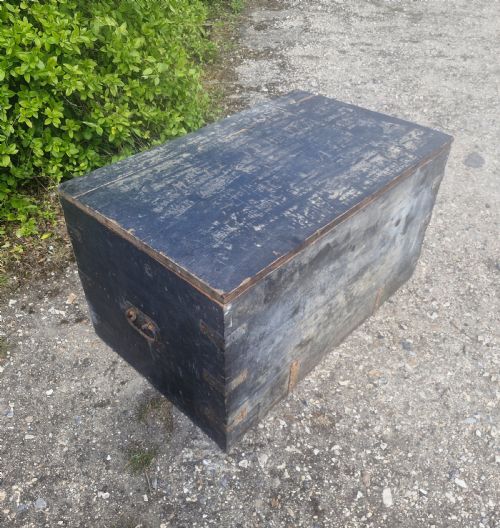
The versions most commonly met on this page date from the nineteenth century and the Victorian period, frequently constructed for campaign use. They include robust camphor wood boxes, metal-bound oak chests, and painted pine travel trunks.
Beyond military examples, the selection incorporates domestic luggage such as vintage steamer trunks and leather-trimmed storage pieces from the early twentieth century. Each object reflects the travelling requirements of its respective decade.
How they were made
Construction relies heavily on durable hardwoods like camphor wood, teak, and oak, alongside utilitarian softwoods such as pine. Carpenters joined these panels securely to endure rough handling during transit.
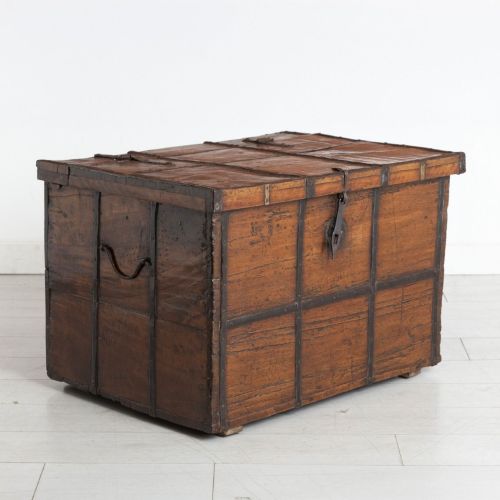
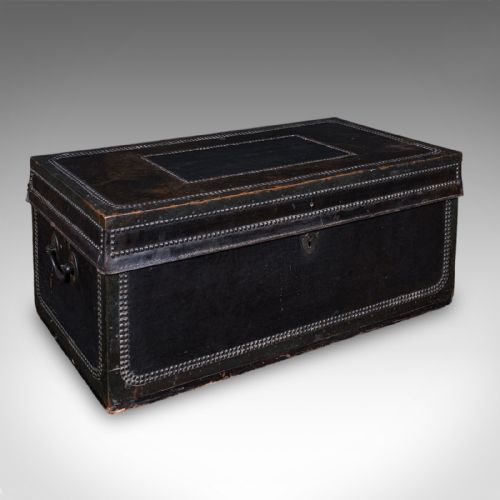
Protection and reinforcement came from applied metalwork, including iron banding, brass corners, and protective steel straps. Leather coverings and canvas wraps provided additional weather resistance for luggage moving between ships and carriages.
One surviving travel trunk still carries the lingering aroma of nineteenth-century camphor wood.
What varies in quality
Quality in a wooden travel trunk is distinguished by the integrity of its timber and the robustness of its hardware. Solid tropical hardwoods like camphor wood and teak represent a higher standard of construction than standard painted pine.
The degree of original hardware preservation - such as flush brass carrying handles, reinforced corner brackets, and working locks - differentiates utilitarian utility cases from high-grade campaign pieces made for officers.
Seabrook of St.Pauls London·Charles Kingston·Aux Etats Unis of Paris·Louis Vuitton
The Wooden Travel Trunk Glossary
- Campaign trunk
- A portable chest built in sections or fitted with carrying handles for military officers on active service. These boxes often utilise durable timbers like camphor wood.
- Steamer trunk
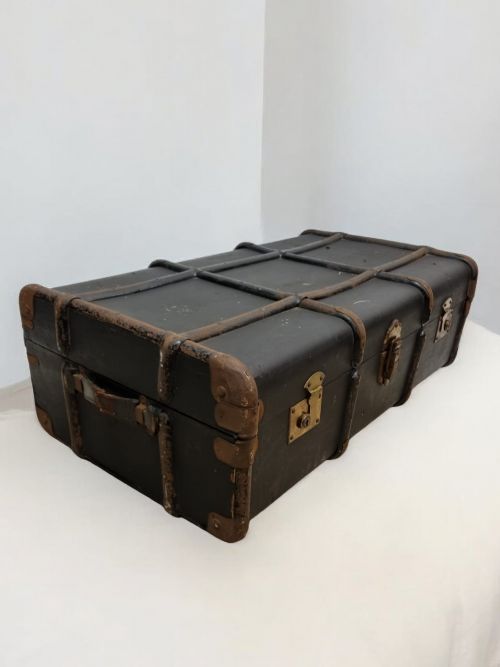
- A lower-profile travel trunk designed to fit beneath a cabin berth on a steamship. They date predominantly from the late nineteenth and early twentieth centuries.
- Camphor wood
- An aromatic hardwood frequently selected for military trunks because its natural scent repelled insects. It provides a distinct fragrance inside the storage compartment.
- Iron bound
- A method of reinforcing wooden luggage edges and panels with heavy metal strips. This technique protected the trunk from heavy impacts during transit.
Wooden Travel Trunk: Frequently Asked Questions
What is a campaign trunk?
A campaign trunk is a robust wooden box made for military officers to transport belongings during active service. These pieces frequently feature recessed brass handles and reinforced corners for easy loading.
Many examples use camphor wood to protect contents from insects during tropical deployment. Their modular design allowed officers to travel with organised storage.
How do I use a travel trunk at home?
A wooden travel trunk functions well as a coffee table, blanket box, or end-of-bed storage chest. The internal capacity accommodates spare linens, winter clothing, or household items.
Placing a trunk in a living space introduces texture from materials like brass, leather, and aged timber. Their flat tops also provide a practical surface for books or display objects.
How do I date a wooden trunk?
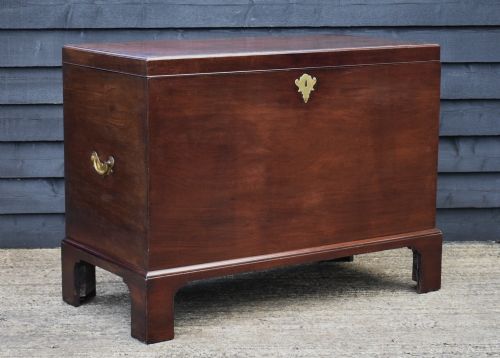
Dating relies on construction methods, timber choices, and hardware styles found on the piece. Georgian and early nineteenth-century examples often feature heavy oak or mahogany with hand-forged ironwork.
Later Victorian and Edwardian items incorporate factory-produced brass brackets, canvas coverings, and specific lock stamps. Camphor wood campaign trunks span multiple decades through the nineteenth century.
What is the difference between a steamer trunk and a travel trunk?
A steamer trunk is specifically constructed with a lower profile to slide underneath cabin berths on ocean liners. These pieces usually date from the late nineteenth century onwards.
General travel trunks and coaching chests are taller and heavier, built for carriage boots and luggage vans before the rise of steamships. Both types utilise strong timber frames wrapped in canvas, leather, or metal.