


Wooden Towel Stand
A wooden towel stand brings practical nineteenth and early twentieth century form to a bedroom or bathroom with quiet architectural presence.
Wooden Towel Stand
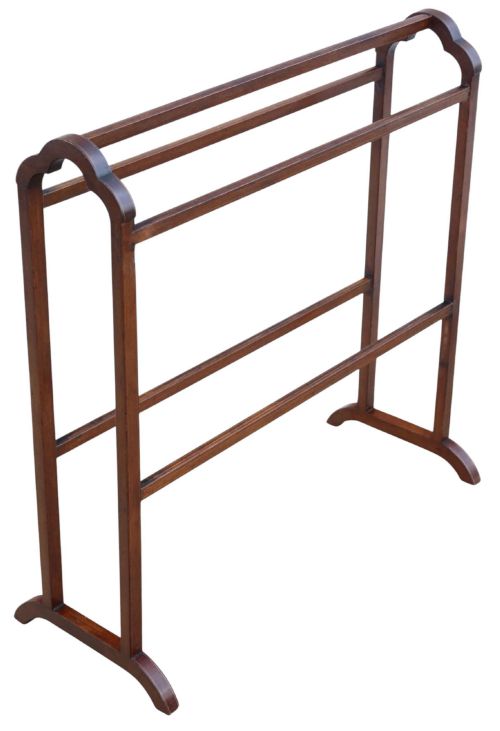
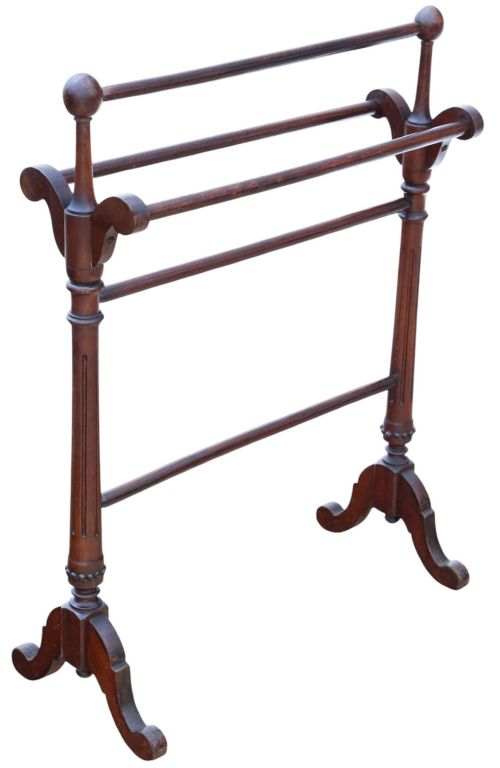
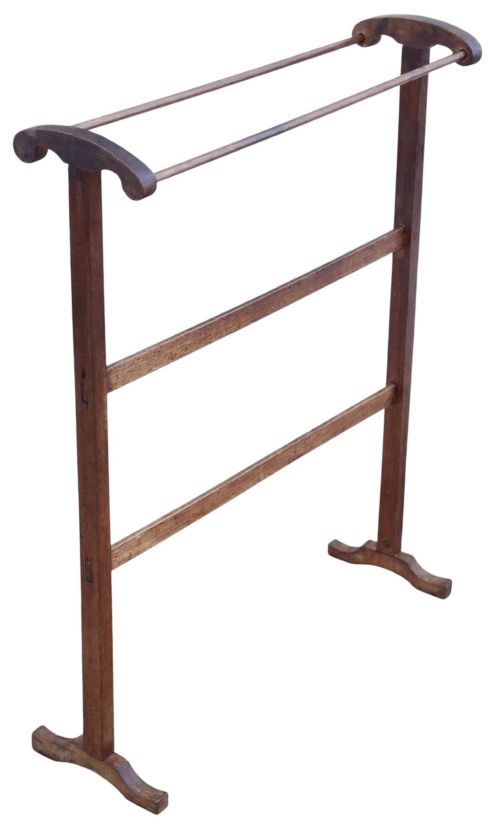
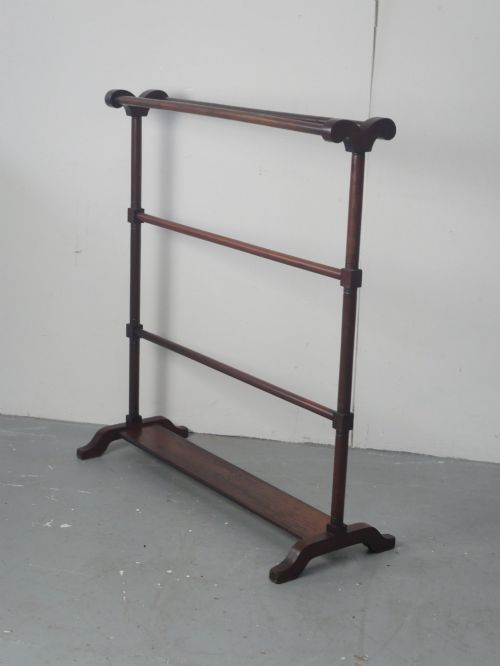
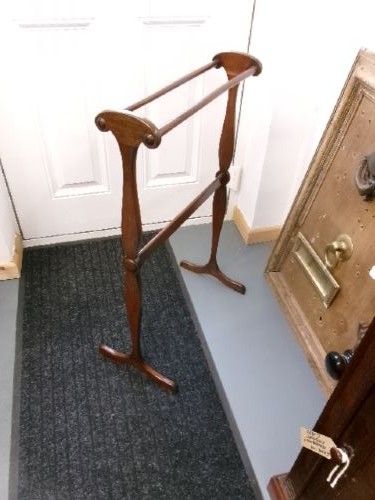
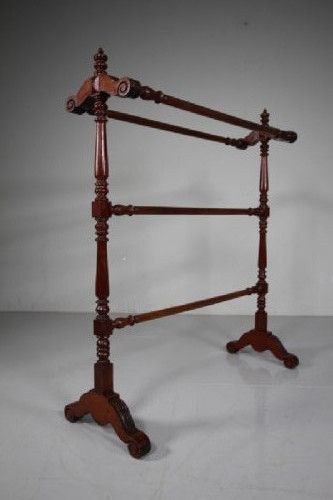
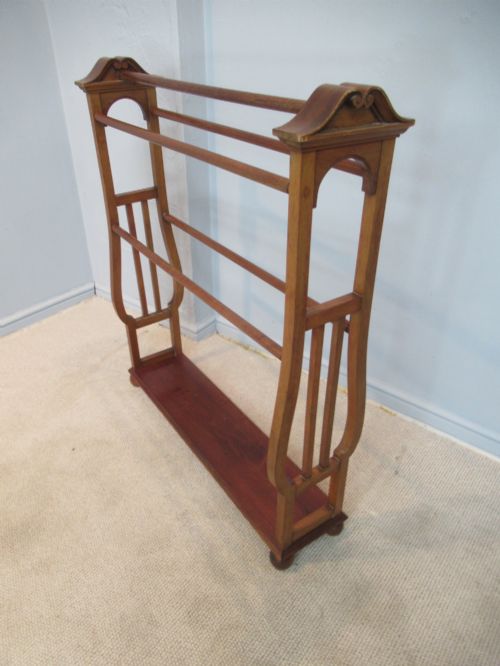
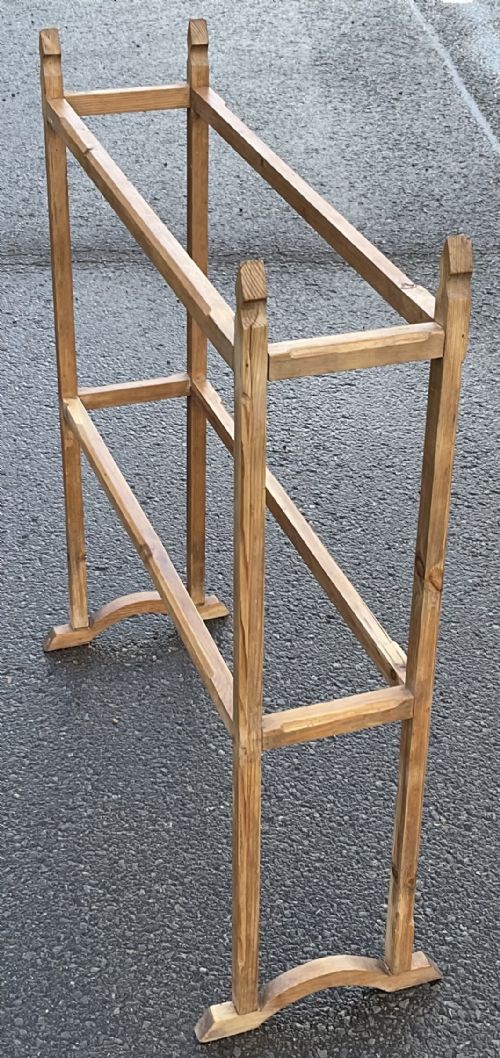
A wooden towel stand is a functional piece of domestic furniture designed for drying and displaying linen, appearing across this page in various forms from the nineteenth and early twentieth centuries. These pieces range from simple floor-standing rails of the Victorian and Edwardian eras to larger folding frames and combined clothes horses.
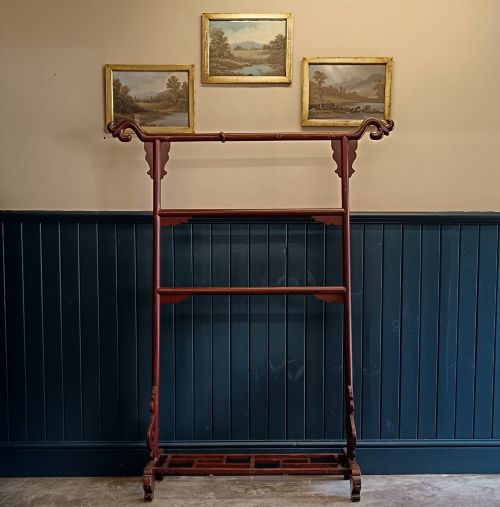
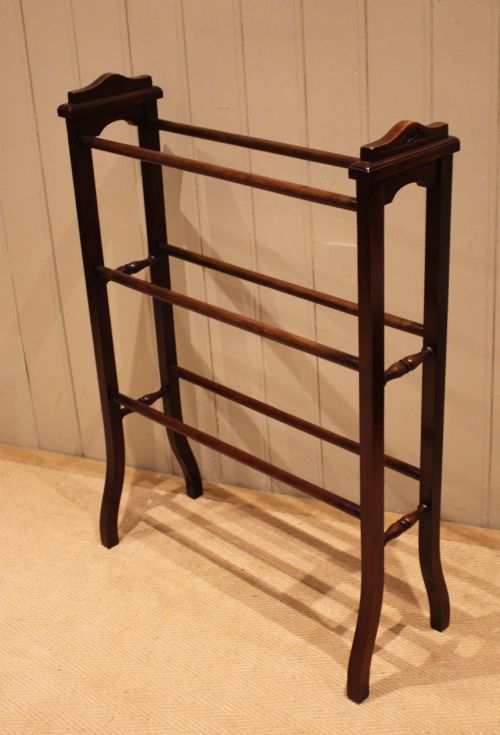
The most common examples encountered here are mahogany rails dating from the Edwardian period and the wider nineteenth century, often featuring multiple horizontal bars for hanging textiles. Alongside British pieces, the selection includes Chinese lacquered robe stands and carved hall stands, broadening the traditional definition of the form.
How they were made
Makers relied primarily on mahogany, oak, walnut, and pine, selecting dense timbers capable of withstanding daily use and damp textiles. Inlaid details, brass fittings, and black ebonised finishes occasionally supplement the exposed grain of the primary woods.
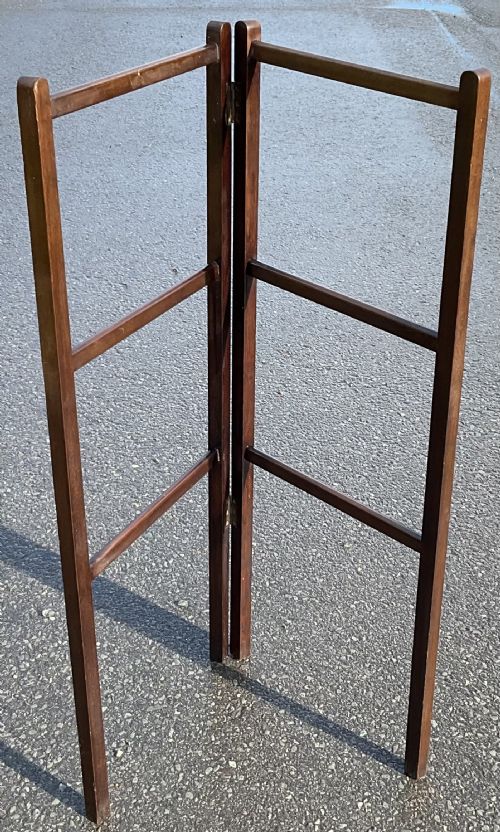
Construction techniques combine traditional joinery with functional folding mechanisms, particularly in three-fold and multi-bar configurations. Lacquered finishes and carved decorative elements appear on pieces originating from Qing Dynasty workshops, employing distinct regional woodworking traditions.
Mahogany appears more frequently than pine, oak, walnut, elm, or hardwood across the nineteenth-century and Edwardian listings.
What varies in quality
Quality in a wooden towel stand rests in the weight of the timber and the rigidity of the joints, separating sturdy domestic examples from lighter utility items. Generous proportions and thoughtful framing, such as five-bar configurations or balanced folding frames, elevate a piece above standard manufacture.
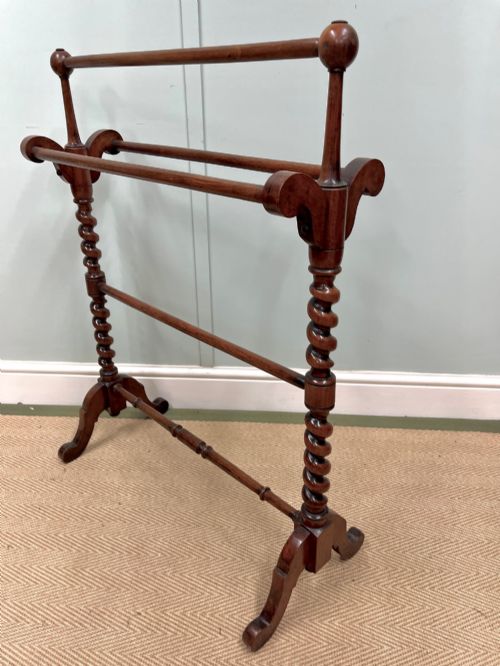
Refinement of detail also distinguishes the range, seen in subtle inlay work, turned side supports, or the crispness of carved ornamentation. The integrity of the wood finish and the survival of original brass hardware contribute further to the distinction between basic utility stands and finer decorative pieces.
Gillows
The Wooden Towel Stand Glossary
- Mahogany
- A durable, reddish-brown tropical hardwood favoured for nineteenth-century furniture due to its rich grain and stability. It forms the primary material for the majority of rails listed here.
- Clothes horse
- A hinged folding frame designed for airing laundry indoors. Versions of this form provide multiple rails for spreading textiles.
- Ebonised
- Wood treated with a dark stain or finish to imitate ebony. This technique creates a dense, black surface seen on specific nineteenth-century pieces.
- Gothic Revival
- An architectural and decorative style popular during the Victorian era, characterised by medieval motifs and pointed arches. It influences the shaping and detailing of selected walnut rails on this page.
Wooden Towel Stand: Frequently Asked Questions
How were wooden towel stands originally used?
These stands served primarily in bedrooms and dressing rooms for airing and hanging household linen and towels before central heating was common.
Their lightweight construction allowed servants or occupants to move them near fires or open windows as needed throughout the house.
Are these stands suitable for modern bathrooms?
They function well in contemporary spaces for holding dry towels, provided the room has adequate ventilation to protect the antique wood.
Placement away from direct and constant moisture preserves the historical polish and structural integrity of the timber.
How do I identify an Edwardian towel rail?
Edwardian examples often feature lighter mahogany frames, sometimes incorporating inlaid stringing or simple multi-bar arrangements dating around nineteen hundred.
They generally display less heavy ornamentation than their mid-nineteenth-century predecessors while maintaining solid wooden construction.
What is the difference between a rail and a clothes rack?
Towel rails typically feature horizontal bars fixed between two vertical uprights, specifically scaled for bathroom or bedroom linen.
Clothes racks and robe stands often incorporate taller dimensions or folding configurations suited for garments rather than smaller textiles.