



Dark Wood Towel Airer
A dark wood towel airer brings practical warmth and rich timber grain to a bathroom or bedroom.
Dark Wood Towel Airer
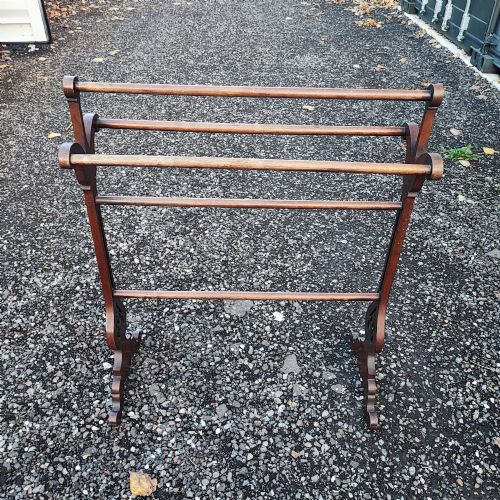
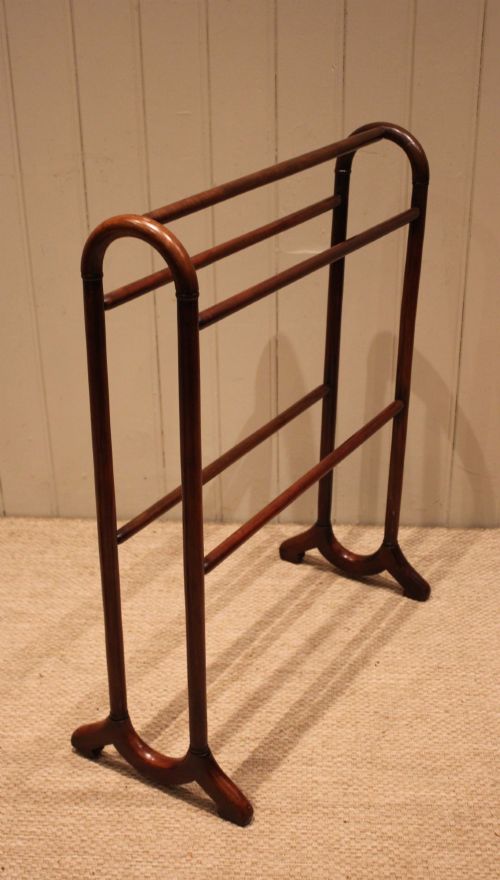
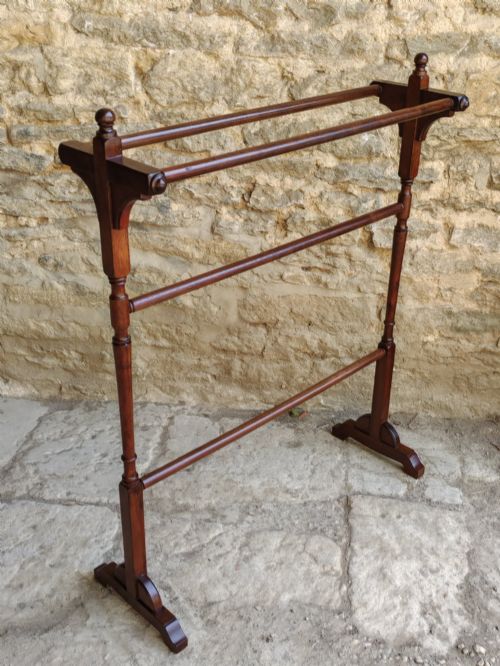
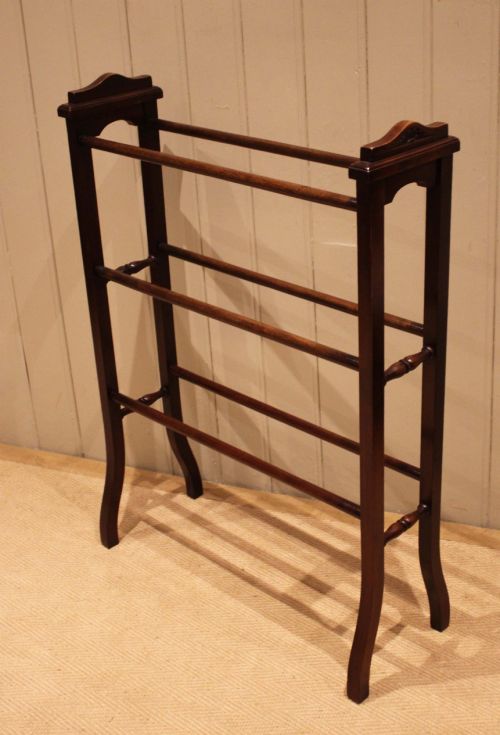
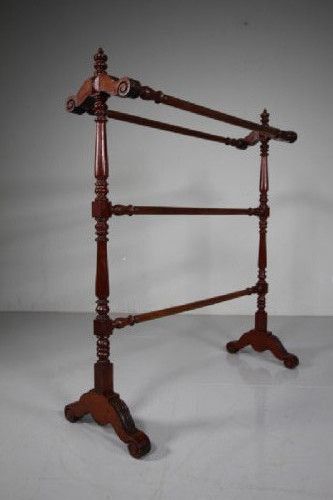
A dark wood towel airer provides functional hanging space through sturdy wooden frames designed to hold linens. These pieces appear across several periods, most commonly taking the form of freestanding rails from the Victorian and Edwardian eras.
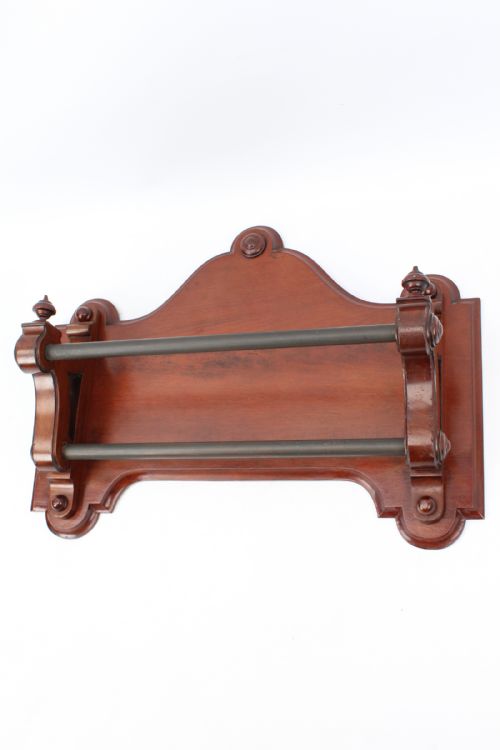
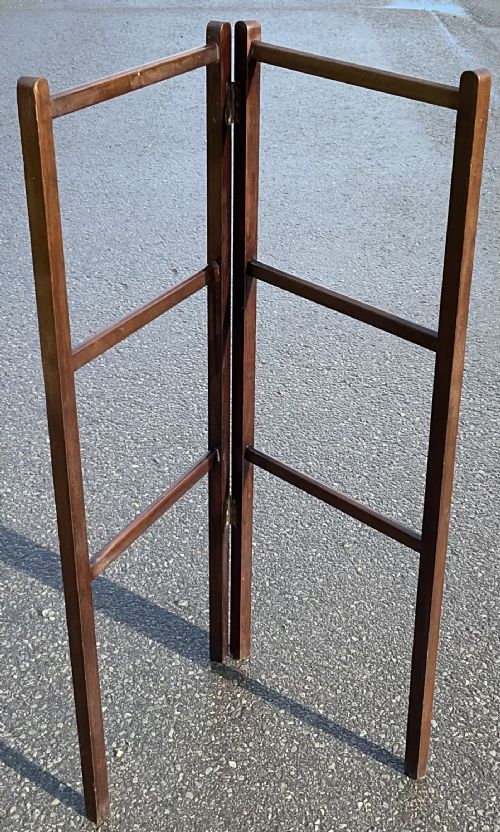
Buyers seeking a dark wood towel airer will encounter standing designs, folding formats, and hanging double rails. Many examples date from the late nineteenth century and the early twentieth century, offering period utility.
The selection ranges from simple Edwardian mahogany towel rails to large oversized William IV clothes and towel rails. Walnut also appears alongside the predominant mahogany frames.
Materials and construction methods
Cabinet makers shaped the wood into standing structures, folding mechanisms, and hanging double rails. These techniques ensured stability and daily practicality in domestic spaces.
Dark Wood Towel Airer Retail Price Guide 2026
Typical asking prices for dark wood towel airer among the pieces listed under this phrase on Sellingantiques today, from the lower quarter to the upper quarter. They describe what is for sale here now, not the wider market.
Listings span from the Regency era through Victorian and Edwardian periods, utilising mahogany, walnut, hardwood, and brass.
Distinguishing quality in dark wood towel airers
Quality reveals itself in the choice of timber and the solidity of the joints rather than mere decoration. Mahogany and walnut pieces with rich grain contrast sharply with plain secondary hardwoods.
Proportion and scale separate standard rails from substantial items such as large oversized William IV examples. Superior construction ensures the frame remains steady during everyday use.
The Dark Wood Towel Airer Glossary
- Mahogany
- A durable tropical hardwood prized for its reddish-brown colour and fine grain. It forms the primary material for the majority of these nineteenth-century rails.
- Edwardian
- A period spanning from the death of Queen Victoria until the First World War. Pieces from this era often display lighter proportions while retaining traditional dark timber construction.
- William IV
- A stylistic period bridging the Regency and Early Victorian eras. Furniture from this time typically exhibits robust forms and substantial scale.
- Folding towel rail
- A space-saving domestic accessory designed with hinged sections. This format allows the rails to collapse when not in active use.
Dark Wood Towel Airer: Frequently Asked Questions
How were these towel rails used originally?
These rails stood in bedrooms or dressing rooms to dry and warm household linens. Families placed them near fires to air towels before use.
Their practical design allowed servants to move them easily between rooms as needed for daily domestic routines.
Where should I place a towel airer today?
A wooden rail functions well in a spacious bathroom or a period bedroom for displaying textiles. The warm timber tones complement traditional interiors.
Keep natural wood away from direct, constant moisture sources to protect the vintage finish and joints.
How do I identify a Victorian rail?
Victorian pieces often display deeper mahogany tones and heavier construction than their Edwardian successors. Details reflect nineteenth-century revival styles.
Look for robust standing frames and traditional joinery methods typical of the period.
What is the difference between standing and folding rails?
Standing rails utilise fixed joints to maintain a permanent rigid structure for hanging linens. They provide stable support for heavier textiles.
Folding rails incorporate hinges that let the frame collapse flat against a wall. This mechanism offered flexibility in smaller Victorian and Edwardian spaces.