





Wooden Tier Washstand
These wooden tier washstand examples offer practical multi-level surface space shaped by Georgian and Victorian periods of cabinetmaking.
Wooden Tier Washstand
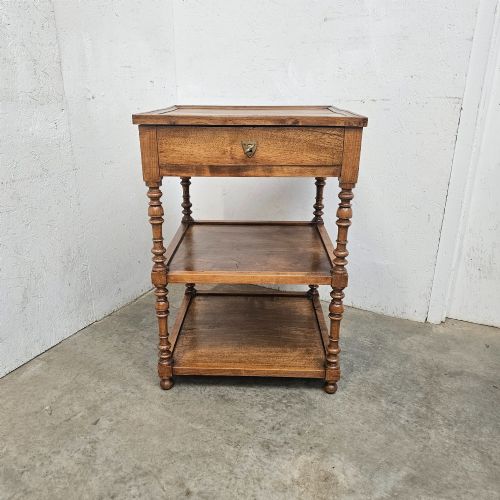
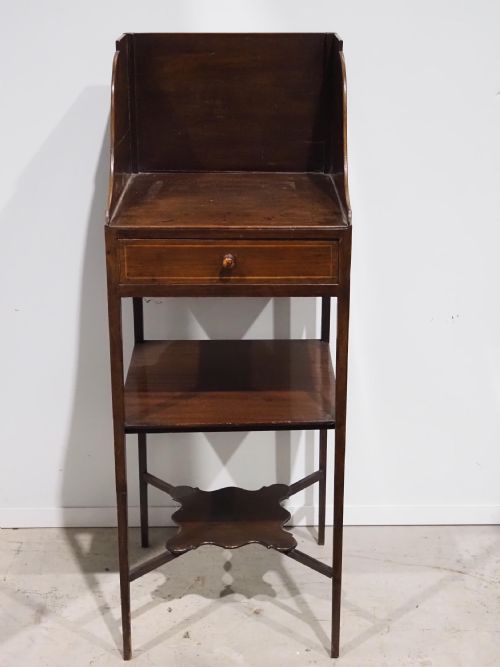
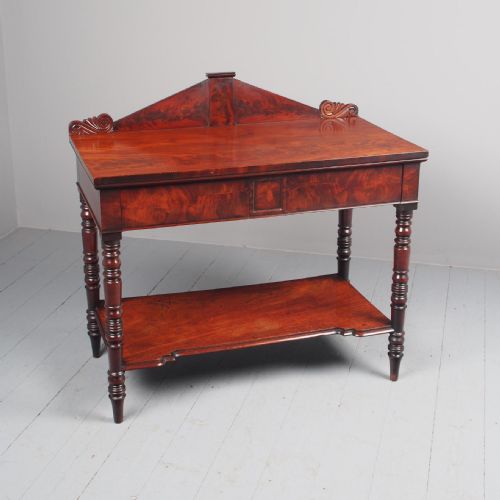
A wooden tier washstand provides multiple surfaces arranged vertically, often functioning today as bedside tables, side tables, or small display stands. These pieces emerge from periods spanning the eighteenth and nineteenth centuries, carrying the functional forms of earlier washing furniture into domestic spaces.
The versions most frequently met on this page include corner wash stands and tiered side tables executed in mahogany and walnut. Such pieces demonstrate how utilitarian bedroom furniture adapts over time into versatile occasional furniture for modern rooms.
Materials and construction methods
Makers built these pieces primarily from solid timber and selected veneers, with mahogany and walnut forming the structural core. Craftspeople utilised boxwood and satinwood for contrasting stringing and inlay work, adding linear detail to tabletops and tiers.
Turned legs, corner brackets, and fitted drawers provide structural support across the nineteenth-century examples. Joinery relied on traditional framing and dovetail techniques to manage the weight of multiple wooden tiers.
Listings feature pieces spanning the Georgian, Victorian, and Edwardian periods, constructed in mahogany, walnut, boxwood, and satinwood.
Assessing quality in tiered wooden washstands
Quality rests in the selection of timber figures, such as flame mahogany veneer or rich walnut grain, matched across the tiers. Superior examples maintain balanced proportions between the vertical supports and the horizontal shelves without structural sagging.
Finishing details like crisp turning on the legs and precise inlay separate standard utility items from more refined domestic pieces. The integrity of the original joints and the depth of the polished surface finish dictate the standing of each piece.
The Wooden Tier Washstand Glossary
- Washstand
- A piece of bedroom furniture designed to hold a basin and jug, often featuring multiple tiers or corners to accommodate washing equipment.
- Etagere
- A set of open shelves arranged in tiers, used for displaying small objects or serving as an occasional console table.
- Inlay
- A decorative technique where contrasting woods like boxwood or satinwood are set into the surface of a primary timber.
- Veneer
- A thin layer of figured wood, such as flame mahogany, applied over a secondary wood base to provide a decorative surface.
Wooden Tier Washstand: Frequently Asked Questions
What is a wooden tier washstand?
A wooden tier washstand is a piece of furniture featuring multiple horizontal surfaces designed originally for washing paraphernalia in bedrooms.
Today, these items serve as side tables, bedside tables, or display stands in living spaces.
How do I date a wooden washstand?
Dating relies on examining the timber species, construction methods, and stylistic cues present in the piece.
Items from the Georgian and Victorian periods display distinct turning styles, leg forms, and inlay patterns typical of their era.
Where can I use a washstand at home?
These pieces fit well beside a bed or sofa as an occasional lamp or plant table.
The multiple tiers provide convenient surface space for books and decorative objects in smaller rooms.
What woods were used for washstands?
Cabinetmakers utilised hardwoods such as mahogany and walnut for the main structure and surfaces.
Secondary woods and lighter accents like boxwood and satinwood appear in inlay and decorative stringing.