
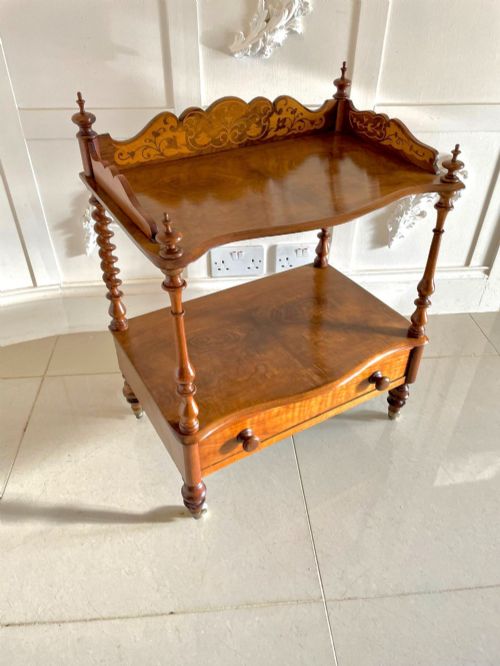
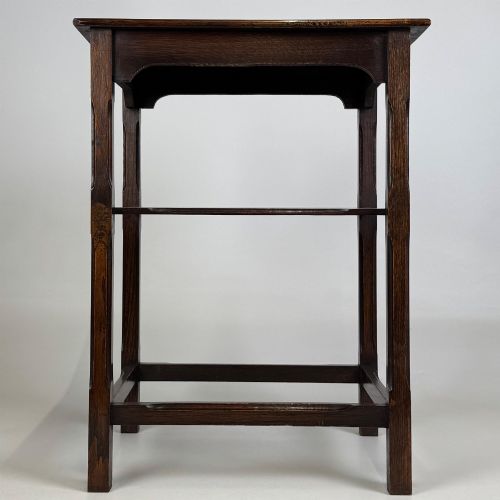
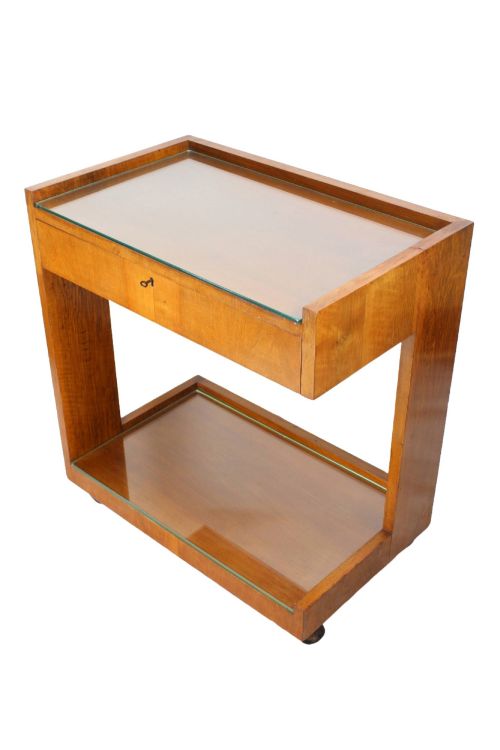
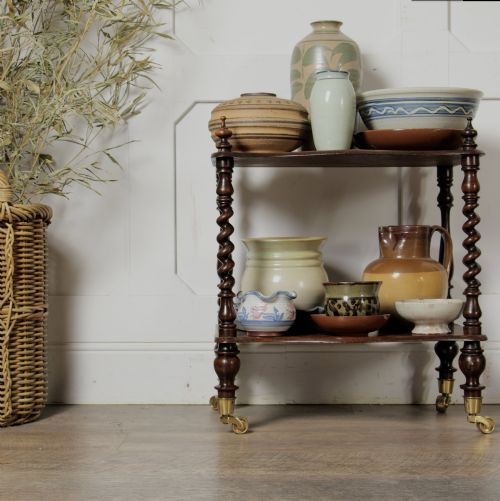

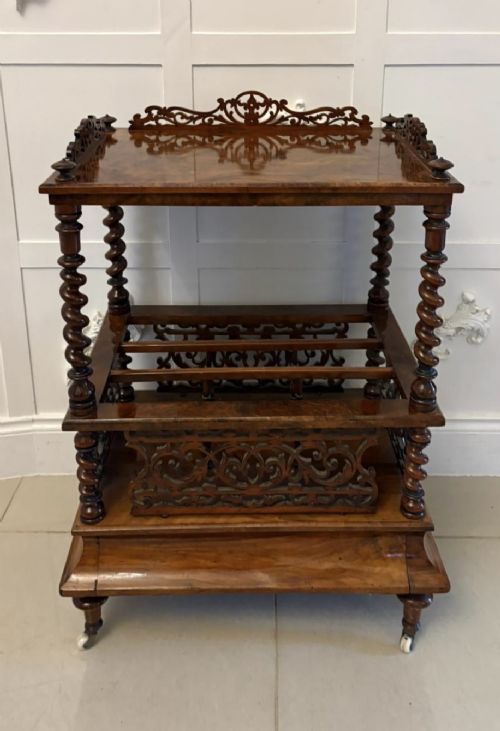
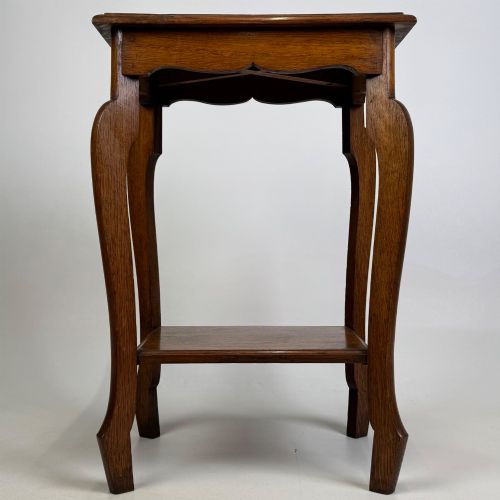
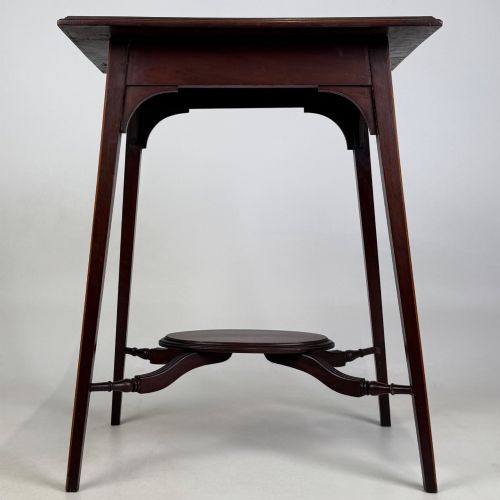
Wooden Tier Table
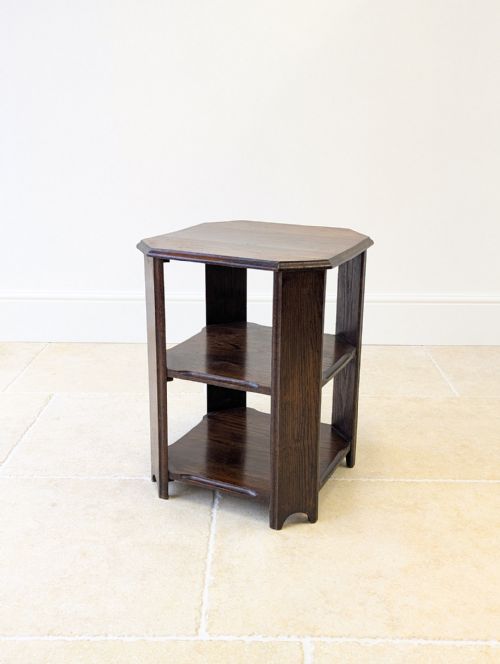
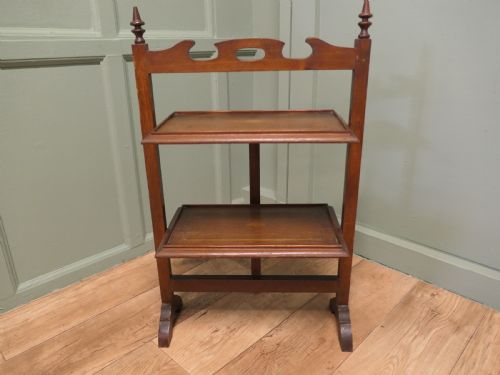
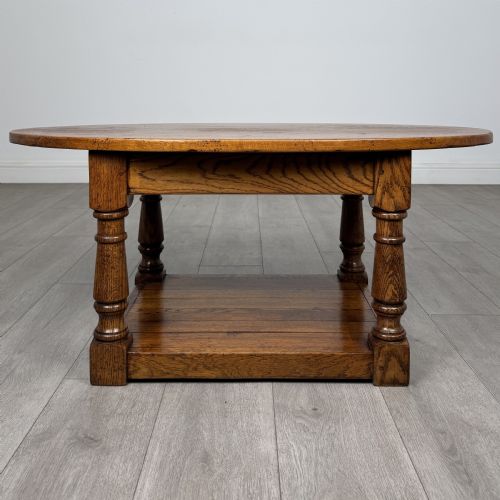
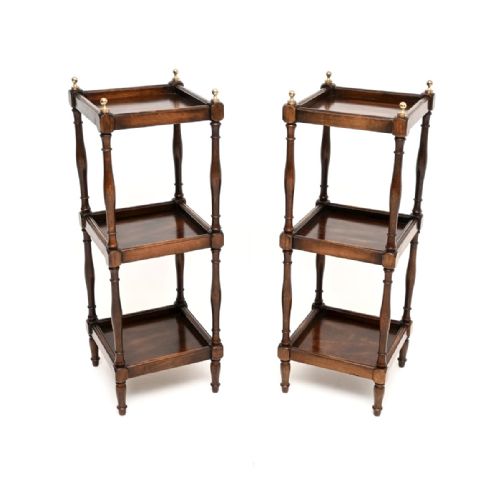
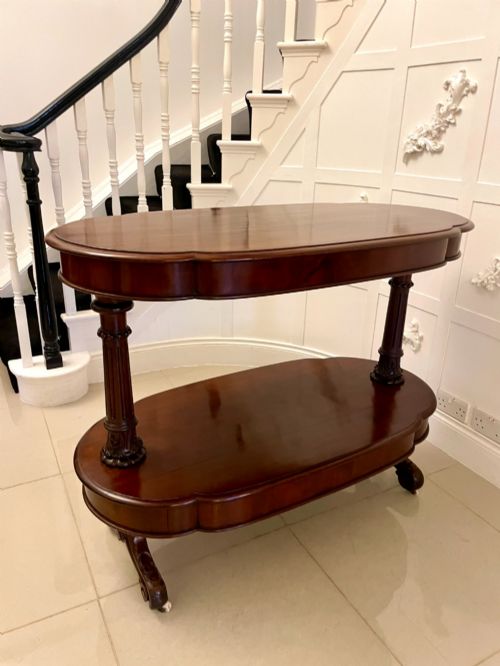
A wooden tier table provides multiple surfaces for lamps and books, bringing practical elegance to domestic spaces from the Victorian and Edwardian eras.
Materials and Technique
Cabinetmakers utilised hardwoods such as mahogany, oak, walnut, and burr walnut, selecting figured grains for prominent surfaces. Ebonised wood and rosewood appear in select pieces, occasionally paired with brass fittings, metal accents, or inset glass panels.
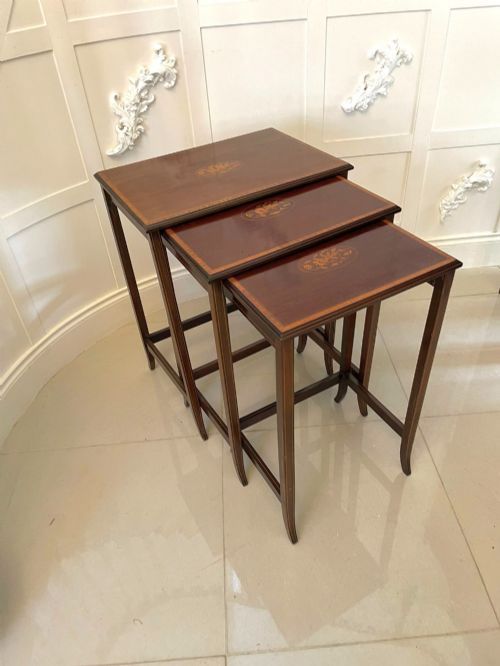
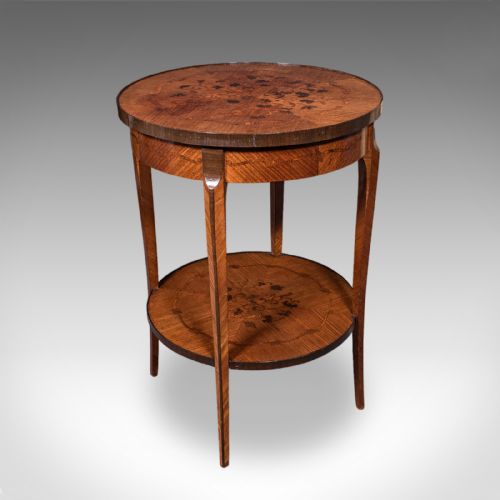
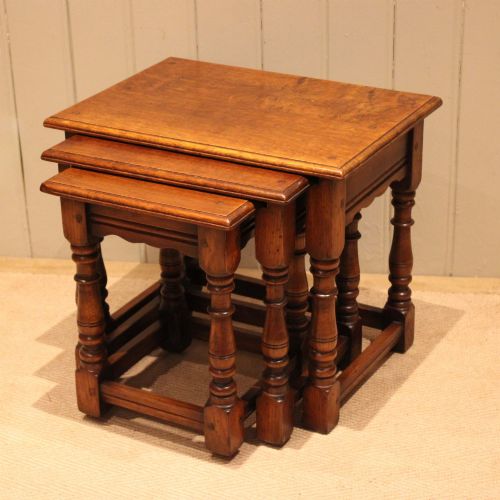
Construction techniques include marquetry inlay, carved details, and specialised turnings like barley twists or bobbin legs. Tiers are joined securely to upright supports, forming stable structures designed to bear weight across multiple levels.
Judging Quality
Quality rests upon the selection of timber and the precision of the joinery connecting the tiers and uprights. Superior examples display carefully matched wood veneers, crisp carved ornament, and harmonious proportions between the stacked levels.
Consideration is also given to the integrity of secondary materials, such as original brass castors, mirrored glass, or painted finishes. Pieces retaining their original structural coherence and surface patination stand apart from altered or heavily restored items.
Listings feature woods including mahogany, oak, walnut, burr walnut, and rosewood, alongside brass and glass elements.
Gregory & Co·Liberty of London·William Birch
The Wooden Tier Table Glossary
- Tier table
- A small furniture piece featuring multiple stacked surfaces supported by upright columns or legs. It offers extra display or storage space without expanding the floor footprint.
- Whatnot
- An open set of multi-tiered shelves used for displaying ornaments or books. Originating in the Victorian period, it typically stands on slender legs.
- Barley twist
- A decorative turning technique resembling a twisted rope. This detail frequently forms the upright supports on Victorian and Edwardian tables.
- Marquetry
- The art of applying pieces of veneer to a structure to form decorative patterns. It adds visual texture to tabletops and cabinet fronts.
- Etagere
- A piece of furniture consisting of a set of open shelves for display. French examples often incorporate turned legs and fine wood veneers.
Wooden Tier Table: Frequently Asked Questions
What is a wooden tier table used for?
These tables provide extra surface area for lamps, drinks, and books within living spaces. Their stacked design allows for efficient storage and display in compact rooms.
Throughout the nineteenth and twentieth centuries, variations served specific domestic roles, from tea service trolleys to plant stands and bedside units.
How do I identify an Edwardian tier table?
Edwardian examples typically feature lighter timbers such as mahogany and oak, often accented with simple inlay or satinwood banding. Their profiles tend to be refined and less heavy than Victorian counterparts.
Look for clean lines and functional forms designed for comfortable early twentieth-century domestic interiors.
What is the difference between a whatnot and a side table?
A whatnot is primarily designed with multiple open shelves for displaying ornaments and small decorative objects. It emphasises vertical storage across several tiers.
A side table focuses on a primary surface with occasional lower shelves added for utility, rather than functioning principally as a display stand.
How do I care for antique walnut tables?
Keep walnut furniture away from direct sunlight and heat sources to prevent the wood veneers from drying and cracking. Regular dusting with a soft, dry cloth maintains the surface.
Apply quality beeswax sparingly when the wood appears dry, buffing gently to preserve the natural lustre of the grain.