



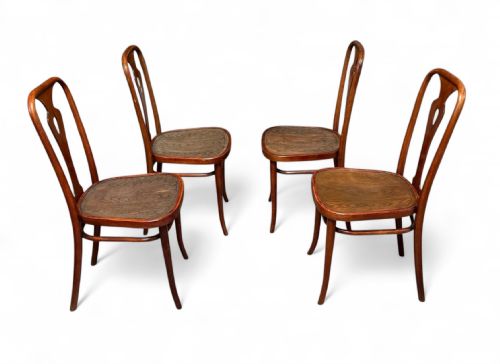


Wooden Thonet Chairs
Wooden thonet chairs bring ingenious bentwood curves and lightweight strength into domestic spaces, prized for both historic utility and enduring modernist elegance.
Wooden Thonet Chairs
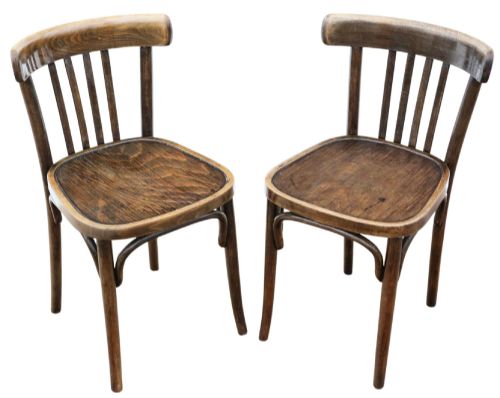
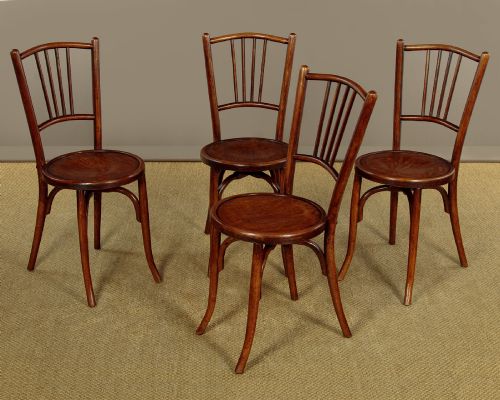
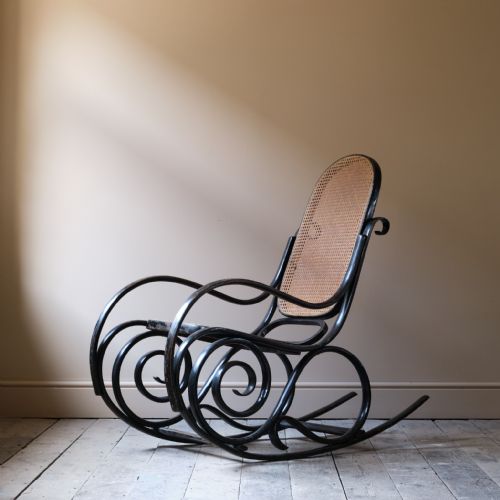
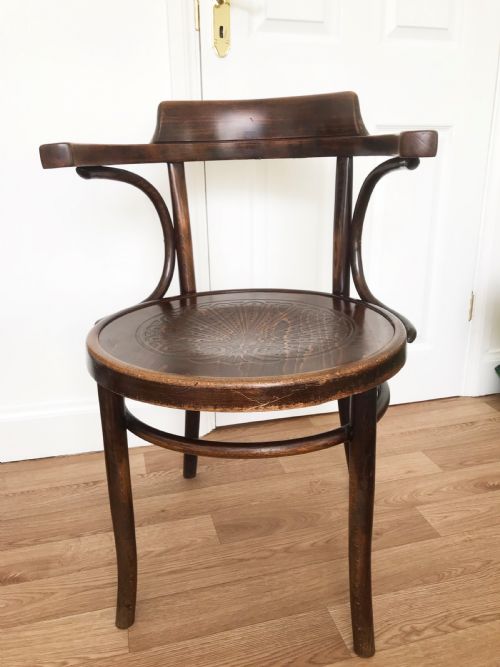
When buyers search for wooden thonet chairs, they encounter practical seating solutions spanning dining chairs, armchairs, and rocking chairs. These pieces originate from the nineteenth and twentieth centuries, taking forms such as bistro dining chairs, carvers, and reclining rockers.
The most common examples on this page are dining and bistro chairs, often grouped in sets or pairs. These pieces frequently date from around nineteen hundred through to the mid-twentieth century, showing influences from Art Nouveau, Edwardian, and Vienna Secession styles.
Originating across Austria, Italy, Yugoslavia, and England, these items include pieces from major workshops alongside examples utilised in notable commercial settings like the Cafe Royal in London.
Assessing quality and finish
The distinction between standard examples and exceptional pieces rests upon the crispness of the steam-bent curves and the complexity of the chair type. Rocking chairs and grotto style carvers demand more intricate manipulation of timber than simple dining chairs.
Attribution to specific makers or workshops elevates a piece, as does documented provenance from historic institutions. The condition of original cane work, integrated armrests, and uniform patination across matched sets also define the upper tier of the range.
Object forms include dining chairs, armchairs, and rocking chairs with origins spanning Austria, Italy, and England.
Jacob and Josef Kohn·Thonet·Codina
The Wooden Thonet Chairs Glossary
- Bentwood
- Wood shaped by exposure to steam and pressure into permanent curved forms. This technique revolutionized furniture production in the nineteenth century.
- Cane
- Woven rattan material used for lightweight, flexible seating inserts. It provides breathability and visual lightness to chair frames.
- Carver
- An armchair designed with open sides, traditionally placed at the head of a dining table. These pieces often feature continuous arm rests curved from a single piece of timber.
- Ebonised
- Wood finished with a dark stain or polish to imitate ebony. This treatment was popular in nineteenth-century decorative arts.
- Vienna Secession
- An Austrian art movement focused on clean lines and modern design principles. It influenced the geometric forms applied to bentwood furniture around nineteen hundred.
Wooden Thonet Chairs: Frequently Asked Questions
How do I identify an original wooden thonet chair?
Original pieces display steam-bent beech construction with specific joinery methods and often carry maker stamps or paper labels beneath the seat. Examining the fluidity of the curves helps distinguish period production from later interpretations.
Matching the construction details against documented nineteenth and twentieth-century catalogues confirms the manufacturing period and origin.
Can I use these chairs for everyday dining?
These chairs were originally engineered for bustling nineteenth-century cafes and domestic dining rooms alike, making them well-suited for daily use. Their lightweight frames make them easy to move around dining tables.
Checking the stability of the screw joints and the integrity of the cane or wooden seat ensures they handle regular seating comfortably.
How should I care for cane seats?
Cane panels require occasional light dusting and should be kept away from direct heat sources that cause the natural fibres to become brittle. Applying a damp sponge periodically helps maintain tension in the woven rattan.
Placing cushions on heavily used cane seats provides extra support and prevents premature wear on the woven material.
What is the difference between bistro and rocking chair models?
Bistro chairs are upright, lightweight dining seats designed for commercial hospitality environments and compact domestic spaces. Rocking chairs feature extended curved runners underneath for motion and often incorporate wider armrests for relaxation.
Both types utilise the same steam-bent beech technology but serve entirely different functional purposes within an interior.