
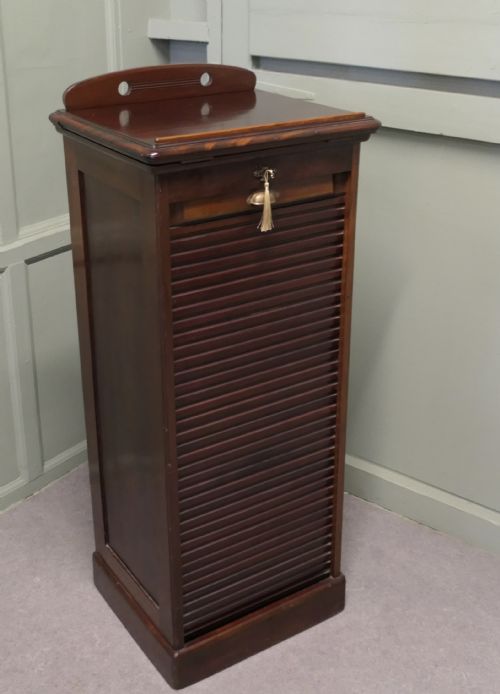


Wooden Tambour Cabinet
A wooden tambour cabinet brings together neat slatted doors and traditional cabinetry, offering a clever way to keep desk space tidy.
Wooden Tambour Cabinet
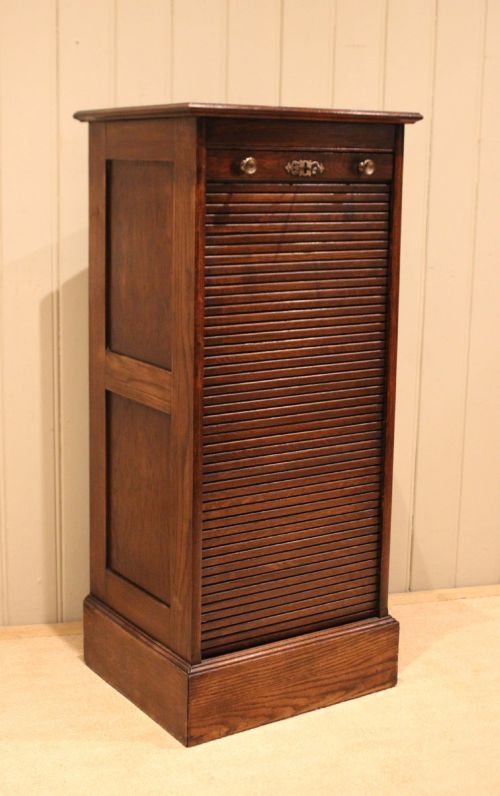
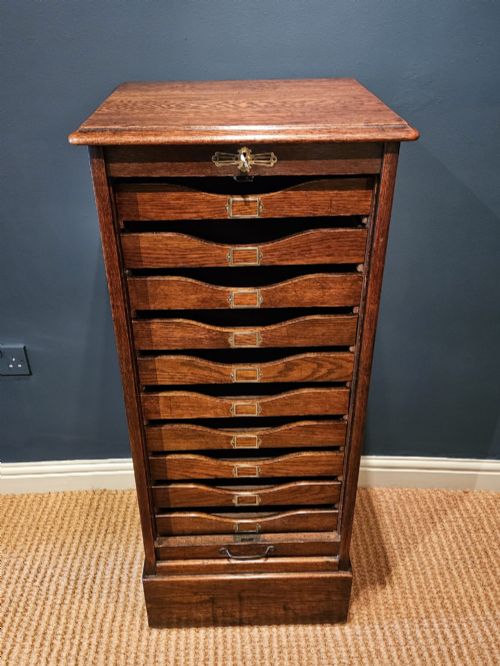
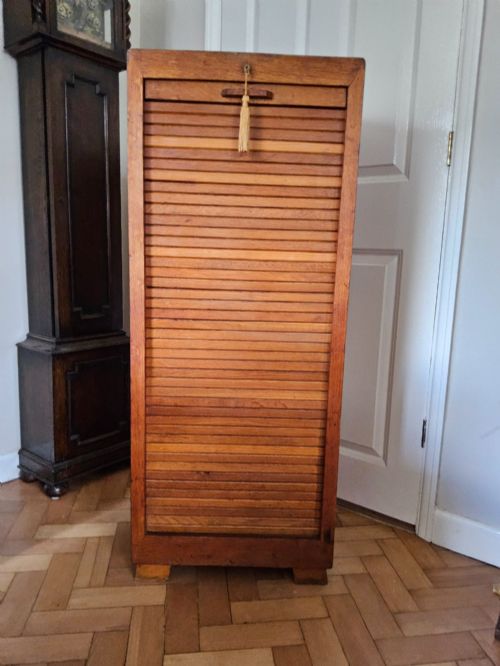
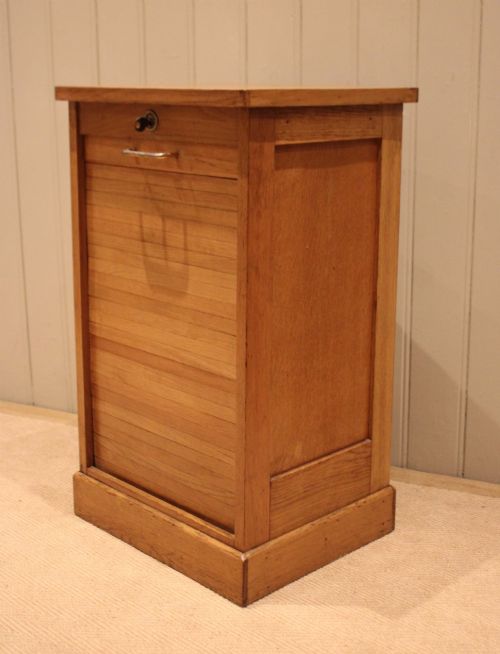
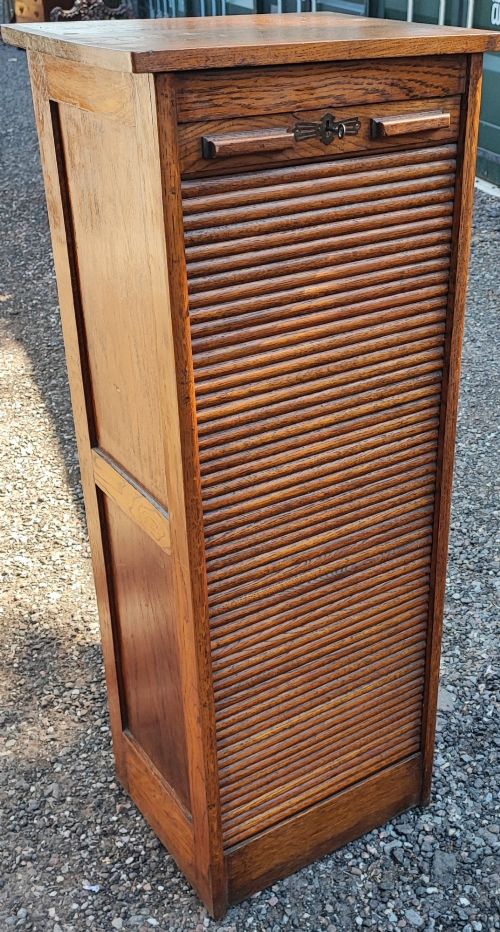
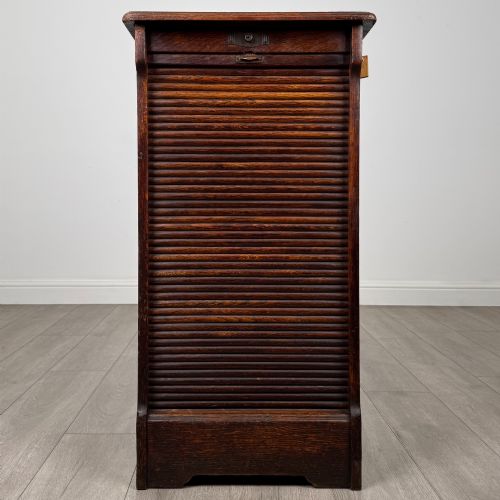
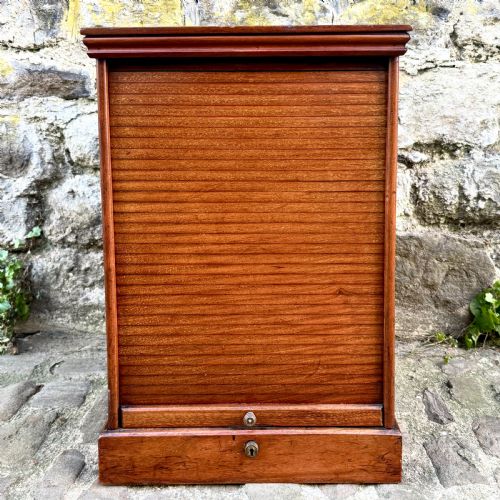
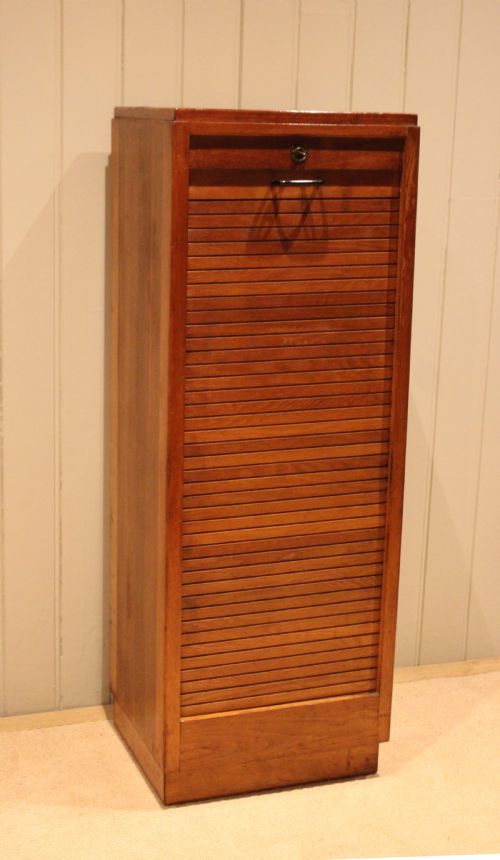
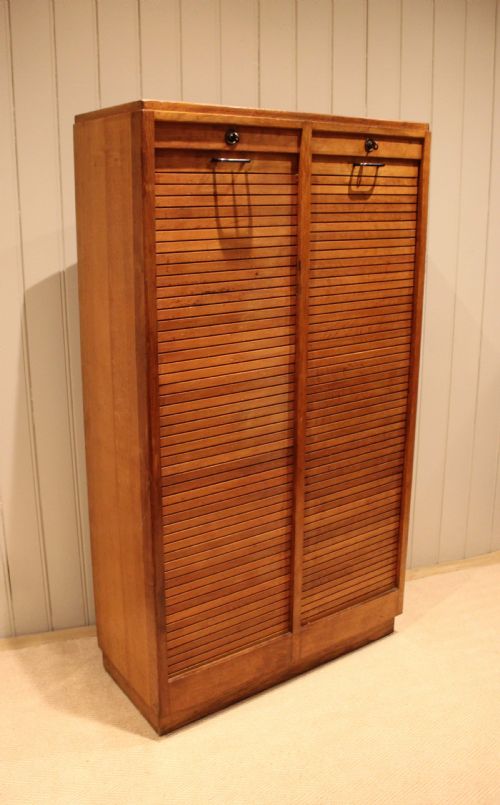
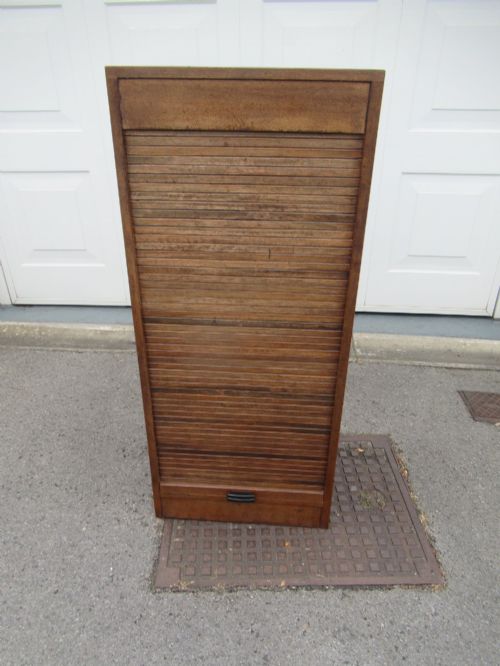
When you search for a wooden tambour cabinet, you encounter versatile storage furniture designed with slatted wooden doors that slide smoothly around a track to conceal the interior. These pieces frequently appear as single or double filing cabinets, office storage units, and compact bedside cabinets.
The selections span several distinct periods, reaching from Georgian and 18th century masterworks through Victorian iterations to Edwardian and 1930s office furniture. Oak and mahogany dominate the forms, supplemented by walnut, satinwood, and yew wood in various desk and cabinet applications.
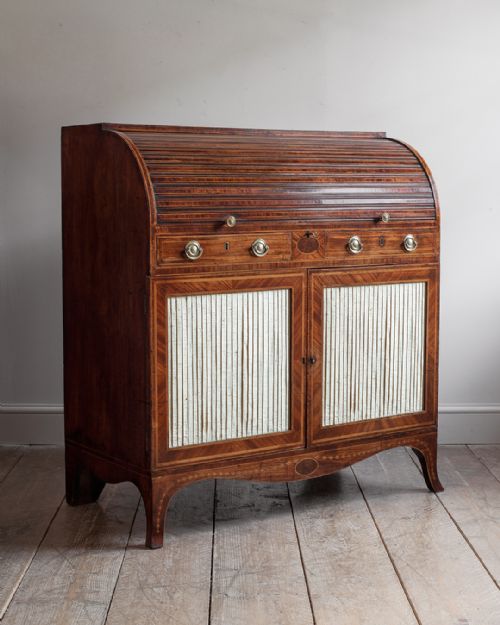
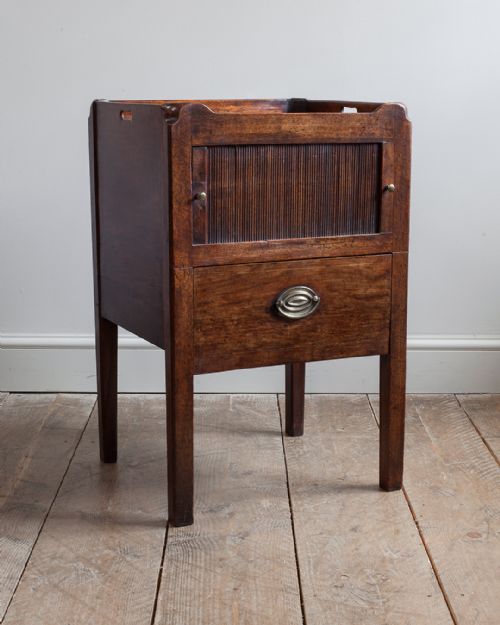
Office filing cabinets and small bedside tables form the core of what you meet on this page. Alongside these upright storage pieces, the selection includes cylinder bureaux and nightstands that utilise the same sliding slat mechanism.
How they were made
Makers constructed the sliding tambour doors by gluing individual narrow wooden strips onto a flexible backing of canvas or linen. This allows the slatted curtain to curve smoothly around corners and track neatly into the body of the cabinet.
Solid timbers such as oak, mahogany, and walnut provide the structural framework and exterior panels. Brass hardware, handles, and occasional feet furnish the finishing touches on these refined storage pieces.
Some Edwardian office managers clearly took great pride in their paperwork, housing correspondence behind smooth oak tambour curtains that rolled shut with a satisfying clatter.
What varies in quality
The smooth operation of the slatted door dictates much of the functional standard. A superior tambour curtain glides effortlessly along its track without catching, binding, or sagging when fully extended.
Timber selection and secondary framing set the finer examples apart from utilitarian office furniture. Cabinetmakers working in the Georgian and Edwardian periods employed choice mahogany and figured oak alongside careful internal joinery.
Gillows
The Wooden Tambour Cabinet Glossary
- Tambour
- A flexible door constructed from narrow strips of wood glued to canvas or fabric. This clever arrangement allows the shutter to slide around a curved track.
- Cylinder
- A rounded, barrel-like writing surface or cabinet front that often houses a sliding tambour mechanism. It conceals pigeonholes and small drawers when closed.
- Nightstand
- A small bedside table or cabinet designed for nocturnal storage. Many Georgian and Victorian iterations incorporate cupboards or tambour doors.
- Commode
- A decorative freestanding cabinet or chest of drawers originating in the 18th century. Some fine examples feature shaped fronts and tambour enclosures.
Wooden Tambour Cabinet: Frequently Asked Questions
How do tambour doors actually work?
The door consists of multiple narrow strips of wood attached side by side onto a sturdy canvas backing. This flexible construction permits the panel to bend around a curved track inside the cabinet frame.
When you push the handle, the slats travel smoothly along the groove to reveal or conceal the interior shelving.
Where were these cabinets used originally?
Many of these pieces served as efficient filing systems in early offices, legal practices, and studies. The slatted doors saved valuable floor space by not swinging outward into the room.
Smaller bedside variants and nightstands also populated period bedrooms, keeping personal items tucked neatly away.
How do I care for a wooden tambour cabinet?
Keep the cabinet away from direct heat sources and dramatic humidity shifts to protect the wooden slats and their fabric backing. Period timber benefits from occasional gentle polishing with traditional beeswax.
Avoid forcing the sliding door if it sticks, and instead check the internal tracks for any minor obstructions.
How can I tell a Georgian piece from a later one?
Georgian and George III examples typically feature rich mahogany timbers, hand-cut dovetails, and refined proportions associated with high-end cabinetmaking. They often take the form of nightstands or cylinder bureaux.
By contrast, pieces from the Edwardian era and the 1930s lean towards utilitarian office filing cabinets in oak with simpler structural lines.