



Wooden Stick Barrel
These wooden stick barrel designs combine practical storage with robust coopered construction, offering a traditional hallway feature for any home.
Wooden Stick Barrel
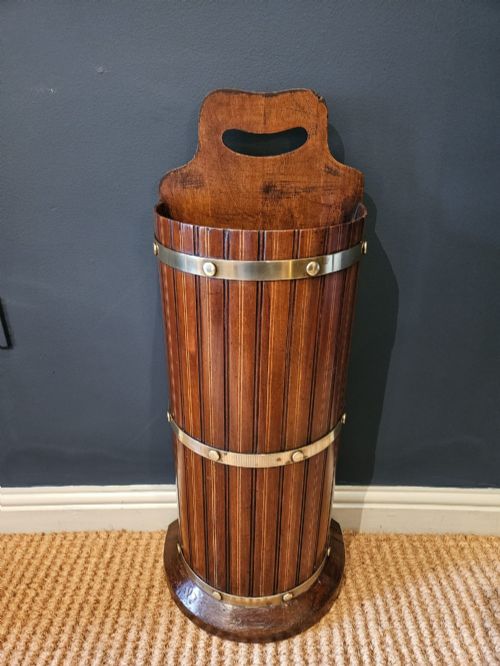
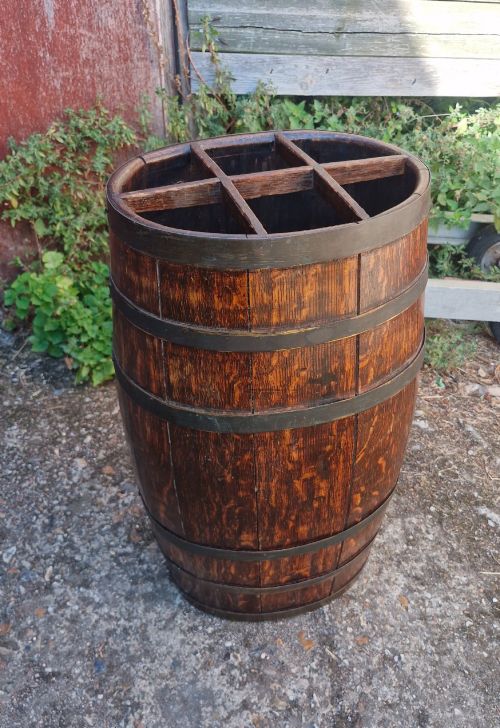
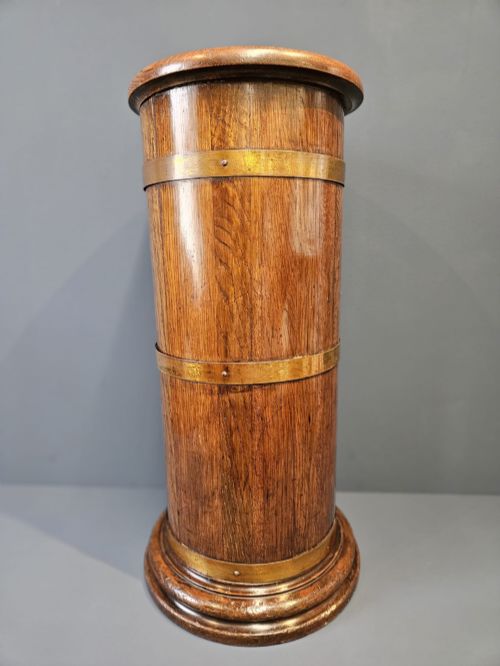
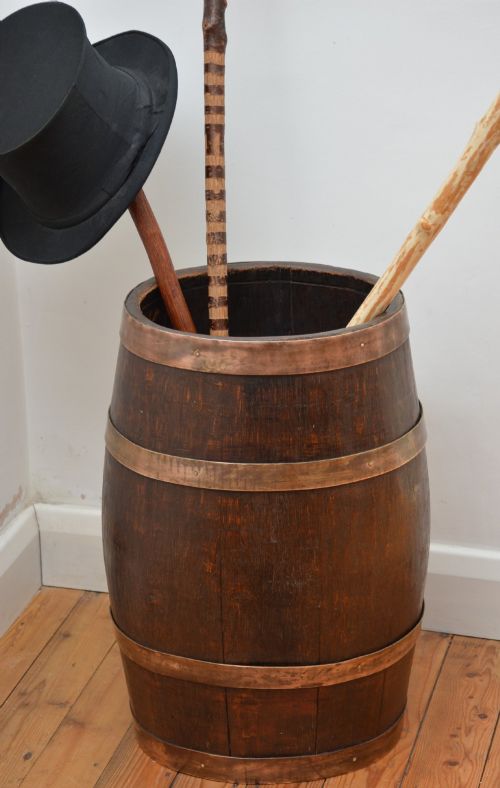
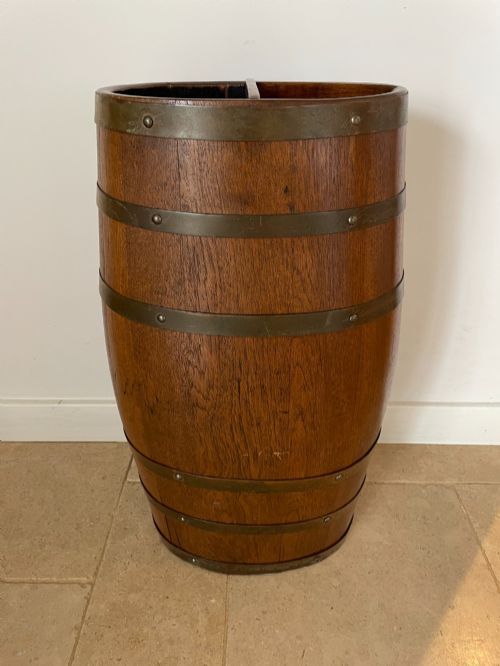
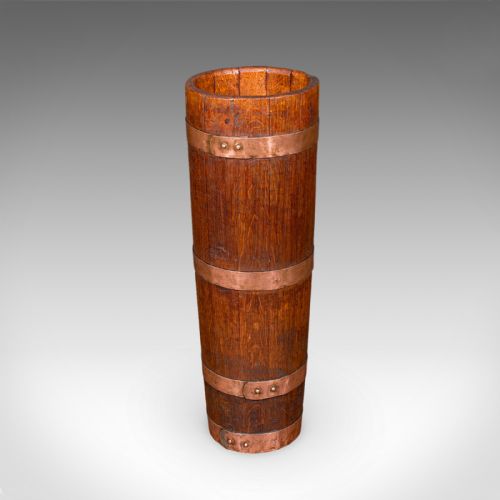
A wooden stick barrel is a functional hallway vessel designed to hold walking sticks, canes and umbrellas securely upright. These pieces typically take the form of cylindrical or oval barrels, utilising traditional coopered construction methods to shape the body.
Most examples found on this page date from the Victorian and Edwardian eras, spanning the nineteenth and early twentieth centuries. Common variations include freestanding coopered oak barrels fitted with metal bands and umbrella loops to keep wet items separated.
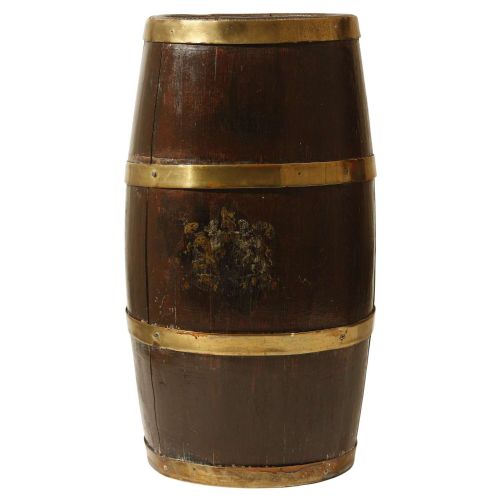
Originating largely from English country houses and domestic settings, these stands serve as both practical furniture and decorative hallway focal points. The forms range from simple banded oak staves to grander oval vessels featuring brass or copper reinforcement.
Materials and methods of construction
The primary material across these pieces is solid oak, selected for its strength and durability in daily use. Individual wooden staves are shaped and fitted together tightly using traditional cooperage techniques to form a self-supporting barrel shape.
Metal reinforcement is essential to the construction, utilising brass, copper, or iron bands that encircle the barrel to hold the staves under constant tension. Additional iron or brass loops are frequently mounted above the vessel to keep individual sticks neatly in place.
Listings feature oak construction almost exclusively, frequently reinforced with brass or copper bands and complemented by Victorian and Edwardian styling.
Distinctions in quality
Quality in a wooden stick barrel rests upon the precision of the cooperage and the selection of timber. Finer examples display tightly fitted oak staves with minimal gaps, whereas simpler versions show more rustic or utilitarian construction.
The choice of metal hardware significantly alters the character of the piece, with polished brass bands and cast umbrella loops indicating a higher status than plain iron hoops. The presence of maker details or heraldic insignia further separates standard domestic items from superior country house pieces.
R.A. Lister
The Wooden Stick Barrel Glossary
- Coopered
- A method of construction where curved wooden staves are joined side by side to create a watertight or cylindrical vessel. This technique relies on tension rather than glue.
- Stave
- One of the narrow strips of wood with tapered edges that form the sides of a barrel or tub. The precise angle of each stave determines the curve of the final object.
- Brass bound
- A descriptive term for wooden items reinforced with bands of brass around the exterior. These bands provide structural support while adding a decorative contrast to the timber.
- Umbrella loop
- A metal ring or divider fitted above the main body of a stand to keep individual walking sticks and umbrellas separated. It prevents wet items from leaning haphazardly.
Wooden Stick Barrel: Frequently Asked Questions
What is a wooden stick barrel used for?
These vessels serve as dedicated receptacles for walking sticks, canes and umbrellas in entrance halls and boot rooms. They keep wet items contained and prevent them from falling across the floor.
Historically, country houses utilised these barrels to manage the daily equipment required for outdoor pursuits. Today, they remain a practical method for organising hallway clutter while adding period character.
How do I care for antique oak?
Antique oak benefits from occasional applications of beeswax to nourish the wood and maintain a gentle sheen. Avoid placing the barrel directly against modern heating sources, which can cause the timber to dry and shrink.
Because these vessels frequently held wet umbrellas, ensure the interior remains dry to prevent dampness from affecting the lower staves. Using a modern inner liner protects the historic base from moisture damage.
How can I date my stick barrel?
Dating relies heavily on the style of the metal bands, the species of timber, and the construction techniques visible on the interior. Victorian examples frequently feature substantial brass binding and rich oak patination.
Edwardian pieces often display machine-assisted precision in the cutting of the staves alongside stamped maker marks. Comparing the hardware style with dated domestic items helps narrow the era of manufacture.
Are these pieces waterproof?
While coopered barrels were traditionally designed to hold liquids or damp items, antique examples require caution due to age. Shrinkage between the oak staves can occur over generations of dry storage.
It is wise to test the barrel gently or insert a modern waterproof tray inside the base if you intend to store very wet umbrellas. This preserves the original timber from internal water staining.