
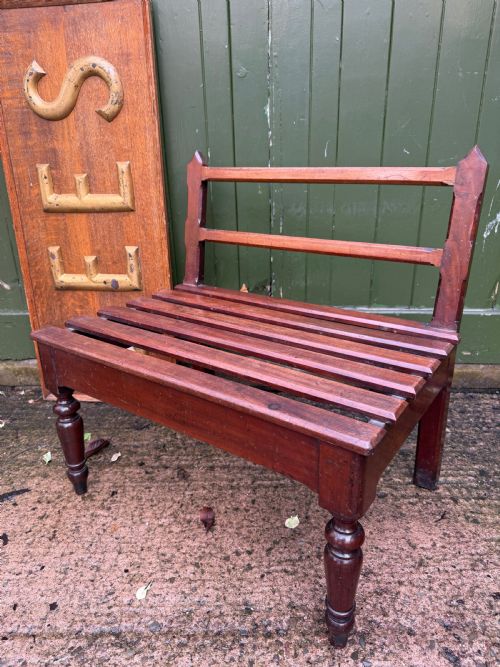


Wooden Slat Luggage
Wooden slat luggage encompasses the stands, racks and trunks built to hold a traveller's belongings.
Wooden Slat Luggage
Wooden slat luggage includes folding stands, wall racks and rigid travel trunks produced across the nineteenth and twentieth centuries. Buyers seeking wooden slat luggage most frequently encounter oak and mahogany stands alongside canvas and leather covered trunks.
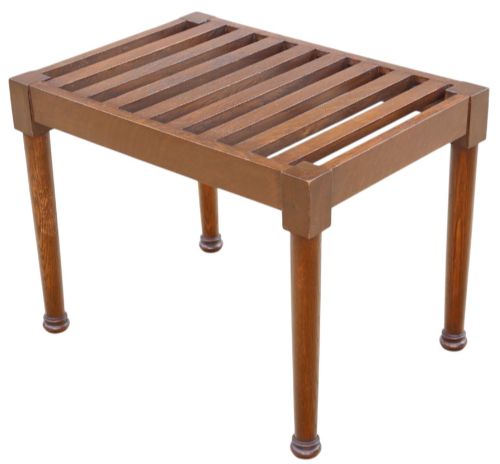
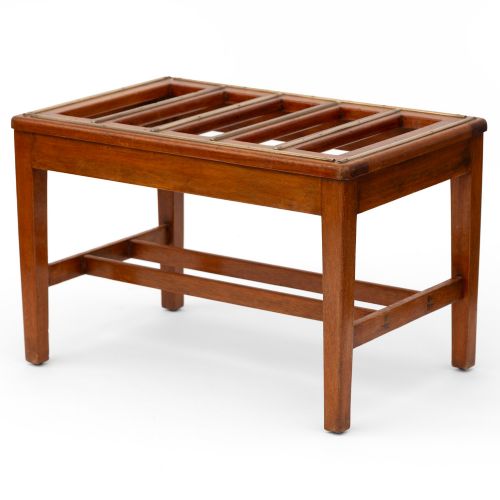
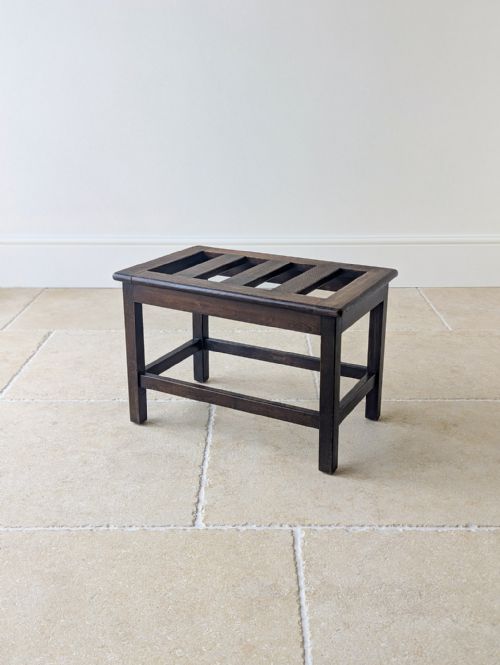
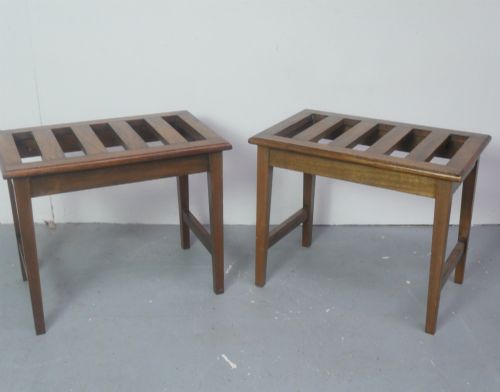
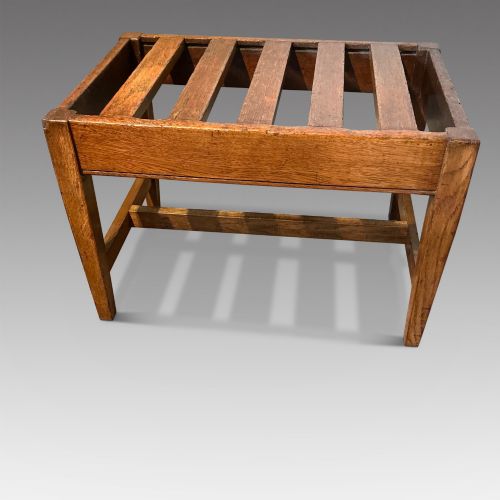
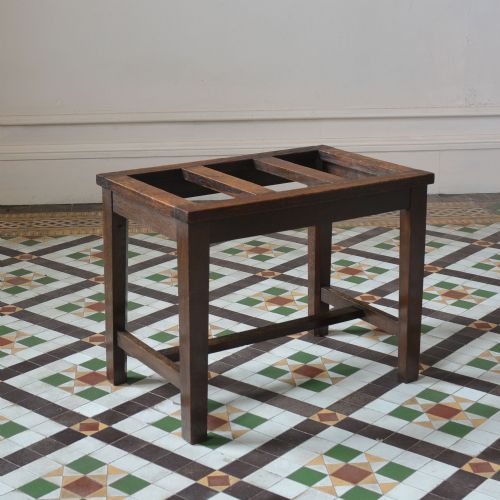
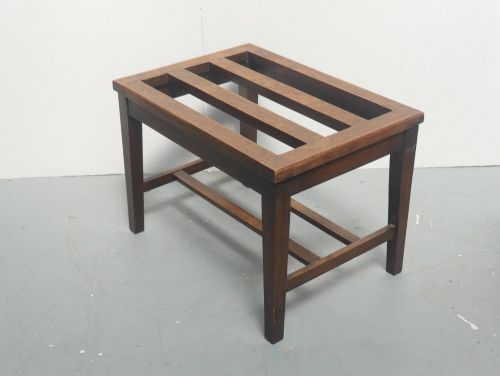
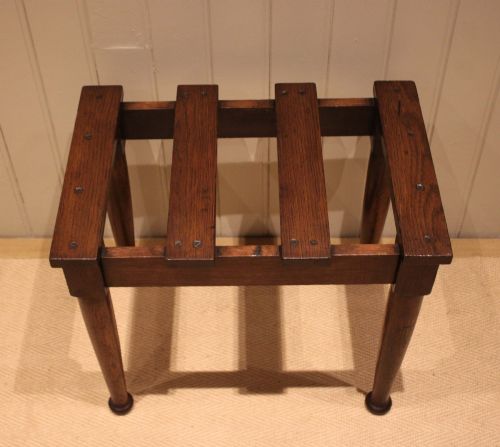
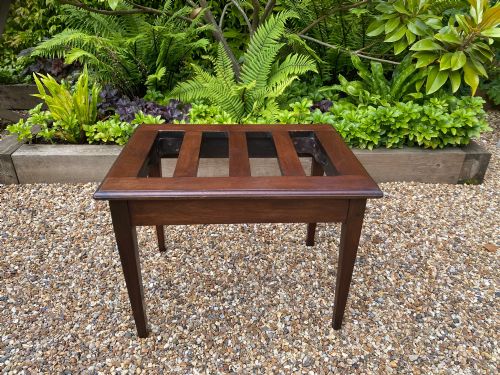
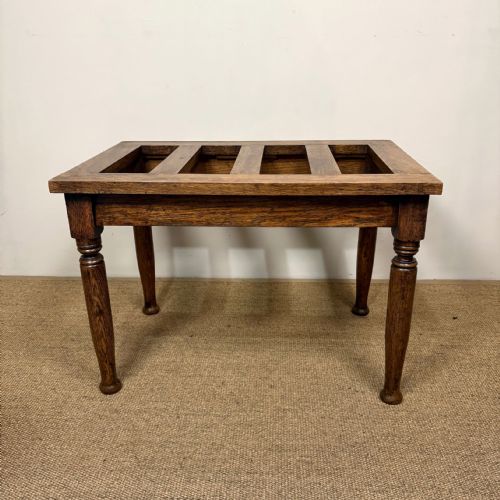
The domestic pieces take the form of luggage stands and racks originating from Victorian, Edwardian and early twentieth century workshops. These range from simple folding oak stands to substantial country house designs with raised rear supports.
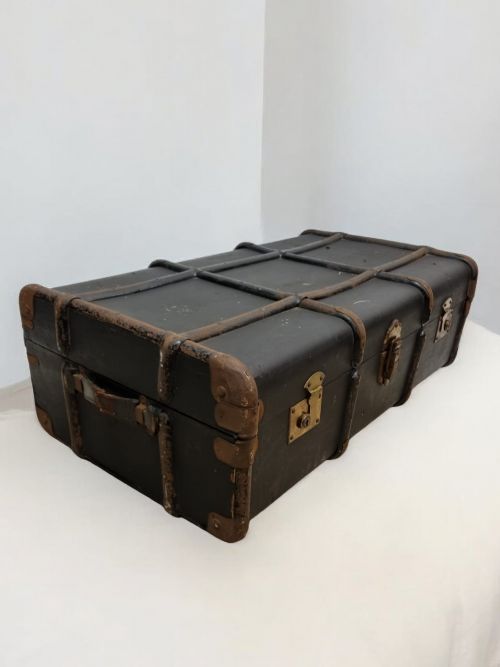
Travel trunks form the alternative group within this category, spanning dome top chests and steamer trunks with reinforced hardware. They bring utilitarian storage history directly into modern interiors as coffee tables or blanket boxes.
How they were made
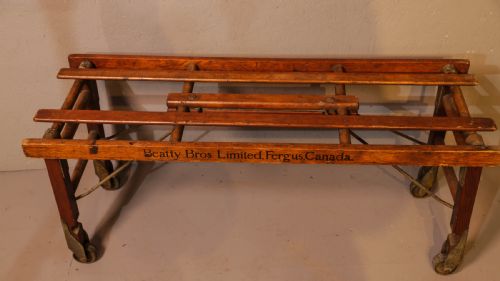
Construction relies on solid timbers such as oak, mahogany, beech, ash and yew combined with structural metal, brass fittings and iron hardware. Makers built folding stands with pivoting joints and sturdy stretchers to bear heavy loads without twisting.
Trunks feature wooden frames covered in canvas, leather or painted pine, secured with brass locks, metal corners and wooden slats. Interior compartments and exterior stencils completed pieces destined for long distance journeys by rail and steamship.
A few luggage stands carry the wanderlust of old hotels and ocean liners, having survived decades of West End hospitality.
What varies in quality
Quality rests in the selection of timber and the precision of the joinery rather than mere decoration. Denser hardwoods like mahogany and figured oak provide greater stability than softer utility pines.
Hardware integrity separates standard items from exceptional examples, seen in stamped brass locks, original corner brackets and robust folding mechanisms. Maker stamps and hotel provenance elevate a piece through documented heritage.
Louis Vuitton·Waring & Gillow·Brown & Lamont·Beatty Bros Fergus Canada·Aux Etats Unis of Paris
The Wooden Slat Luggage Glossary
- Luggage stand
- A folding piece of furniture designed to hold a suitcase or trunk at a convenient height. These typically feature wooden slats across the top and folding X frame legs.
- Steamer trunk
- A low profile travel chest designed to fit beneath a ship's cabin berth. They often feature canvas or leather coverings over wooden frames with reinforced slats.
- Upstand
- A raised barrier at the rear or sides of a luggage stand. This feature prevents luggage from sliding backward against a wall.
- Wardrobe trunk
- A vertical trunk opening like a wardrobe with internal hanging space and drawers. These large travel cases represent the height of luxury luggage design.
- Hardware
- The metal components attached to trunks and stands, including locks, handles, corner brackets and latches. Original hardware significantly influences collector interest.
Wooden Slat Luggage: Frequently Asked Questions
What is a wooden slat luggage stand used for?
These stands provide a dedicated surface for resting suitcases in guest bedrooms or an entrance hall.
They elevate bags to a comfortable height for packing and unpacking while protecting floors from heavy travel wear.
How do I care for antique wood furniture?
Keep wooden stands and trunks away from direct heat sources and dramatic humidity shifts to prevent timber splitting.
Apply natural beeswax periodically to nourish the grain and maintain a soft protective finish.
Can I use an antique trunk as a coffee table?
Travel trunks serve as functional coffee tables with internal storage for blankets and books.
Ensure the flat top surface is stable and protect the antique canvas or leather from moisture rings.
How do I distinguish Victorian from Edwardian luggage racks?
Victorian examples often display heavier timber proportions, deeper mouldings and dense hardwoods like mahogany or ash.
Edwardian pieces lean toward lighter polished oak frames with simplified joinery reflecting changing domestic interiors.