


Antique French Trunk
An antique french trunk is a sturdy receptacle built for travel or storage, valued for its robust wooden or leather construction and historic utility.
Antique French Trunk
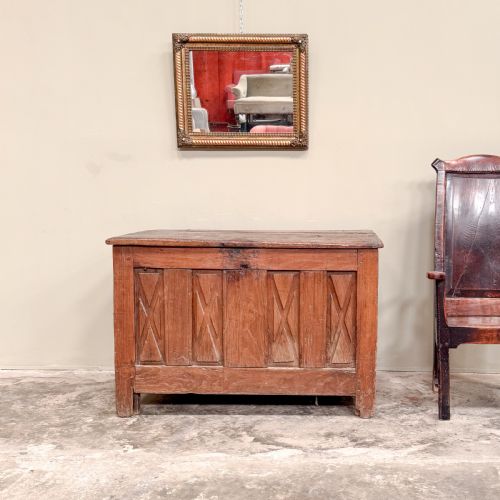
An antique french trunk encompasses a variety of substantial storage pieces designed for travel and domestic use. Buyers encounter solid timber coffers from earlier centuries alongside specialised luggage from later decades.
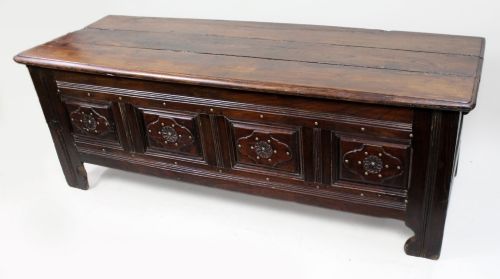
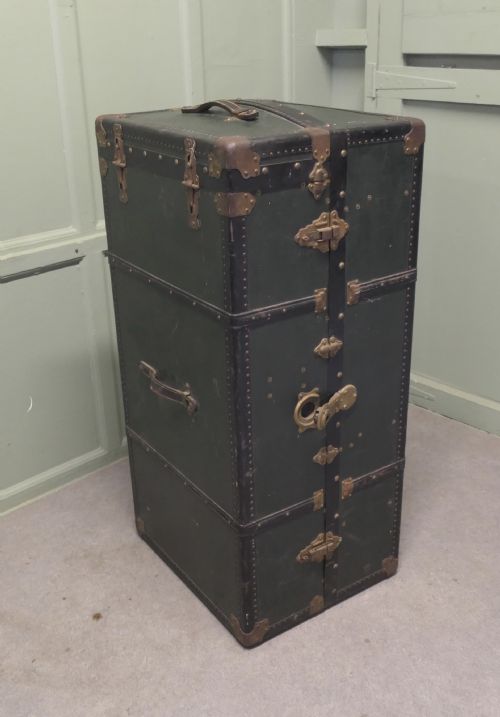
The selection ranges from seventeenth and eighteenth century oak coffers to early twentieth century steamer trunks and travel cases. Storage chests, blanket boxes, and fitted wardrobe trunks appear frequently across these periods.
Makers and workshops utilised durable timbers including oak, walnut, pine, and cherrywood. Metal bindings, brass hardware, and leather cladding reinforced these items for rigorous journeys.
How They Were Made
Carpenters and trunk-makers constructed these pieces using solid timbers such as oak, elm, fruitwood, and pine, often joined with traditional framing techniques. Iron hasps, wrought iron braces, and brass fittings provided structural strength.
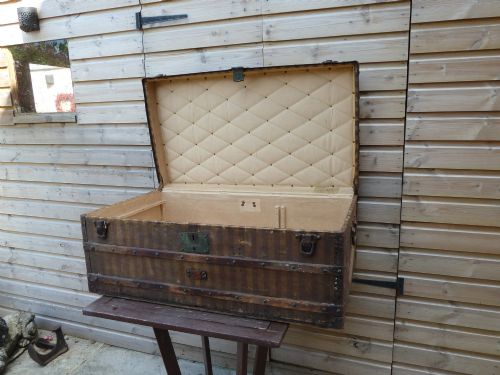
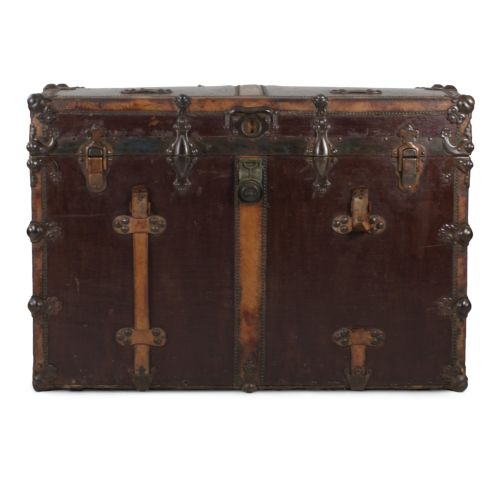
External surfaces were frequently clad in leather, canvas, or zinc to protect the contents during transit. Specialised interior compartments, wooden slats, and fabric linings accommodated travelling wardrobes.
An eighteenth-century French oak coffer likely held the family bread ration under lock and key.
What Varies in Quality
The standard of construction depends on the integrity of the timber framing, the density of the wood, and the resilience of the original metal hardware. Pieces retaining intact leather cladding, working brass locks, and original interior fittings demonstrate superior craftsmanship.
Signatures, maker stamps, and stencilled monograms from prominent Parisian houses indicate high-grade workshop production. Simpler provincial blanket boxes and utilitarian storage chests rely on straightforward joinery and sturdy local materials.
Louis Vuitton·Goyard·Aux Etats Unis·Seugnot Paris
The Antique French Trunk Glossary
- Coffer
- A heavy wooden chest used for storage of valuables and textiles. These sturdy receptacles often feature panelled construction and iron reinforcements.
- Steamer trunk
- A low-profile travel trunk designed to fit beneath a ship cabin berth. They emerged during the golden age of ocean liner travel.
- Portmanteau
- A large travelling case or bag for carrying clothing, typically opening into two equal compartments. These items were essential for nineteenth-century journeys.
- Faux bois
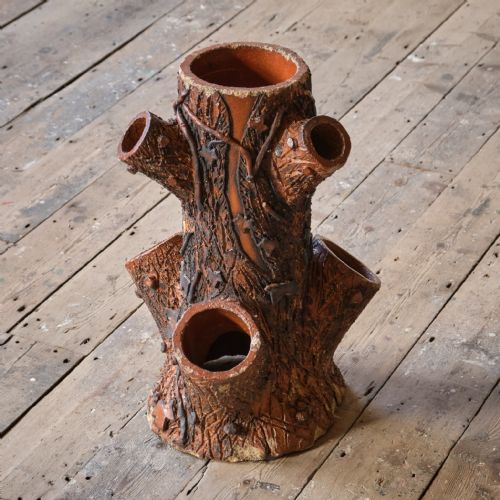
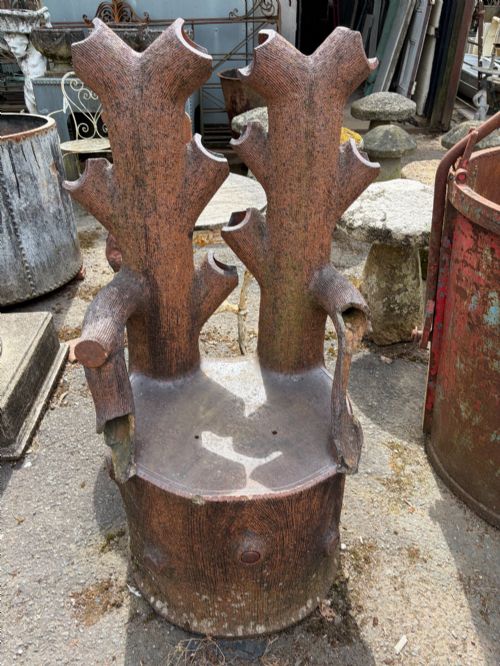
- A decorative technique mimicking wood grain, applied to garden furniture and planters. Artisans rendered this finish in concrete, metal, or painted surfaces.
- Dough bin
- A domestic wooden chest with a slanted lid used for kneading and rising bread dough. They reflect regional rural craftsmanship.
Antique French Trunk: Frequently Asked Questions
What is an antique french trunk used for?
These trunks serve as practical storage solutions for blankets, linens, and household items. Many buyers place them at the foot of a bed or utilise them as coffee tables in living spaces.
Their robust construction allows them to support weight while concealing clutter inside.
How do I tell an 18th century coffer from a 19th century trunk?
Earlier pieces from the seventeenth and eighteenth centuries typically feature heavy hand-carved oak panels, pegged joints, and forged iron hardware. Nineteenth and twentieth century examples often incorporate travel elements such as leather cladding, canvas coverings, and internal wooden slats.
Materials also shift toward pine, cherrywood, and specialised travel canvas as production methods industrialised.
Are these trunks waterproof?
While leather and canvas clad travel trunks offered protection against rain and damp conditions during transit, historic materials degrade with moisture exposure over time. Zinc-lined variants were specifically designed to keep contents dry during sea voyages.
Modern owners should avoid placing them in damp environments to preserve the original wood and metal.
How do I clean the interior of an antique trunk?
Dust and debris should be removed gently using a soft brush or a low-suction vacuum attachment. Fabric linings and paper interiors require dry cleaning methods rather than liquid solutions to prevent staining and deterioration.
Leaving the lid open in a well-ventilated room helps dissipate musty odours naturally.