

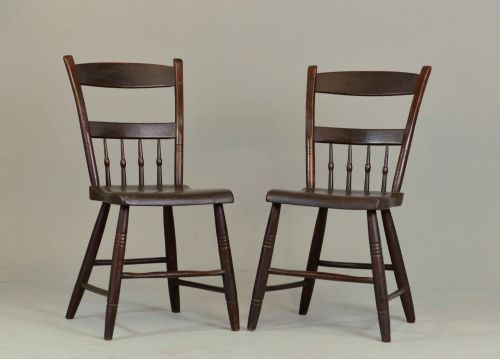
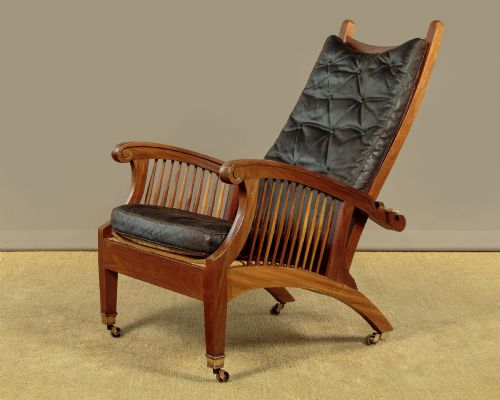
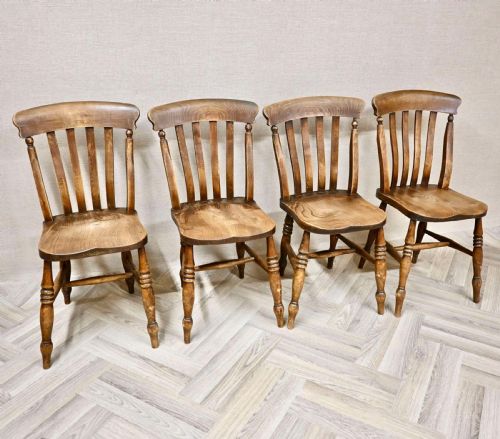

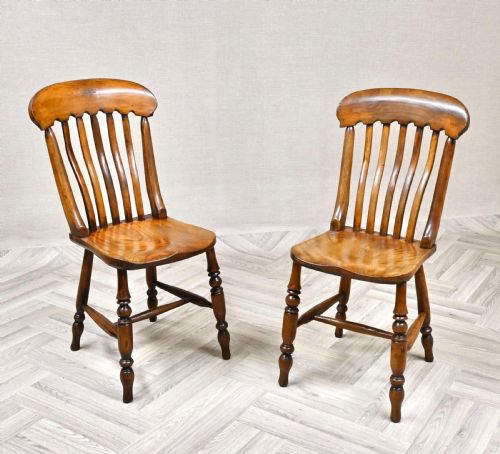



Wooden Slat Back Side Chairs
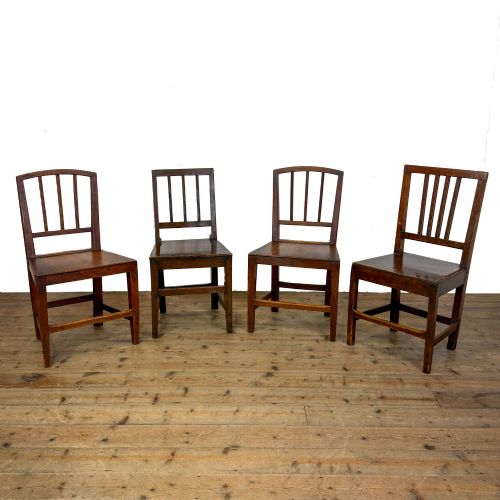
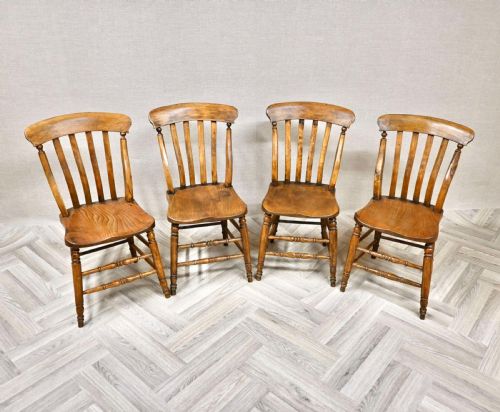
These wooden slat back side chairs bring honest country craft into the room, offering solid seats built for daily use.
Wooden Slat Back Side Chairs
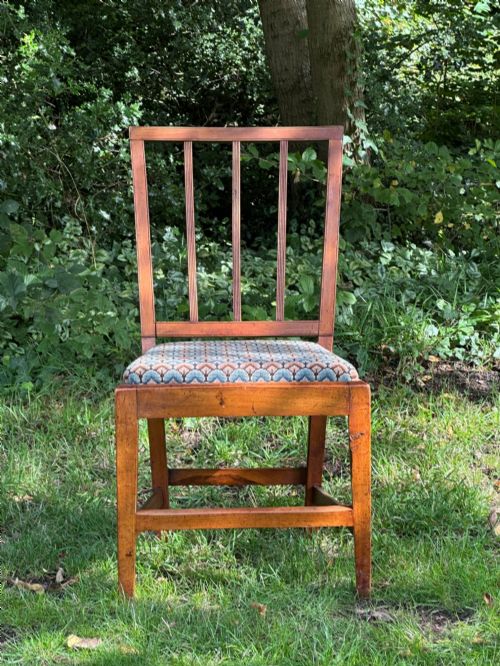
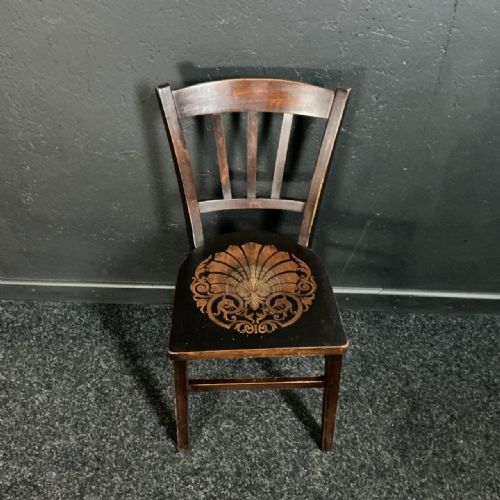
Wooden slat back side chairs encompass nineteenth-century country kitchen seating, farmhouse dining sets, and Arts and Crafts vernacular forms. The pieces you meet most often on this page hail from the nineteenth century, alongside Edwardian interpretations and later examples from nineteen-thirty.
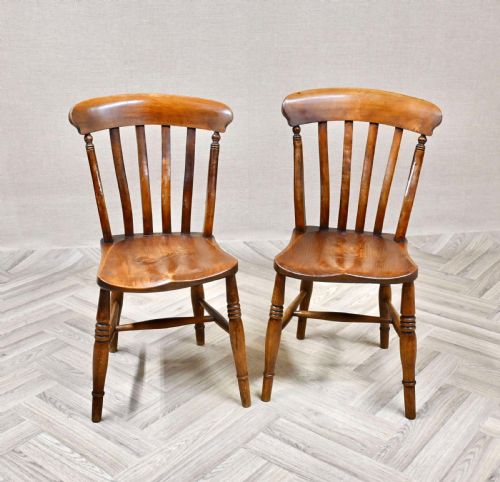
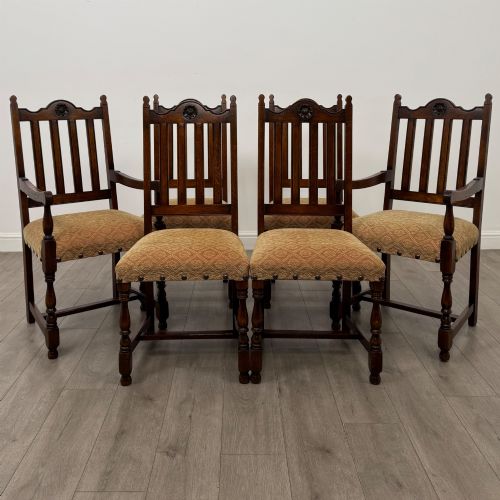
Makers shaped these utilitarian seats in oak, beech, elm, and pine, frequently grouping them into sets of four, five, or six for domestic dining. Forms range from low bedroom chairs and salon seating to robust kitchen Windsor lathbacks and ladder backs.
Origins stretch across English, Scottish, American, and French workshops, utilising local timber such as birch and walnut. Buyers select these designs to anchor rustic farmhouse interiors or to provide straightforward seating around a kitchen table.
Construction and Materials
Cabinetmakers and country joiners relied upon solid hardwoods like oak, beech, elm, and mahogany, often pairing turned uprights with steam-bent slats. Seats were fashioned from solid timber planks or woven with traditional rush, while structural joints utilised simple pegging and mortise and tenon construction.
Surface finishes include bleached oak, French grey paint, and polished mahogany, reflecting the vernacular traditions of British and continental workshops. Metal elements such as brass occasionally appear on decorative salon pieces, though iron and brass fixings remain minimal on standard kitchen seating.
Wooden Slat Back Side Chairs Retail Price Guide 2026
Typical asking prices for wooden slat back side chairs among the pieces listed under this phrase on Sellingantiques today, from the lower quarter to the upper quarter. They describe what is for sale here now, not the wider market.
Listings feature robust nineteenth-century oak, beech, and elm country pieces alongside Edwardian designs and painted nineteenth-century frames.
Evaluating the Craft
The distinction between ordinary utility seating and superior vernacular craft lies in the integrity of the timber selection and the precision of the joinery. Chairs fashioned from dense, figured elm or quartersawn oak with tight, hand-turned spindles represent a higher tier of production.
Consistency across a assembled set dictates value, as matched groupings of six or more demand uniform timber patination and identical slat profiles. Subtle refinements in the rake of the back and the ergonomic curve of the crest rail separate basic workshop output from accomplished regional work.
SHAPLAND AND PETTER·James Shoolbread
The Wooden Slat Back Side Chairs Glossary
- Lathback
- A chair back featuring flat wooden slats or laths rather than turned spindles. These upright slats provide rigid support and define the vernacular kitchen seating of the nineteenth century.
- Ladder back
- A chair form constructed with multiple horizontal wooden rails resembling the rungs of a ladder. This traditional framing method allows for lightweight strength in country dining chairs.
- Rush seat
- A seating surface woven from dried marsh grasses twisted into cords. Craftsmen utilised rush to create a flexible, durable platform stretched tightly over wooden seat rails.
- Harlequin set
- A collection of dining chairs that share a similar period style or silhouette rather than originating as a single matched suite. These groupings allow buyers to assemble larger seating sets from related antique pieces.
- Vernacular furniture
- Domestic objects built by local tradesmen using regional materials and traditional techniques without high-style academic influence. This approach prioritises utility and structural honesty.
Wooden Slat Back Side Chairs: Frequently Asked Questions
How do I care for antique wooden chairs?
Keep wooden slat back side chairs away from direct heat sources and sudden humidity shifts to prevent timber splitting and joint shrinkage. Apply a traditional wax polish periodically to nourish the dry grain and preserve the historic surface patination.
Avoid commercial silicone sprays and harsh chemical cleaners that strip the original finish. Simple dusting with a dry, soft cloth is sufficient for daily maintenance of vintage oak, beech, and elm surfaces.
Are these chairs suitable for daily dining?
Nineteenth-century country kitchen and farmhouse seating was engineered for rigorous everyday use. Solid timber construction and pegged joints ensure these pieces remain robust dining companions today.
Check that individual joints remain secure before placing heavy demands on antique seating. Many examples survive precisely because their straightforward construction withstands regular household activity.
How do I identify lathbacks from ladder backs?
Lathback designs incorporate vertical flat wooden slats running from the seat up to the crest rail. Ladder backs utilise horizontal curved rails stacked vertically between the rear uprights.
Both styles belong to the broader category of wooden slat back side chairs but offer distinct visual rhythms. Lathbacks lean towards Windsor-style construction, while ladder backs draw on seventeenth and eighteenth-century vernacular traditions.