

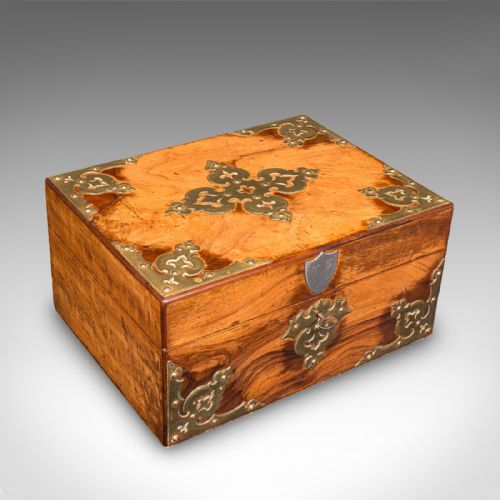


Wooden Sewing Chest
A wooden sewing chest organises the needles, threads and small tools of needlework inside fitted compartments.
Wooden Sewing Chest
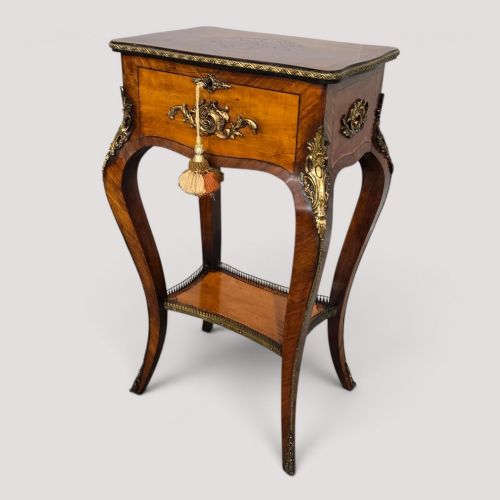
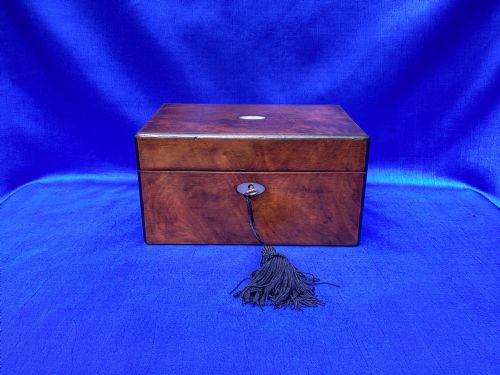
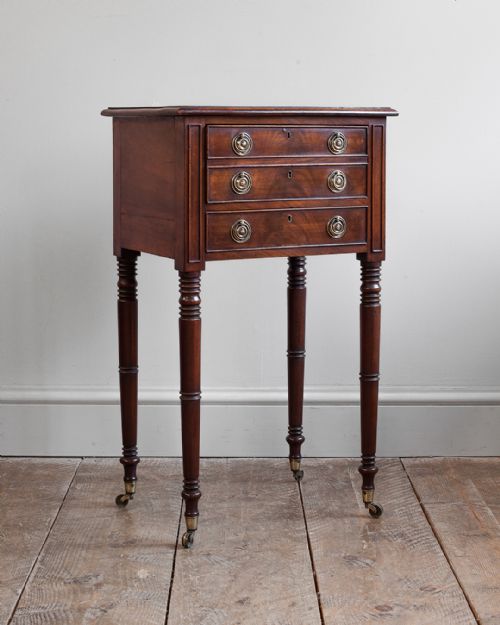
A wooden sewing chest encompasses a variety of forms designed to hold sewing equipment, ranging from tabletop boxes to pedestal tables and display cabinets. Buyers searching this phrase encounter pieces dating from the Georgian and Regency eras through the Victorian period, as well as later twentieth-century examples.
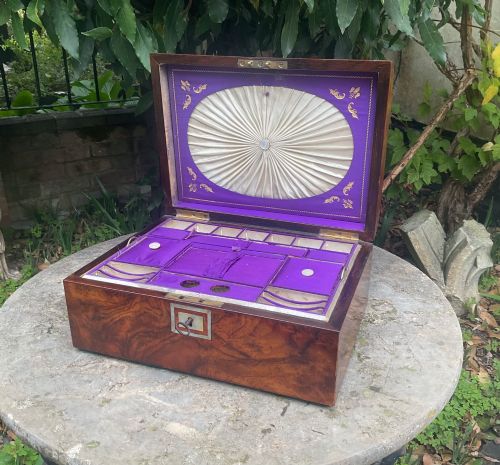
The domestic interior of the nineteenth century required dedicated receptacles for needlework, producing table forms with silk catch bags alongside portable boxes. Mahogany and walnut predominate among the surviving examples, often fitted with internal trays and compartments for spools and pins.
Specialised retail display cases also emerge from this category, including haberdashery cabinets and cotton counters that once served in shops. These commercial pieces sit alongside domestic workboxes inlaid with mother-of-pearl or decorated with Tunbridge Ware.
How they were made
Cabinetmakers utilised dense hardwoods such as mahogany, walnut and rosewood for carcass construction, applying burr veneers to feature surfaces. These timbers provide the structural stability necessary for hinged lids and multi-tiered interior trays.
Decorative embellishments involve brass hardware, silver stringing and mother-of-pearl inlay set directly into the wood. Display cases integrate glazed panels to showcase cotton reels and haberdashery items.
Joinery techniques include dovetail joints for drawer construction and turned pedestals supporting table-form workboxes. Interior compartments frequently feature lined paper or fabric to cushion delicate tools.
Wooden Sewing Chest Retail Price Guide 2026
Typical asking prices for wooden sewing chest among the pieces listed under this phrase on Sellingantiques today, from the lower quarter to the upper quarter. They describe what is for sale here now, not the wider market.
Victorian needleworkers relied on tiny bone winders hidden inside these boxes to keep their silk threads from tangling.
What varies in quality
The refinement of internal fittings distinguishes standard workboxes from superior examples. Fitted trays with individual lidded compartments and original bone or ivory winders indicate careful workshop production.
Timber selection and veneer matching dictate the visual appeal of the exterior. Burr walnut and figured mahogany display deliberate grain alignment across lids and drawer fronts.
The complexity of decorative techniques, such as precise Tunbridge Ware mosaic work or intricate mother-of-pearl inlay, marks out skilled craftsmanship from plain utility pieces.
Chadwick·Ermen and Roby
The Wooden Sewing Chest Glossary
- Tunbridge Ware
- A form of decorative woodwork featuring intricate mosaic patterns made from tiny wood blocks of various natural colours. This technique creates geometric designs and pictorial scenes on the lids of small boxes.
- Tea Poy
- A small stand or table fitted with compartments for storing tea, which often shares similar pedestal forms and internal configurations with workboxes of the Regency and Victorian periods.
- Work Table
- A freestanding table incorporating a drawer and frequently an attached fabric bag for holding sewing materials. These pieces served domestic needlework in nineteenth-century sitting rooms.
- Stringing
- Inlay work consisting of thin contrasting lines of wood or metal embedded into the surface of furniture. It defines the edges of drawers and tabletops on mahogany and rosewood pieces.
Wooden Sewing Chest: Frequently Asked Questions
What is a wooden sewing chest?
A wooden sewing chest is a box or table designed to store needles, threads, and textile tools. These pieces range from portable tabletop boxes to pedestal tables and shop display cases.
Internal arrangements typically include lift-out trays, small compartments, and pin cushions. They were essential household and retail items during the eighteenth and nineteenth centuries.
How were sewing tables used?
Sewing tables served as domestic workstations for women engaged in needlework, embroidery, and mending. The integrated drawers and silk bags kept active projects and small implements close to hand in the parlour.
Larger pedestal versions remained stationary beside seating, while portable workboxes could be carried between rooms. Some examples double as decorative occasional tables.
What woods were used for sewing chests?
Cabinetmakers employed durable hardwoods, primarily mahogany and walnut, for the main structure of these boxes and tables. Burr walnut veneer frequently provides decorative grain patterns on Victorian examples.
Exotic timbers such as rosewood appear on high-status workboxes, occasionally enhanced with mother-of-pearl inlay. Lighter woods provide the microscopic tiles used in Tunbridge Ware mosaics.
How do I date a sewing box?
Stylistic indicators help assign periods, such as the curved bow fronts of George III pieces or the heavy pedestals of the William IV era. Gothic Revival motifs point toward the mid-nineteenth century.
Construction details, including handmade dovetails, brass hardware types, and interior paper linings, also assist in determining age. Commercial display cases often bear manufacturer lettering from the later nineteenth or early twentieth century.