




Wooden Sewing Box Drawers
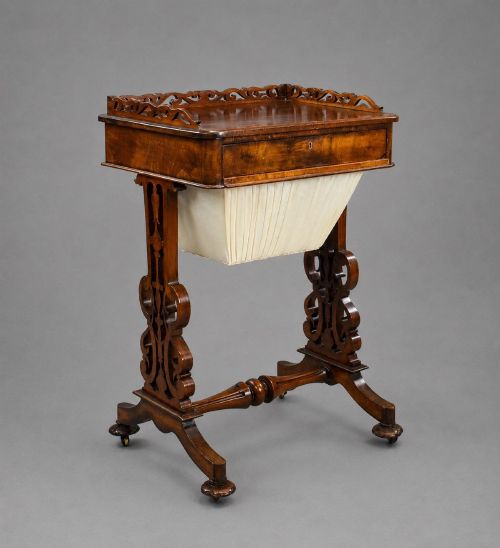
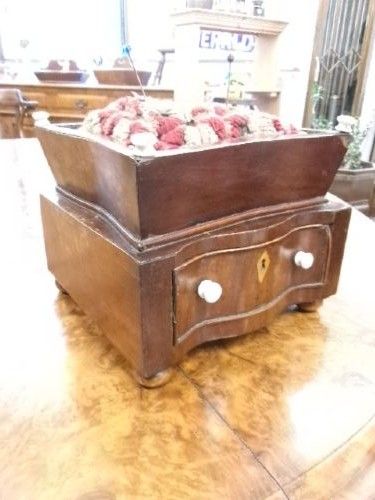
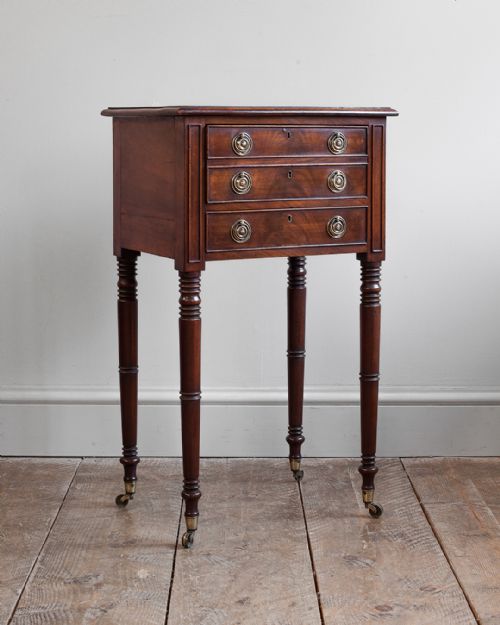
These wooden sewing box drawers are period work tables and fitted boxes designed to hold threads and needlework.
Wooden Sewing Box Drawers
Wooden sewing box drawers comprise nineteenth-century and early twentieth-century work tables, sewing boxes, and haberdashery cabinets designed for needlework and small storage. When you search for wooden sewing box drawers, you encounter freestanding furniture and tabletop boxes intended to keep threads, pins, and textiles orderly.
The pieces appearing on this page span the Victorian period, Regency era, and the early twentieth century up to nineteen-twenty. They take the form of occasional tables, side tables, and fitted boxes that combine surface utility with internal compartments.
Mahogany and walnut predominate among the surviving examples, often paired with brass handles, fabric linings, and bone accessories. These items served both practical domestic work and refined parlour display.
How they were made
Cabinet makers utilised solid timbers and veneers such as mahogany, burr walnut, and oak to construct the frames and carcasses of these tables and boxes. Brass hardware, including hinges, escutcheons, and castors, provided functional detailing and structural support.
Interiors incorporated textile linings, fabric pockets, and bone or glass components to organise sewing paraphernalia. Wood inlay and careful grain selection defined the exterior presentation of Victorian Sheraton Revival and Regency pieces.
Wooden Sewing Box Drawers Retail Price Guide 2026
Typical asking prices for wooden sewing box drawers among the pieces listed under this phrase on Sellingantiques today, from the lower quarter to the upper quarter. They describe what is for sale here now, not the wider market.
Materials recorded across these items include mahogany, burr walnut, oak, brass, fabric, glass, and bone.
What varies in quality
Quality rests upon the choice of timber and the precision of the cabinet work, distinguishing simpler utility pieces from elaborate parlour furnishings. Burr walnut veneers and intricate mahogany inlay indicate higher workshop ambition than plain secondary timbers.
The integrity of internal fittings, such as fitted sewing drawers, sliding bags, and original bone accessories, separates complete survivals from altered examples. Structural cohesion in the stands and legs further marks the distinction between fine occasional tables and standard utilitarian boxes.
Chadwick’s Sewing Cottons
The Wooden Sewing Box Drawers Glossary
- Work table
- A small freestanding table containing drawers, compartments, or a suspended fabric bag designed specifically for needlework and sewing implements. These items doubled as occasional or lamp tables in Victorian reception rooms.
- Haberdashery cabinet
- A shop or domestic display case used for organising sewing cottons, ribbons, and small haberdashery items. They typically feature glass fronts or multiple small drawers.
- Burr walnut
- A highly figured wood veneer taken from the warted growths of walnut trees, prized for its swirling grain patterns. Cabinet makers utilised it on high-status Victorian boxes and tables.
- Pincushion
- A small padded object used for sticking pins and needles during sewing tasks, sometimes integrated into larger wooden boxes or stands. They appear in various nineteenth-century forms.
Wooden Sewing Box Drawers: Frequently Asked Questions
What is a work table?
A work table is a nineteenth-century small table equipped with drawers or compartments specifically built for sewing and needlework.
They functioned as practical pieces that could also hold a lamp in a parlour setting.
How do I date a sewing box?
Dating relies on timber choices, construction methods, and stylistic cues such as Regency or Victorian Revival details.
Secondary woods and hardware types also assist in determining whether a piece originates from the nineteenth century or nineteen-twenty.
What were haberdashery cabinets used for?
Haberdashery cabinets stored and displayed small sewing goods like cottons, pins, and ribbons for trade or domestic organisation.
Display cases such as those by Chadwick’s allowed shopkeepers to present sewing cottons directly to buyers.
Are these pieces suitable for modern rooms?
These tables and boxes function well as bedside surfaces, lamp stands, or decorative storage in contemporary interiors.
Their compact footprints and internal compartments make them practical for holding small modern items.