

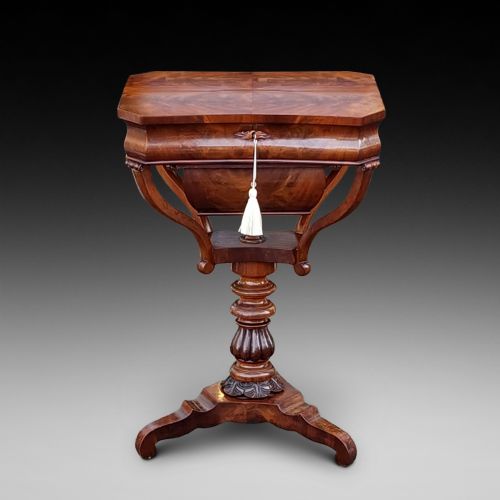
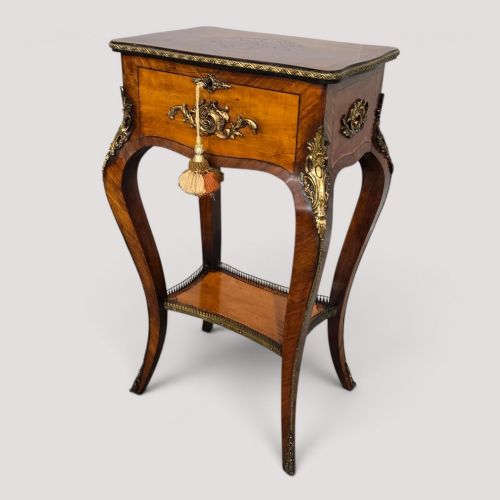
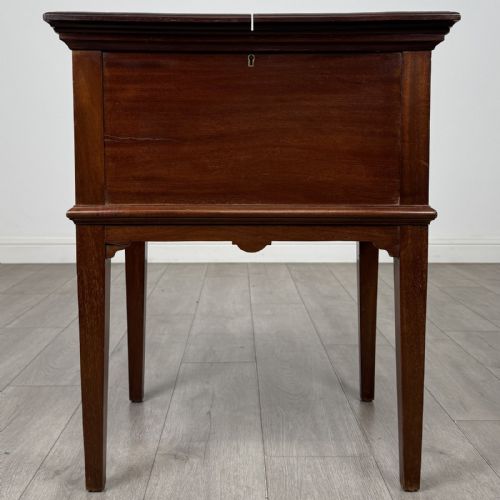
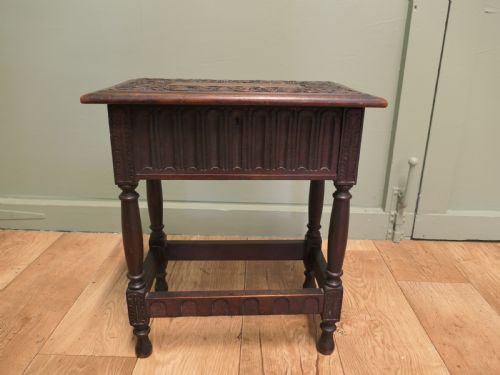



Wooden Sewing Box Table
A wooden sewing box table combines a compact container for needlework with a steady surface, offering both utility and elegant form for any room.
Wooden Sewing Box Table
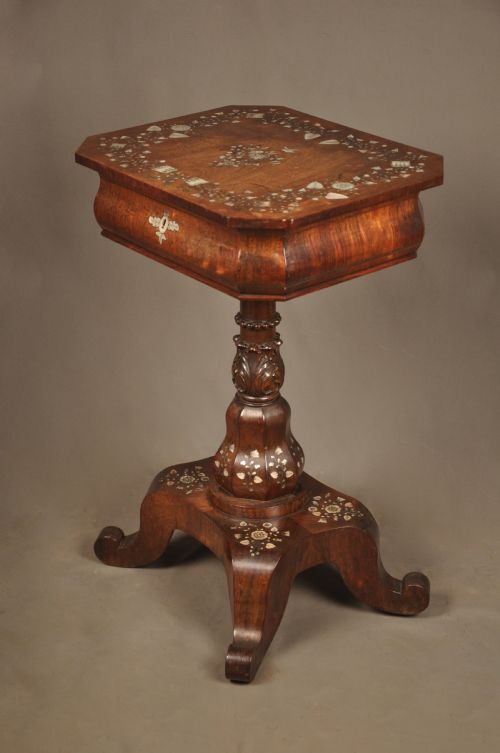
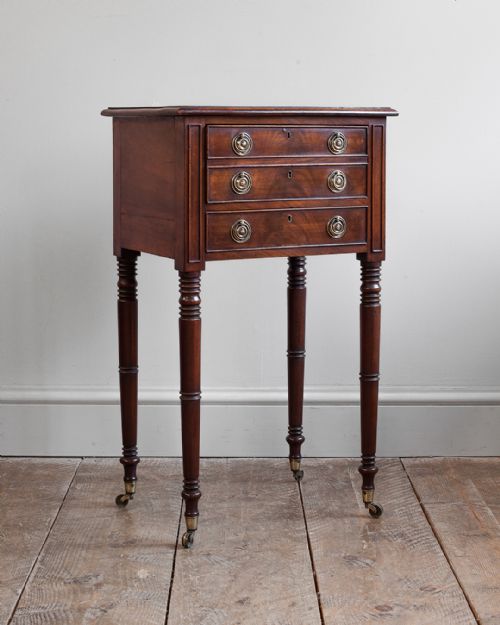
A wooden sewing box table serves as a dual-purpose piece of furniture designed to house threads, needles, and textiles while operating as an occasional or side table. The selections found here span from the George III period through the Victorian and Edwardian eras, showcasing how domestic furniture evolved to accommodate leisure pursuits.
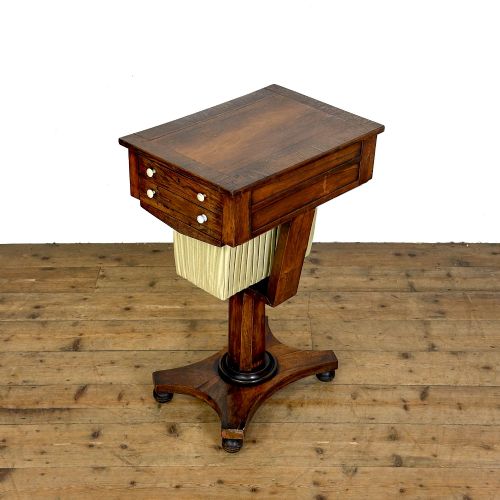
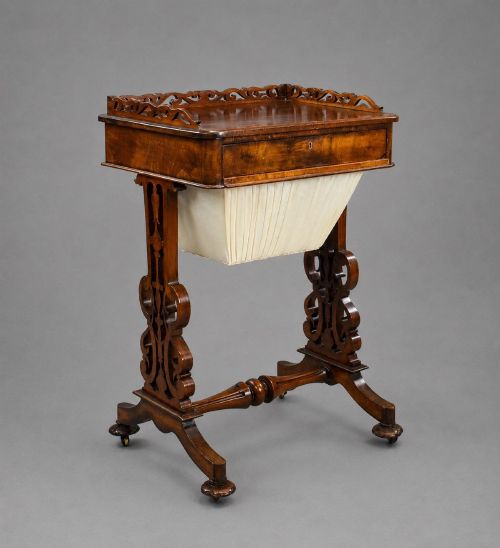
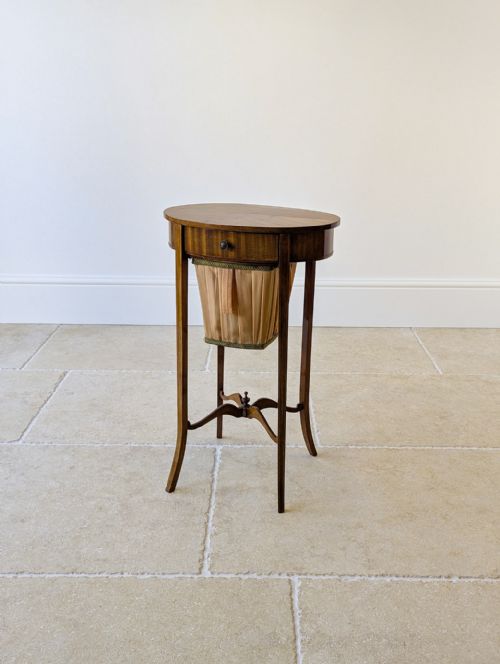
Victorian and 19th-century examples form the majority of the pieces on this page, frequently rendered in rich timbers like mahogany and walnut. These objects often include fitted interiors beneath the lid to organise small sewing implements, along with hanging fabric bags or wooden compartments below.
Alongside standard work tables, the inventory includes specific variants such as games tables, jewellery boxes on stands, and vanity tables that double as workboxes. Edwardian iterations tend to present lighter woods such as satinwood and delicate inlay work, reflecting the shifted aesthetic tastes of the early 20th century.
Materials and Construction
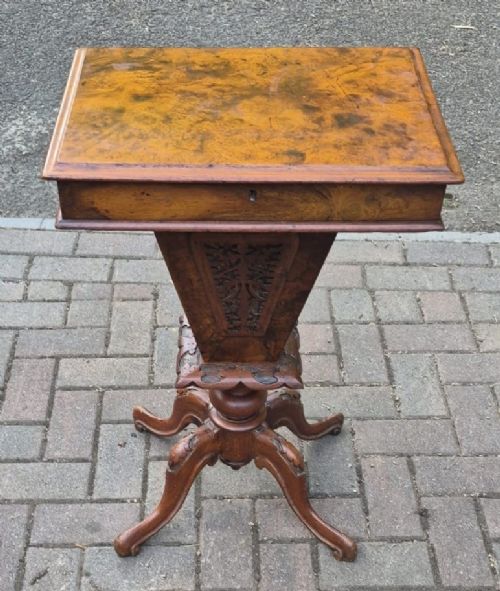
Cabinetmakers constructed these tables using dense hardwoods such as mahogany, rosewood, and walnut, often selecting burr walnut veneers for decorative impact on table tops and lid surfaces. Solid timbers provided the structural integrity needed for legs and frames, while finer grain veneers created striking visual patterns.
Surface decoration frequently involved wood inlay, brass mounts, and occasionally hand-painted details, adding ornamentation to the functional form. Interiors required precise joinery to create fitted compartments, miniature drawers, and lidded wells tailored for spools and needles.
Wooden Sewing Box Table Retail Price Guide 2026
Typical asking prices for wooden sewing box table among the pieces listed under this phrase on Sellingantiques today, from the lower quarter to the upper quarter. They describe what is for sale here now, not the wider market.
Some Victorian ladies kept secret compartments inside their work tables for hiding small love letters alongside their darning needles.
Assessing Quality
Quality in a wooden sewing box table rests on the selection of timber veneers, the crispness of any wood inlay, and the complexity of the interior fittings. Superior pieces utilise figured burr walnut or select mahogany with balanced grain patterns across the main surfaces.
The sophistication of the internal compartment layout distinguishes finer examples from simpler utilitarian models. Master cabinetmakers invested considerable labour in concealed compartments, smooth-sliding drawers, and sturdy hinging mechanisms that endure through generations.
The Wooden Sewing Box Table Glossary
- Work table
- A small movable table designed specifically for holding sewing equipment, textiles, and crafting materials. These pieces typically feature a hinged lid opening to a fitted compartment and sometimes a fabric storage bag underneath.
- Burr walnut
- A highly prized timber veneer taken from the knotted growths of a walnut tree, yielding swirling, organic patterns. Cabinetmakers used it on prominent exterior surfaces to create rich decorative effects.
- Inlay
- A decorative technique where pieces of contrasting wood, brass, or other materials are inserted into recesses cut into the primary surface. This method creates flat, flush patterns across table tops and friezes.
- Fitted interior
- An organised arrangement of small compartments, lidded boxes, and miniature partitions built inside the box section of the table. It keeps needles, threads, and thimbles separated and secure.
- Occasional table
- A small, light table intended to be moved around a room as needed for specific tasks or display. They often serve secondary functions such as lamp stands or side tables.
Wooden Sewing Box Table: Frequently Asked Questions
What is a wooden sewing box table?
A wooden sewing box table is a piece of furniture featuring a built-in compartment for storing threads, needles, and sewing tools, combined with a usable surface on top. They functioned historically as practical items for domestic needlework.
Most examples stand at a height suitable for sitting beside a chair or sofa, allowing crafters to keep their materials close at hand. Today, they serve equally well as decorative side tables or lamp stands in living spaces.
How were these tables used originally?
In the 19th and early 20th centuries, women used these tables to organise sewing, embroidery, and lacemaking supplies. The internal trays and compartments kept delicate tools from tangling or rolling away.
When the lid was closed, the top provided a clean surface for writing, holding a small lamp, or resting a cup of tea. Some variants also incorporated folding leaves for games or reading.
How do I date a wooden sewing box table?
Dating relies on observing the timber choice, construction methods, and decorative styles characteristic of different historical periods. Georgian and Regency pieces often show clean classical lines in mahogany, while Victorian examples frequently employ burr walnut and heavier carvings.
Edwardian tables tend to feature lighter satinwood, delicate string inlay, and more slender legs. Examining the secondary woods inside the drawers also helps confirm the period of manufacture.
How do I care for an antique sewing table?
Maintain antique wooden furniture by keeping it away from direct sunlight and sudden changes in temperature, which can cause wood to split or veneer to lift. Dust gently with a dry or slightly damp cloth.
Applying a quality beeswax periodically helps nourish the polished wood surface and preserve its natural sheen. Avoid using modern silicone-based sprays that can damage historic finishes.