



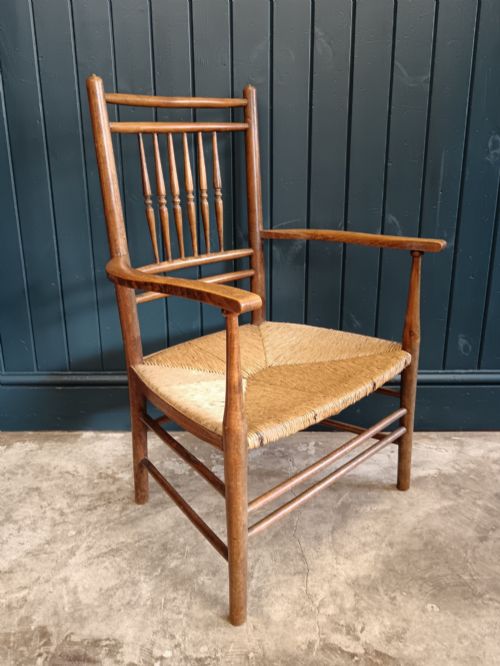

Wooden Rush Seat Armchair
A wooden rush seat armchair brings tactile texture and sturdy vernacular construction into a room, offering enduring comfort shaped by traditional hands.
Wooden Rush Seat Armchair
A wooden rush seat armchair is a substantial seating form rooted in domestic history, combining a rigid timber frame with a woven seating surface. These chairs emerge from both rural vernacular traditions and later design movements, carrying the marks of regional British and European workshops.
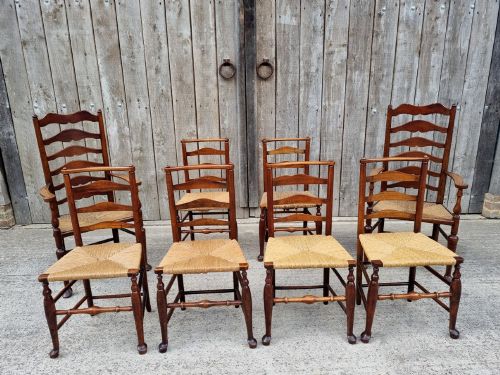
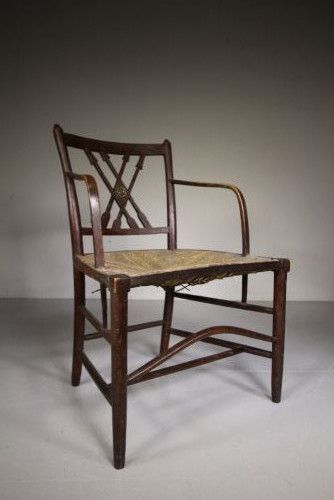
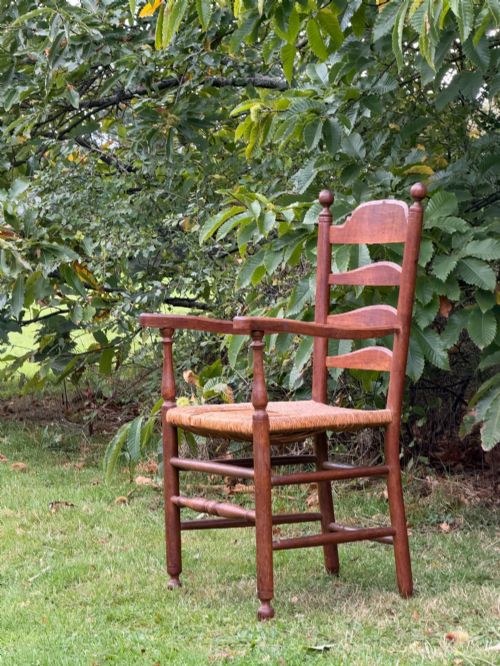
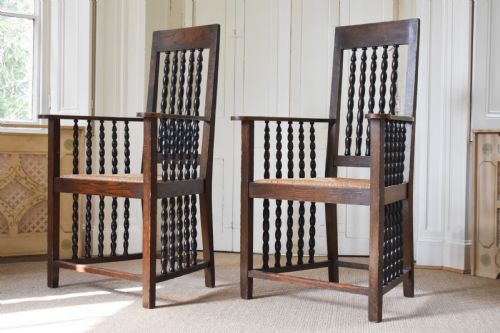
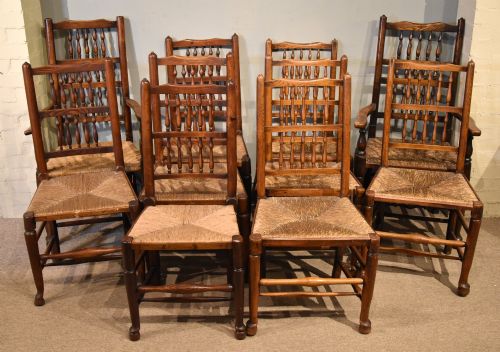
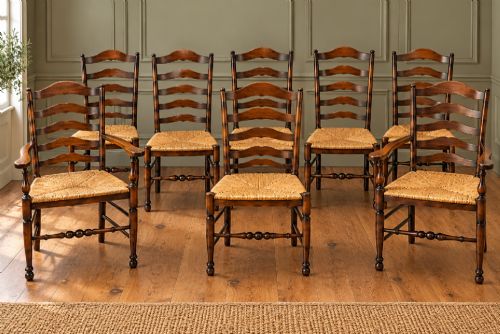
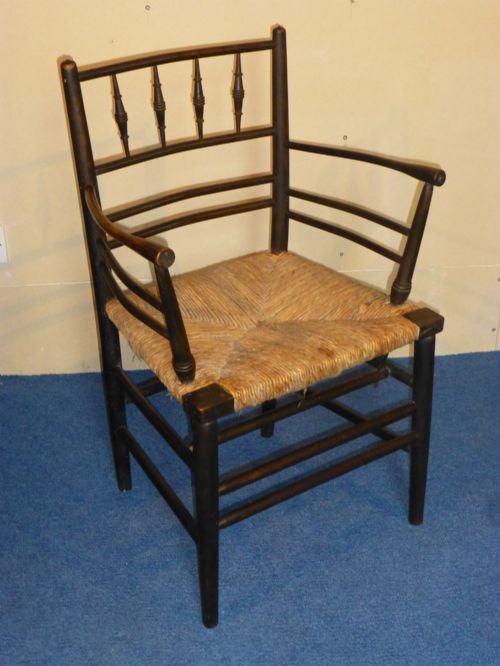
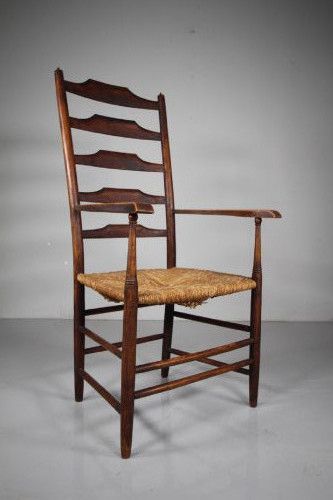
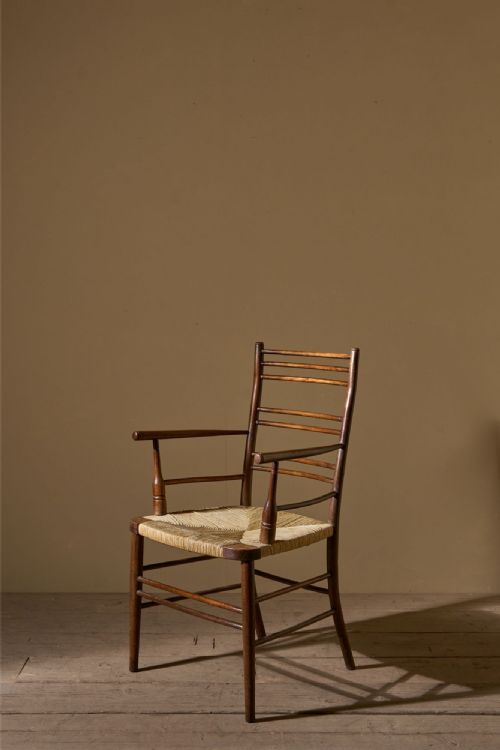
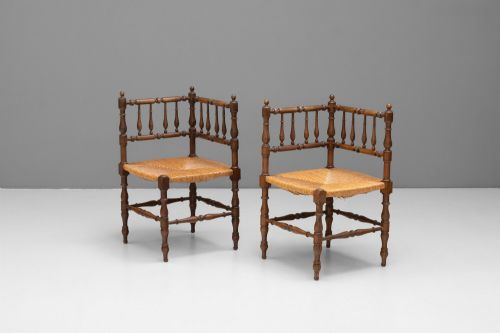
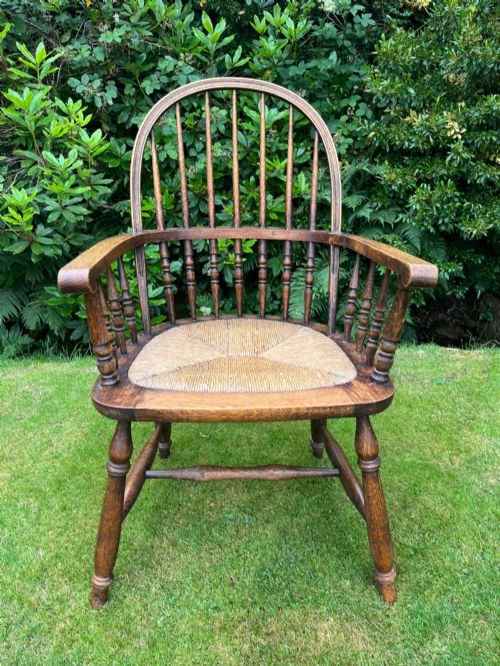
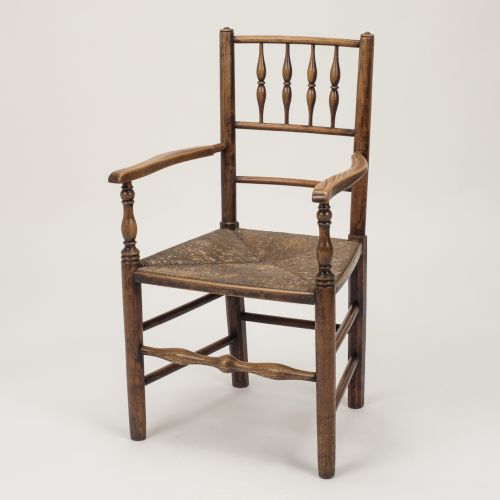
Buyers will most frequently meet 19th-century examples alongside Arts & Crafts interpretations on this page. Common forms span ladderbacks, spindlebacks, and low fireside armchairs constructed from native hardwoods.
The aesthetic ranges from rustic country seating to sophisticated maker-designed pieces associated with the late Victorian period. Each piece reflects the functional requirements of historic domestic spaces, prioritising durability and ergonomic support.
How They Were Made
Makers built the structural frameworks of these armchairs using traditional timber turning and joinery techniques. Woods such as ash, elm, beech, and oak were selected for their strength and flexibility, often shaped green before seasoning.
Seats were woven by hand using dried marsh rushes, twisted into durable cords and wrapped tightly around the seat rails in repetitive patterns. This plant material provides a resilient, slightly springy platform that softens with age and use.
Surface treatments vary from polished hardwoods to painted ash and ebonised finishes. Joinery relied on mortise and tenon joints secured with pegs, ensuring the framework remained stable under daily weight.
Wooden Rush Seat Armchair Retail Price Guide 2026
Typical asking prices for wooden rush seat armchair among the pieces listed under this phrase on Sellingantiques today, from the lower quarter to the upper quarter. They describe what is for sale here now, not the wider market.
Some chairs spent decades tucked beside Victorian hearths, quietly absorbing the warmth of peat fires and the polished patina of generations of elbows.
What Varies in Quality
Quality rests in the harmony between the timber frame and the precision of the woven rush. Tightly packed, even rush work demonstrates superior craftsmanship that resists sagging, whereas loose weaving indicates hurried production.
The integrity of the original timber frame dictates long-term stability. Chairs retaining their original turned components and uncompromised joints stand above those requiring extensive replacement parts or structural reinforcement.
Design sophistication also separates utilitarian seating from commissioned pieces. Subtle refinements in spindle turning, arm curvature, and proportion elevate certain vernacular and movement-driven examples.
Liberty Morris And Co·Morris And Co·Philip Webb·Philip Clissett·William Morris·E W Godwin·Liberty And Co
The Wooden Rush Seat Armchair Glossary
- Rush
- Dried marsh plant material twisted into cord and woven by hand to form resilient chair seats. It provides a natural, flexible surface that responds to environmental humidity.
- Ladderback
- A chair back featuring horizontal arched wooden slats positioned between two upright posts. This traditional form offers strong structural support and ergonomic shaping.
- Spindleback
- A chair design incorporating a series of slender, turned wooden rods set into the back rail. This construction lightens the visual weight while maintaining rigidity.
- Carver
- A traditional term for an armchair, typically designed to match a set of smaller dining chairs. These pieces usually feature open arms and a wider seat.
- Ebonised
- Timber treated with a chemical stain or black finish to imitate expensive ebony wood. This technique gained popularity during the Victorian and Arts & Crafts periods.
Wooden Rush Seat Armchair: Frequently Asked Questions
How do I care for a rush seat?
Keep the woven rush away from direct moisture and excessive dry heat to prevent the natural fibres from becoming brittle. Occasional gentle dusting with a soft brush helps maintain the material.
Avoid sitting on these chairs with sharp objects or heavy point loads that might catch the woven strands. Treating the timber frame with appropriate furniture wax protects the surrounding wood without harming the seat.
Can broken rush seats be repaired?
Skilled craftspeople can completely re-weave damaged rush seats using traditional materials and techniques. The original frame remains intact while new cord restores the supportive surface.
Partial repairs are rarely successful because the tension across the whole seat is interdependent. Re-weaving returns the chair to full functional use.
Are these armchairs suitable for daily dining?
Many historic examples were built precisely for everyday domestic life around tables and hearths. Their sturdy hardwood construction handles regular seating well.
Checking the stability of the joints ensures safety during daily use. Selecting chairs with comfortable arm heights and supportive backs enhances long seating periods.
How do I distinguish country vernacular from Arts and Crafts?
Country vernacular pieces developed organically through regional woodworking traditions to serve local agricultural and domestic needs. Their forms prioritize utilitarian function and straightforward construction.
Arts & Crafts examples reflect a conscious design philosophy that revived handcraft methods. These pieces often exhibit deliberate aesthetic refinements and specific workshop attributions.